A marine AC E1 error can sound like a compressor failure, especially when the cabin is warm and several displays are showing the same warning. On this Tampa Bay boat, three of the four air-conditioning units were reporting E1 errors while the owner was also seeing weak water flow from the AC pump.
The pattern mattered. Three units developing the same symptom at the same time made the seawater-cooling side of the system a more useful starting point than assuming three separate compressors had failed.
The service record ultimately documented significant buildup in the lines, heavy growth in the strainers, and a completed descaling that restored reliable cooling-water flow. This case study keeps the owner anonymous and focuses on what the diagnosis can teach other boaters.
One Error Across Three Air-Conditioning Units
The original complaint involved two clues: low AC-pump water flow and E1 errors on three of four units. Either clue would justify inspection. Together, they suggested that the affected units might be reacting to a shared operating condition.
Marine air conditioning has to move heat out of the cabin and then reject that heat through the system's cooling side. When seawater flow is restricted, the equipment can struggle to shed heat even if the controls, fans, and compressors are still trying to operate normally.
That is why the number of affected units was important. A single fault can belong to a single unit. Repeated faults across several units should make the technician look beyond the first display and ask what those units depend on together.
What the E1 Code Meant on This Boat
In the diagnostic notes for this Webasto system, the E1 code was identified as compressor high-pressure protection. That does not mean every E1 code on every marine AC system has the same definition. Owners should always check the documentation for the exact make, model, and control system installed on their boat.
On this job, the code fit the other visible symptom: weak cooling-water flow. If the seawater side cannot carry heat away effectively, pressure can rise and the protection circuit can stop the equipment before the condition becomes more damaging.
The useful question was therefore not simply, “How do we clear the code?” It was, “Why is the system reaching the condition that triggers the code?” Resetting a display might temporarily remove the message, but it would not remove growth from a strainer or buildup from a cooling line.
The Restriction Was Visible in the Strainers and Lines
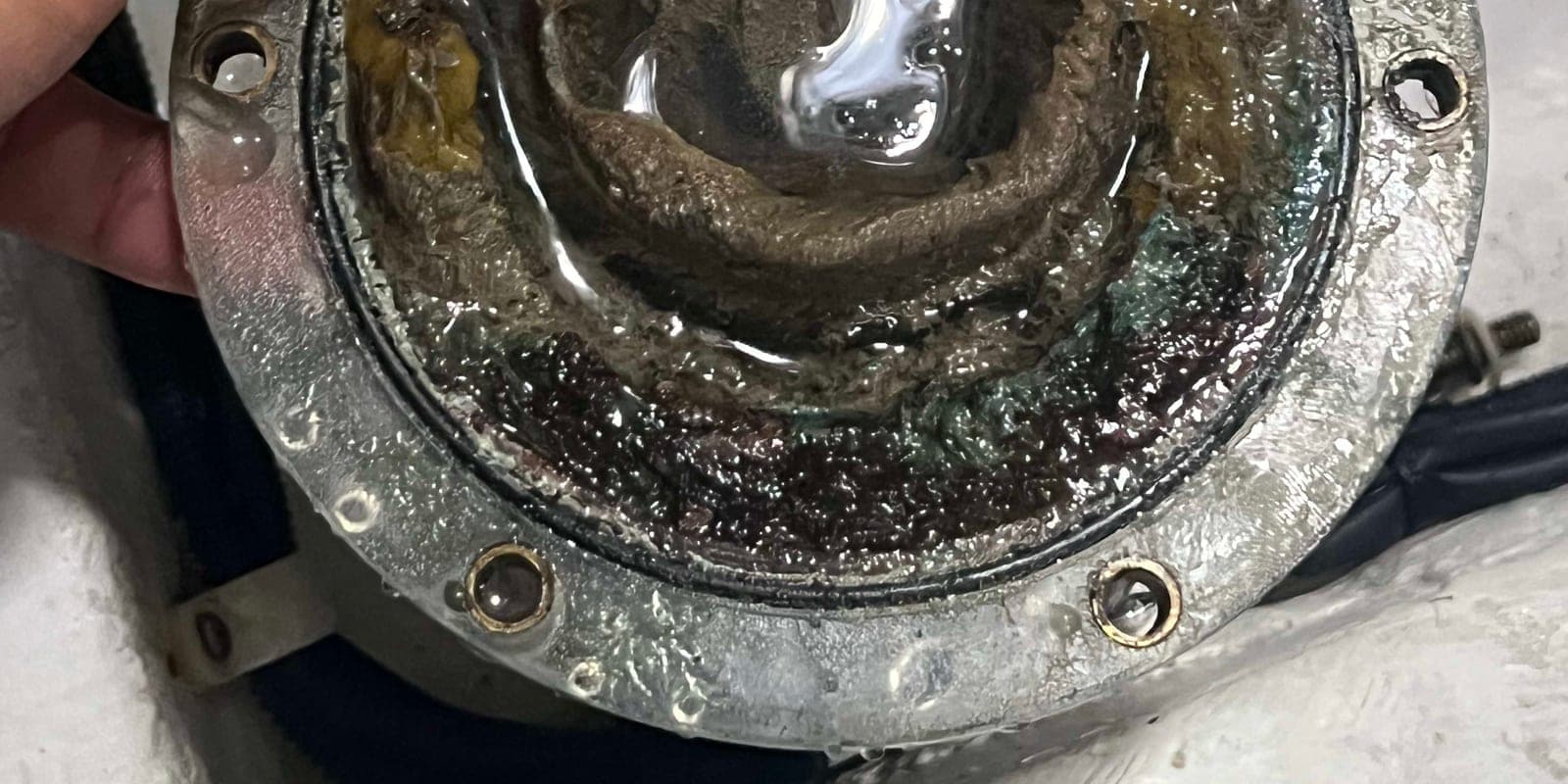
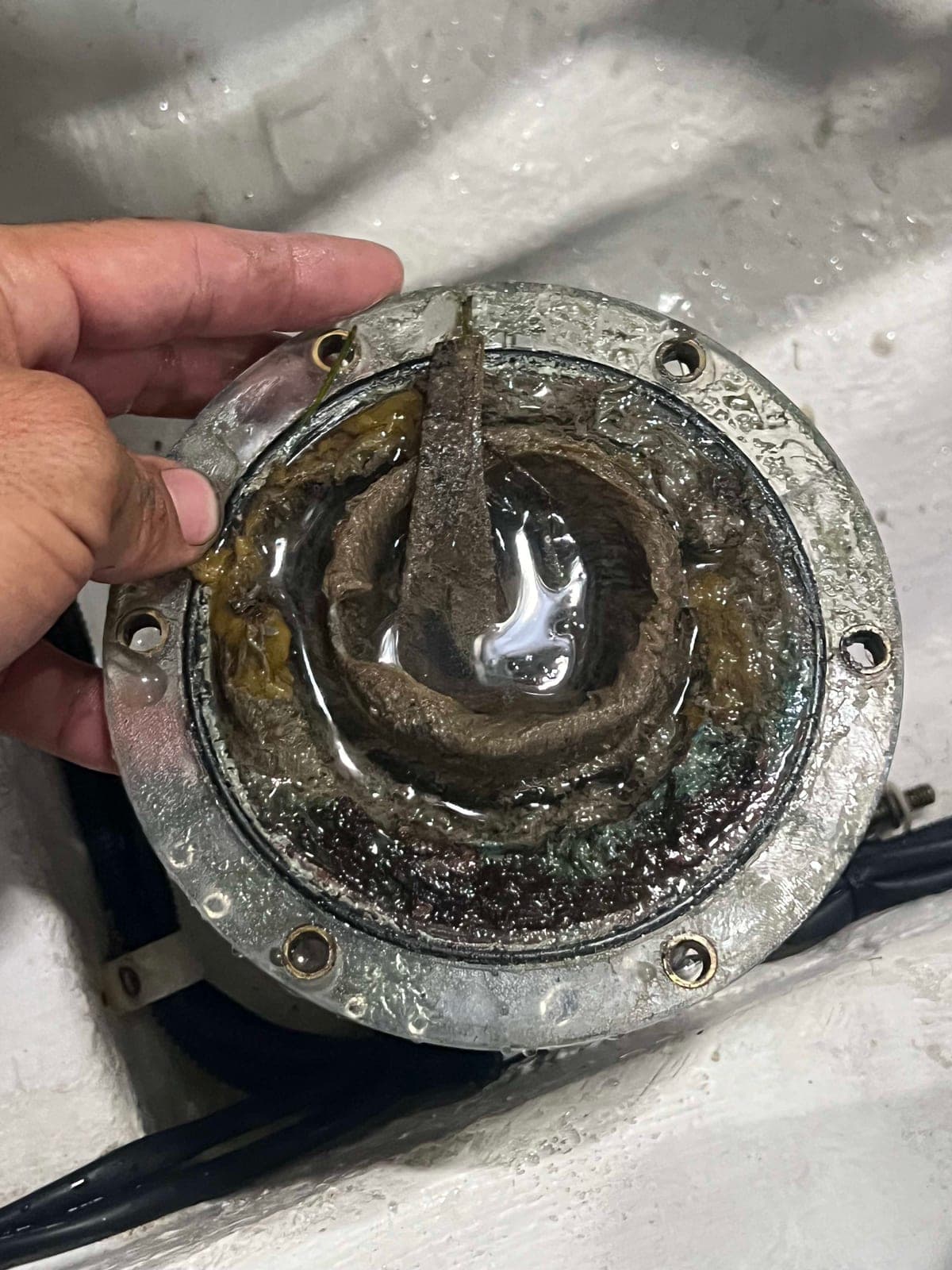
The inspection found significant growth in the strainers and buildup inside the cooling lines. The job photo shows how much material had accumulated in one opened strainer housing.
That finding connected the owner's symptoms to a physical restriction. Water still being present does not necessarily mean the system has enough flow. A partially obstructed strainer or narrowed line can allow some discharge while starving the system of the volume it needs under load.
This is one reason marine AC diagnosis should include the complete water path: the seawater inlet, strainer, pump, hoses or plumbing, AC equipment, and overboard discharge. The place where an owner notices weak flow may be downstream from the condition causing it.
Why Descaling Came Before Replacing Major Components
The service notes treated descaling as the logical starting point. That decision addressed a documented restriction before moving toward a much more expensive conclusion about compressors or replacement cooling lines.
This was not guesswork or a promise that descaling fixes every marine AC fault. The strainers showed heavy growth, the lines had significant buildup, and the owner had already reported low water flow. Those facts supported clearing the cooling-water path and then evaluating how the system behaved with flow restored.
The notes also preserved the next decision if clearing the system had not worked: restricted lines might have required replacement. A good diagnostic plan has that kind of sequence. Correct the confirmed condition first, verify the result, and only then move to the next repair if the symptom remains.
Restoring the Cooling-Water Flow
The seawater lines were descaled, and reliable water flow was restored so the air-conditioning system could reject heat properly again. A fitting damaged during the work was also repaired during the completed follow-up.
The outcome was not described as “the code disappeared, so the job was done.” The completion plan called for the AC performance to be monitored and for any renewed loss of cooling or water flow to be reported. That matters because the goal is stable operation after the cleaning, not a temporary improvement at the dock.
With the descaling and follow-up repair complete, the owner had a working system, a documented cause for the low-flow condition, and a clear baseline for what to watch next.
Expert Marine Maintenance
From routine service to major repairs, our team of expert marine technicians handles it all. Full project management so you can enjoy your boat.
Expert Technicians
Certified marine specialists
What Boat Owners Can Learn From This Repair
The biggest lesson is that several expensive-looking faults can have one shared cause. Three displays showing the same warning did not automatically mean three compressors had failed.
- Look at the pattern, not only the code. Multiple units faulting together can point toward a shared pump, intake, strainer, or cooling-water path.
- Weak discharge is diagnostic information. Reduced flow at the outlet deserves attention even when some water is still moving.
- Inspect the physical system before condemning major equipment. Growth and line restrictions can create operating conditions that resemble a component failure.
- Do not rely on repeated resets. A code may clear temporarily while the underlying restriction remains.
- Keep a completion baseline. Photos, flow observations, and service notes make it easier to recognize when performance starts changing again.
This is especially relevant for boats that sit in Tampa Bay water for long periods. Strainers and seawater plumbing operate in the same environment that produces growth on running gear, dock hardware, and other submerged components.
Signs the Seawater Side Needs Attention
An E1 code was part of this job, but boaters should not wait for a specific code before paying attention to cooling-water flow. Warning signs can include:
- A weaker overboard discharge — compare the flow with what the system normally produces.
- Several AC units faulting close together — a shared condition may be affecting more than one cabin unit.
- Cooling that fades under load — the system may start but struggle as heat and pressure build.
- Frequent shutdowns or resets — protection circuits are responding to a condition that still needs diagnosis.
- Visible growth in the strainer — cleaning the basket does not prove the remaining lines are clear, but it is an important clue.
- A pump that sounds different — changes in sound can accompany lost prime, restricted intake, air intrusion, or an overloaded pump.
Shut the system down if water flow disappears or a high-pressure fault continues returning. Running it harder will not clear the obstruction and can turn a serviceable flow problem into a more expensive repair.
Frequently Asked Questions
The Bottom Line
Three marine AC units showing E1 errors looked like a large equipment problem. The service evidence instead pointed to heavy growth and restricted cooling-water lines. Descaling restored reliable flow, and the completed follow-up closed out the related fitting repair.
If your marine air conditioning has weak discharge, recurring pressure faults, or several units shutting down together, request dockside marine AC repair. We can inspect the system at the boat, document what is restricting its operation, and determine the right next repair.
Related: Marine AC & Refrigeration Service | Mobile Boat Repair vs. a Marine Repair Shop | Vessel Management