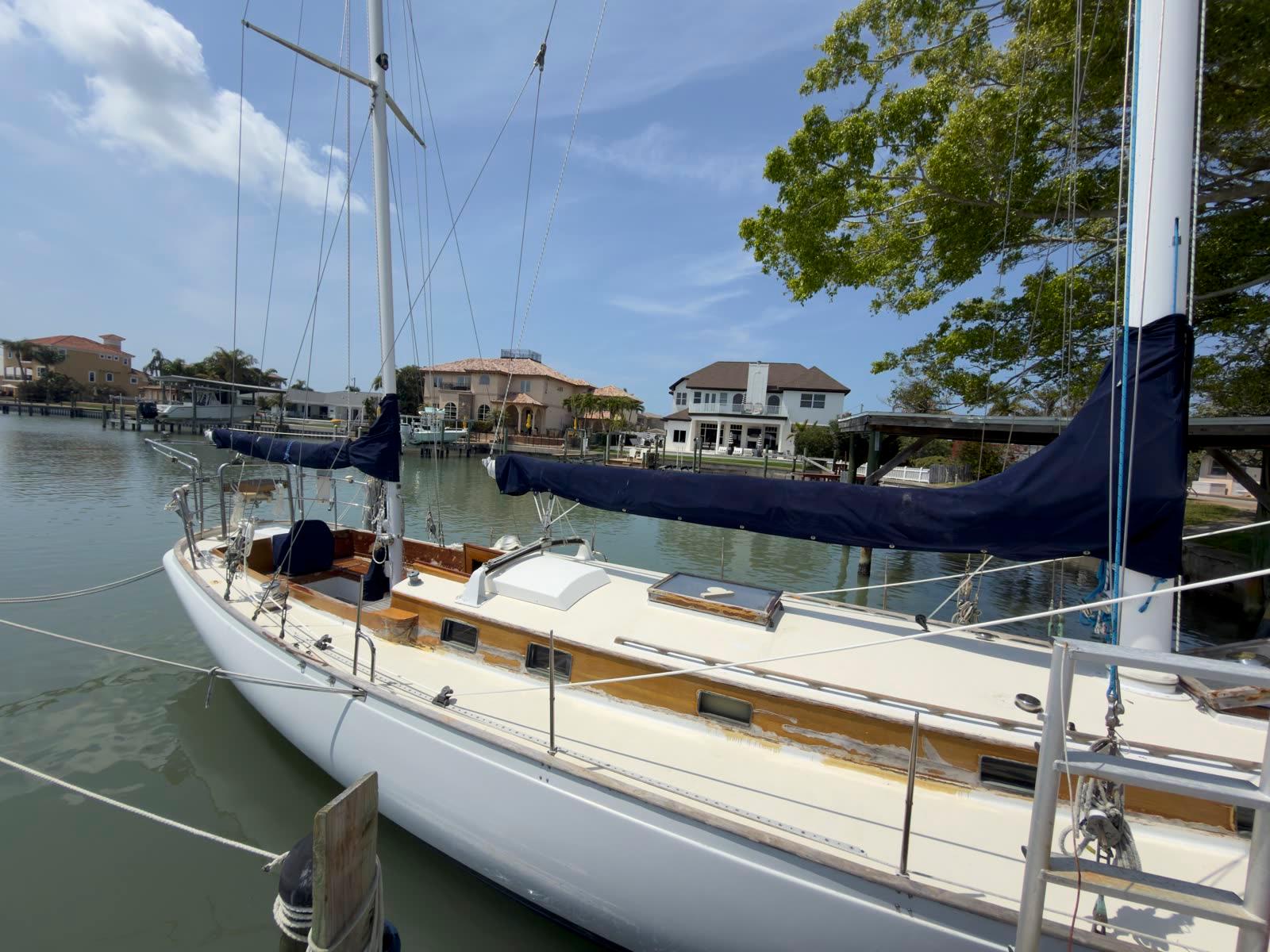
A lot of boat rewiring jobs start with one bad circuit. This one started with a list: a new rig, engine work, new electronics, and wiring that could carry them. The boat is a 1982 Cherubini 44, a two-masted ketch kept at a private dock in Largo, just south of Clearwater. Between February and October 2026, we coordinated all of it.
Four trades worked on the boat over the year, and three of them were partner shops. This case study follows the job records and the photos from the boat. The owner stays anonymous, and we've left out prices.
A 44-Foot Classic With 1982 Wiring
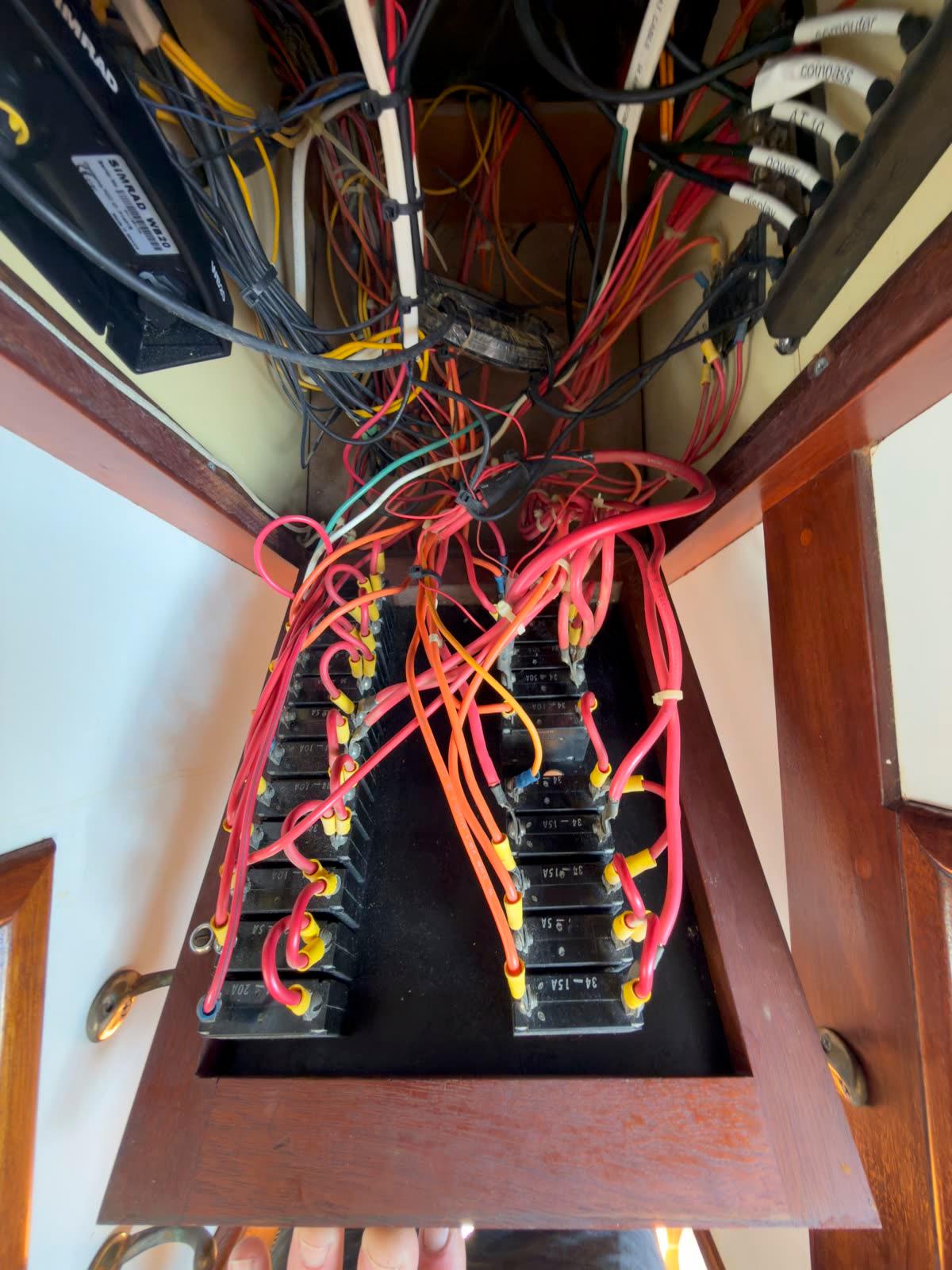
Forty-four years is a long time for any boat's wiring, and this one showed it. Behind the original 12V panel was a dense tangle of wire, and very little of it was labeled. Elsewhere aboard, the wire runs still had old butt splices in them.
None of that is unusual for a boat this age. But new electronics and an autopilot were part of the plan, and you don't hang a chartplotter and a hydraulic autopilot on wiring nobody can trace. The electrical system needed to be rebuilt, not patched.
Re-Rigging the Ketch
The rigging work, done with our partner CMachines Rigging & Boatworks between February and May, covered:
- New self-tailing winches — two Andersen 40ST winches for the main halyard, an 18ST for the mizzen halyard and a 34ST on the cabin top for the staysail sheet.
- A new bobstay — including a new fitting at the waterline, where it sits in the water.
- New whisker stays — the wires that brace the bowsprit side to side.
- All new running rigging — main, mizzen, genoa and staysail halyards, both topping lifts, the mainsheet, mizzen sheet and genoa sheets.
- Lifeline gate terminals — new fittings where the lifeline gate opens.
On a ketch that's a lot of line. Replacing it all at once means every halyard and sheet starts the same age, instead of one worn line after another failing over the next few seasons.
Getting the Yanmar Diesel Right
The engine work went to Diesel Doctor Marine Services in the spring. It started as a full service on the Yanmar: oil and filters, a new V-belt, both Racor fuel filters rebuilt, and new constant-torque clamps on the exhaust hoses. Oil and coolant samples went off for lab analysis, which tells you more about an older diesel than a dipstick does.
Diesel Doctor also replaced or rebuilt several parts:
- Transmission cooler — couldn't be repaired, so it was replaced with a new one.
- Raw-water pump — couldn't be rebuilt, so it was replaced too.
- Starter and alternator — pulled and rebuilt.
- Oil pan — painted to slow corrosion.
A failed raw-water pump overheats the engine, and a failed transmission cooler can cook the gearbox. Both are far better found at the dock than on the way out.
The Rewire: About 20 Circuits, Every Wire Labeled
This was the longest-running piece of the project. We scoped the rewire in April, sourced the parts and started the work. In late June our electronics partner Shiptronics took on the completion.
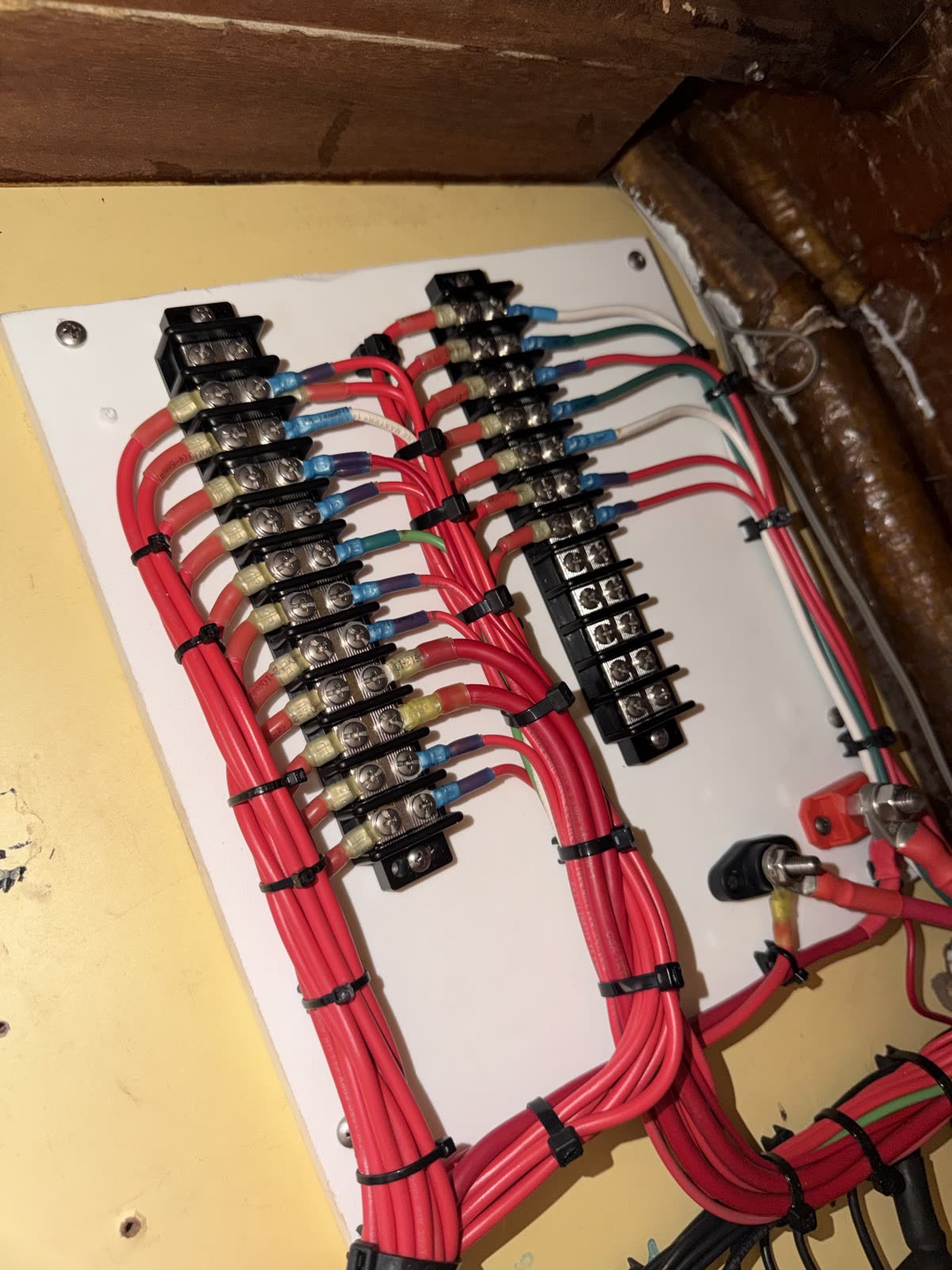
The new system uses tinned marine wire, where every copper strand is coated in tin so salt air has a much harder time corroding it. Behind the panel, about twenty circuits were terminated onto terminal blocks and bus bars, with separate bus bars for the lighting, the midship circuits, the mast disconnect and the forward electronics. Every wire got a shrink-wrap label, so the next person who opens the panel can read it instead of guessing.
The panel now runs the cabin lights, running and steaming lights, the anchor light and tricolor, deck lights, water pressure, the electronics and the autopilot. Each bilge pump has its own 24-hour circuit for automatic operation, plus a separate manual switch. New battery cable went in, and the batteries, autopilot and inverter were tested.
For everything else our marine electrical team handles, from battery banks to full boat rewiring, see the electrical systems page.
Expert Marine Maintenance
From routine service to major repairs, our team of expert marine technicians handles it all. Full project management so you can enjoy your boat.
Expert Technicians
Certified marine specialists
Shore Power and a Real 110V System
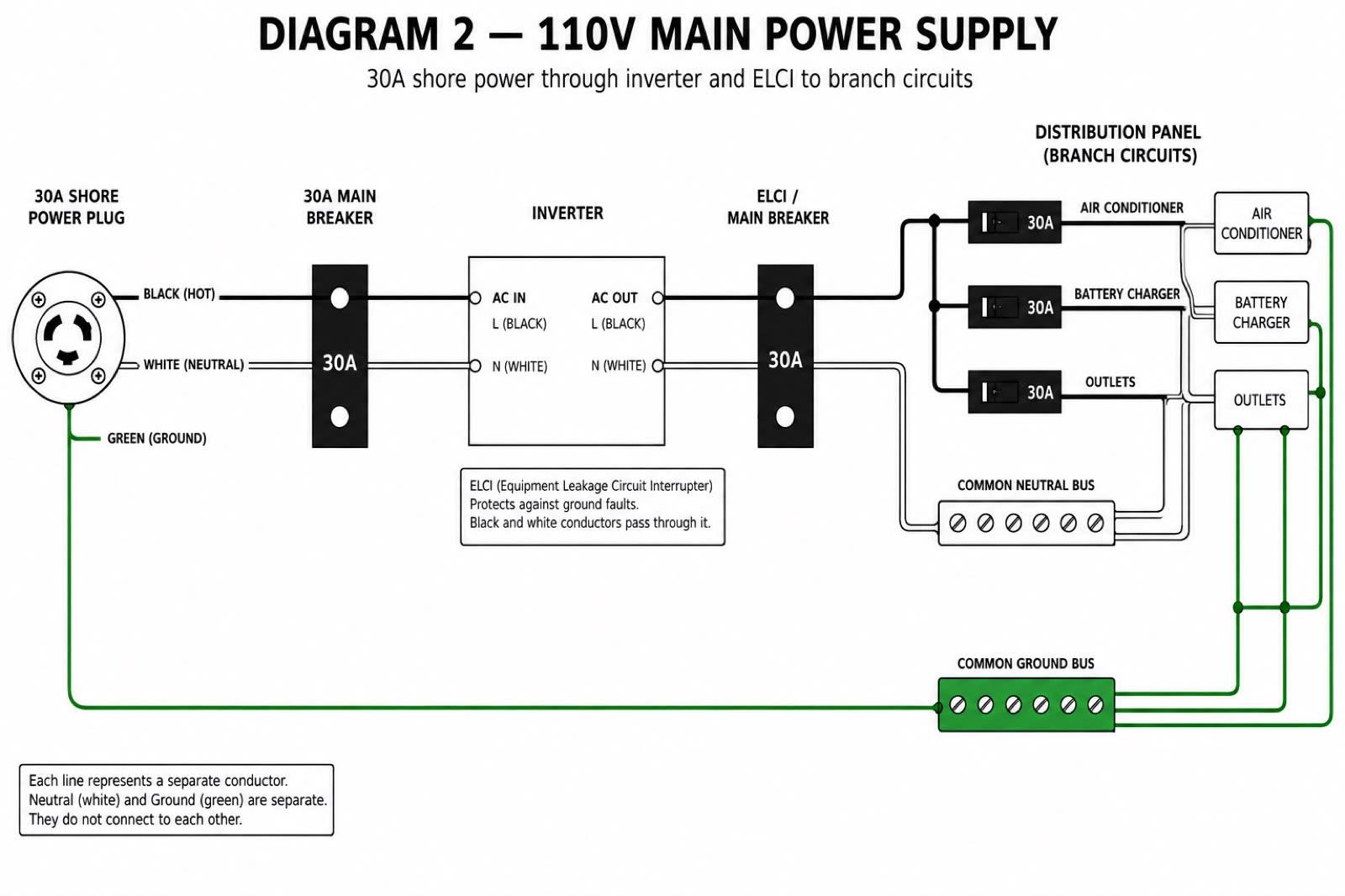
A new 30-amp shore power inlet went into the cockpit. From there, power runs through a 30-amp main breaker to a Freedom XC Pro 2000 inverter/charger, then through an ELCI to the branch circuits for the air conditioning, the battery charger and the outlets.
An ELCI (equipment leakage circuit interrupter) trips when current leaks to ground. That kind of fault can shock a swimmer near the boat or start a fire aboard. ABYC's E-11 standard has called for one on new boats with AC shore power since the early 2010s, three decades after this boat was built.
New GFCI outlets went in, along with a second 110V outlet. The inverter/charger got a remote panel, so the owner can check its status at a glance. If your boat has a generator, our Onan troubleshooting guide covers the other common source of AC trouble.
Navigation Electronics and Autopilot
The same job added new electronics:
- Chartplotter — the owner supplied a Garmin unit, which was installed and connected to the new radio.
- VHF with AIS — a Garmin VHF 215 AIS, wired over NMEA so nearby AIS traffic shows on the chartplotter screen.
- Masthead antenna — the VHF antenna went to the top of the mast. A climber went up the mast to install it.
- Hydraulic autopilot — a Garmin Reactor 40 hydraulic system with a GRF 10 rudder sensor and a TD 50 touchscreen display, tested once it was in.
In late August, Shiptronics came back for a few extras: a stereo with two speakers, a remote for the autopilot and an LED light in the engine room. That last one sounds minor until you're checking a belt at night. They wrapped up on October 1.
Bilge Pumps, Plumbing and the Small Stuff
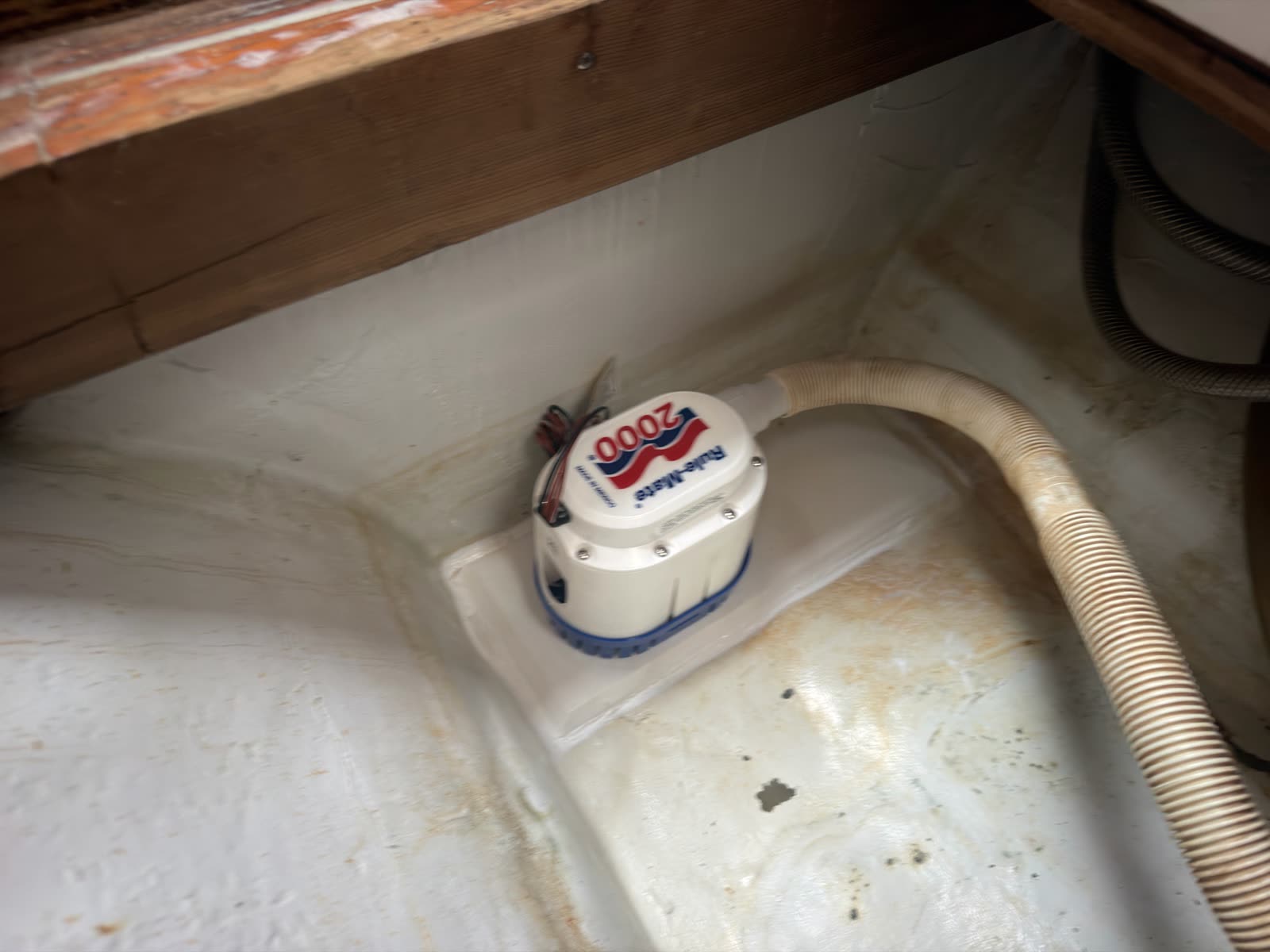
The bilge got new Rule-Mate automatic pumps in 2,000 GPH and 500 GPH sizes. A Whale Gulper pump went in on the plumbing side.
The air conditioning got a new raw-water pump and strainer. Up the mast, a Forespar LED spreader light now lights the deck. The interior was cleaned in August.
Why One Coordinator Mattered
Over the year, this boat saw a rigger, a diesel shop, our own electrical work and an electronics shop, with parts orders and follow-up visits in between. Each shop is good at its piece. Someone still has to keep the pieces in order.
That was our part. We estimated the electrical work, sourced the parts and lined up the partner shops. It's the same approach we took on the Boston Whaler 305 fuel tank replacement, where a hidden failure turned into a coordinated rebuild.
If you'd rather have someone keep an eye on your boat between projects, our vessel management program puts a USCG-certified captain aboard every month, with a written report after each visit.

$99
per month
Starting price for vessels under 25ft
Never Worry About Your Boat Again
Monthly inspections by USCG-certified captains keep your boat ready to go whenever you are.
Monthly Inspections
Full systems checks every month
Full Diagnostics
Engine, electrical, and navigation systems
Coordination
We schedule and manage all maintenance
Peace of Mind
Your boat is always ready when you are
Signs Your Boat's Wiring Is Due
A boat doesn't have to be 44 years old to need boat rewiring. Boaters should watch for these on any boat:
- Splices and taps everywhere — butt connectors in the bilge, or wires tapped off other wires, mean the system has grown without a plan.
- No labels — if nobody can say what a wire does, every repair starts with an hour of tracing.
- Green or black wire ends — corrosion inside the insulation raises resistance, and that means heat.
- Breakers that trip for no clear reason — or a panel where nobody remembers what half the breakers do.
- Household wire — solid-core wire from a hardware store can crack under vibration. Marine wire is stranded for a reason.
- No ELCI or GFCI protection — on any boat that plugs into shore power.
- New electronics on the wish list — a chartplotter, radar or autopilot is the best time to fix the wiring behind it.
If a few of these sound familiar, call us at (727) 607-1050. We'll look at the boat at the dock and tell you whether it needs repairs or a full rewire.
Frequently Asked Questions
The Bottom Line
This 1982 Cherubini 44 came out of the year with a new rig, a sorted Yanmar, wiring you can actually read, and electronics that work together. By early October, everything on the list was done. The lesson for any older boat: get the wiring right before you add to it. If your boat is heading toward a refit, get in touch or call us at (727) 607-1050, and we'll keep you on the water.
Related: Marine Electrical Systems | Boat Repair in Clearwater | Vessel Management