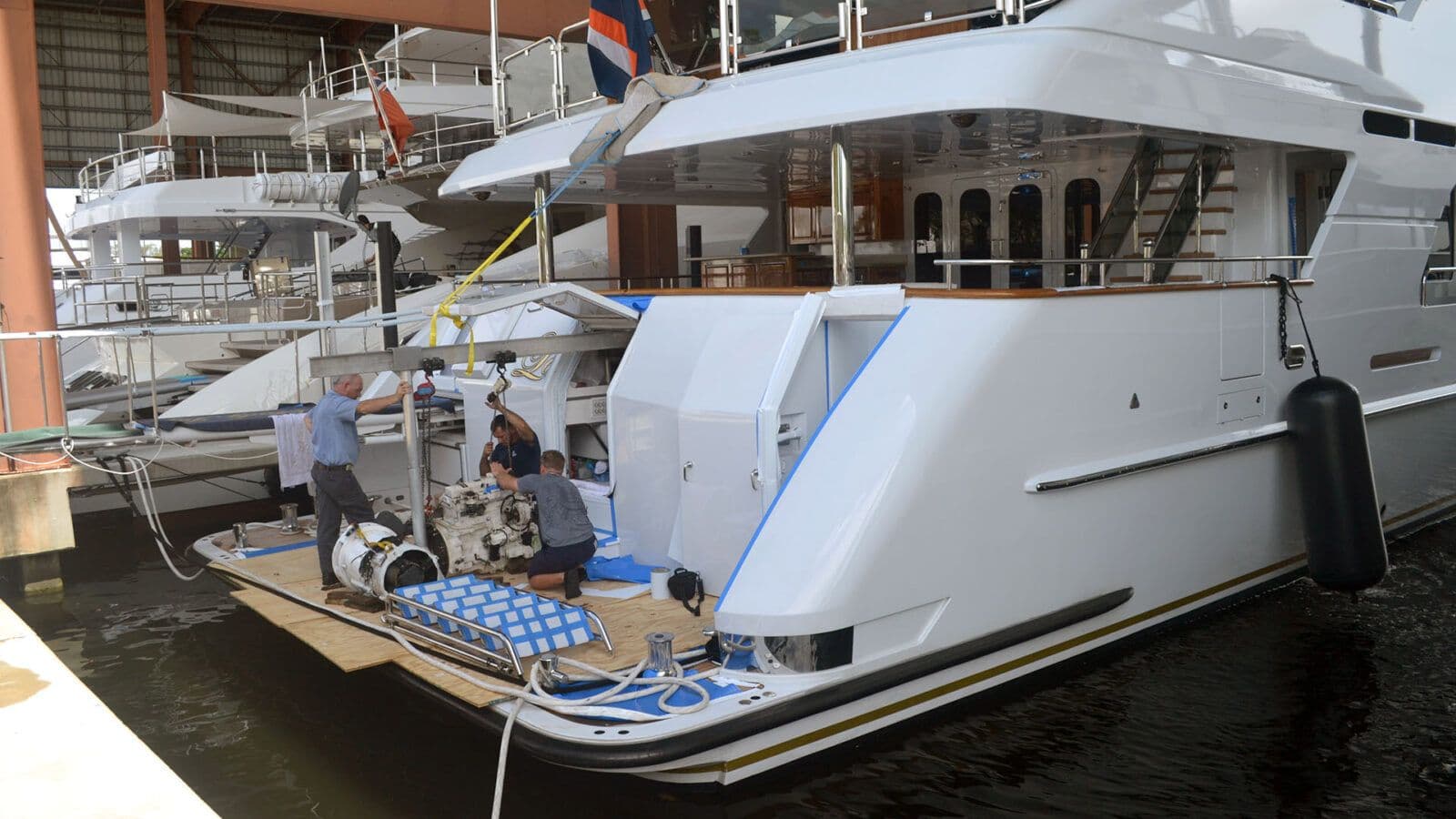
It's 97 degrees, you're tied up at your slip in St. Pete, and your Onan just quit. The air conditioning goes silent, the fridge starts warming, and that familiar hum you never think about is suddenly the only thing on your mind. If you've been boating in Tampa Bay long enough, you know this isn't a matter of if — it's when. And when it happens in the middle of a Florida summer, the clock is running.
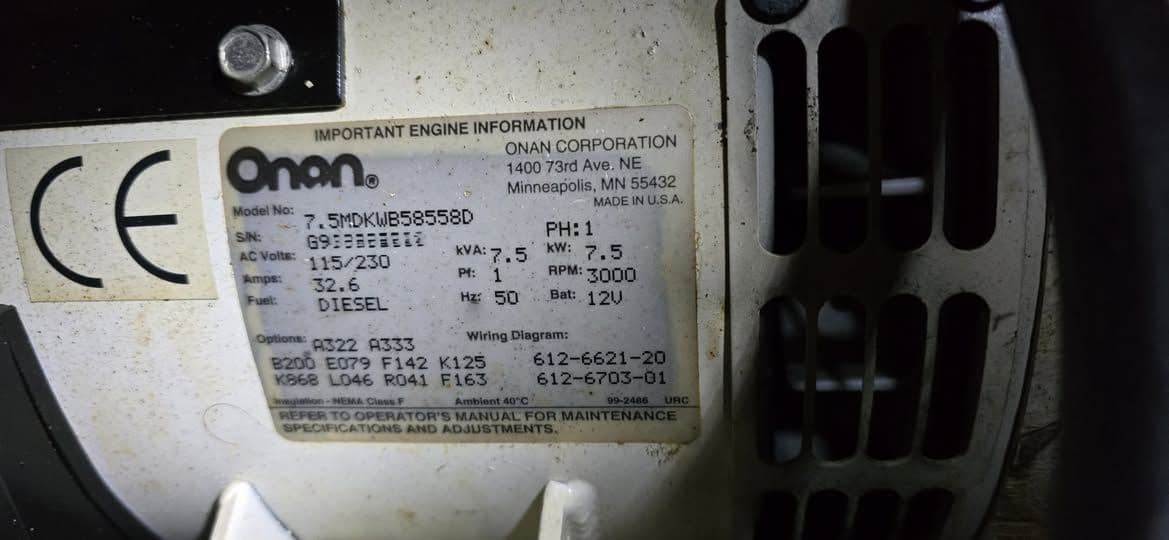
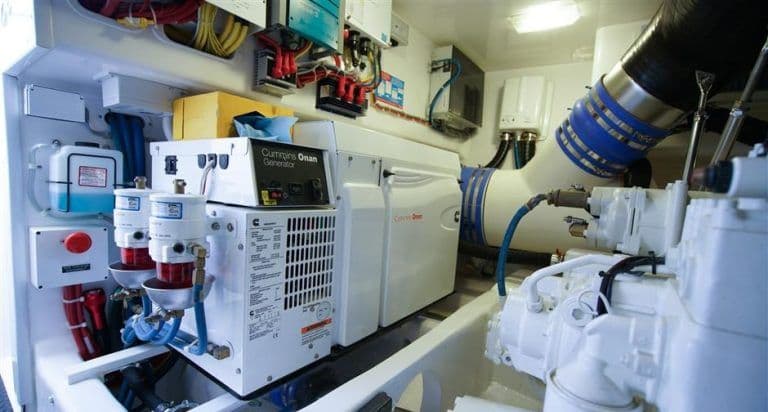
At Mobile Marina, Onan generator repair is one of the most common service calls our technicians handle across Tampa Bay — from Clearwater down to Tierra Verde. These generators are workhorses, but the combination of Florida's heat, humidity, and ethanol-blended fuel creates a set of failure conditions you won't find in an RV troubleshooting guide. Marine gensets live in engine compartments that regularly hit 130°-plus, breathe salt air, and run fuel that's been sitting in a tank through months of humidity swings. That's a different animal entirely.
This article breaks down the seven most common Onan failure modes we see on the water — from fuel delivery problems and overheating shutdowns to exhaust elbow failures and control board faults. We'll walk through what's actually going wrong, what each repair typically costs in this market, and when you can get it handled dockside versus when the boat needs to go to a yard. If your genset just died or it's been acting up, start here.
The 7 Most Common Onan Generator Failures We See on Tampa Bay Boats
If your Onan won't fire up, you're not alone — and you're probably dealing with one of the same handful of problems we see over and over again. We've ranked these by how often they show up across service calls and boater reports, and we've added the Tampa Bay angle because salt, heat, and humidity change the game down here.
Before we break each one down, here's the quick-reference version:
| Rank | Failure | Estimated Share of Reported Issues | Tampa Bay Factor |
|---|---|---|---|
| 1 | Starting circuit failures | 20–25% | Salt humidity accelerates solenoid and relay corrosion |
| 2 | Raw water cooling failures | 15–20% | Warm Gulf water = more biological debris in strainers |
| 3 | Fuel system fouling | 15–20% | Florida heat cuts E10 shelf life well under 30 days |
| 4 | Overheating / high-temp shutdown | 10–15% | Mineral scale builds faster in warm saltwater |
| 5 | False fault codes (especially low oil pressure) | 5–10% | Heat and vibration degrade sensor wiring |
| 6 | Exhaust mixing elbow failure | 5–10% | Salt corrosion on older MDKAU/MDKD units |
| 7 | Low battery / charging system | 5–10% | Corroded terminals mimic dead batteries |
Those percentages are based on cross-forum consensus from boater communities — your boat may vary, but the pattern is remarkably consistent. Now let's dig into each one.
1. Starting Circuit Failures
This is the big one. A dead relay, a corroded battery cable, or a failing starter solenoid accounts for roughly one in four Onan no-start calls. On MDKBL-series gensets especially, the start relay is the single most-cited point of failure — it just gives up after years of thermal cycling and salt exposure.
What to check yourself:
- Battery voltage at the genset terminals — not at the house bank, at the actual genset connections. Voltage drop across corroded cables can eat 2–3 volts before the current even reaches the starter.
- Start relay click — if you hear a click but no crank, the relay is passing signal but the solenoid or starter motor is the problem. No click at all? The relay itself or the safety circuit upstream is your culprit.
- Cable terminal condition — in Tampa Bay's humidity, green corrosion builds on battery terminals and ground connections faster than most boaters expect. Warm saltwater environments accelerate corrosion by roughly 40% compared to cooler coastal regions.
When to call a tech: If you've confirmed good battery voltage at the terminals and the relay still won't engage, the starter solenoid or the control board's safety interlock circuit needs hands-on diagnosis.
2. Raw Water Cooling Failures
The classic "eating impellers" problem. Your impeller shreds after a few runs, you replace it, and it shreds again. Most boaters blame the impeller. The actual cause is almost always upstream — a partially closed seacock or a clogged raw water strainer starving the pump.
What to check yourself:
- Seacock position — fully open means fully open. A seacock that's 80% open creates enough restriction to cavitate the impeller.
- Strainer basket — pull it and look. Barnacle fragments, grass, and debris from our warm Gulf waters accumulate fast, especially if you're docked anywhere from Clearwater to Tierra Verde.
- Pump weep hole — water dripping from the weep hole behind the impeller means the shaft seal has failed. That's a pump rebuild, not just an impeller swap.
When to call a tech: If you're going through impellers every few runs and the seacock and strainer check out fine, the pump housing itself may be scored or the bearings are worn. That's a shop job.
3. Fuel System Fouling
E10 ethanol-blend fuel has roughly a 30-day storage window before it starts forming varnish — and that's under ideal conditions. In Florida summer heat, that window shrinks. If your boat sits between trips (which describes a lot of boaters in St. Pete and Gulfport who cruise weekends only), varnish builds up in the carburetor on gas models or the fuel pump degrades on diesel units.
What to check yourself:
- Fuel age — if it's been more than a month since you ran the genset, stale fuel is the first suspect. This is one reason we recommend REC 90 ethanol-free fuel for generator tanks when possible.
- Fuel filter condition — a filter that looks dark or has visible sediment is doing its job, but it's also telling you there's contamination in the tank.
- Microbial growth (diesel units) — dark sludge or a rotten-egg smell at the fuel filter means bacteria or algae are growing in the tank. Warm, humid conditions in Tampa Bay make this more common than in northern waters.
When to call a tech: Carburetor varnish requires disassembly and ultrasonic cleaning. Microbial contamination means the tank needs to be polished. Both are beyond the dock-day toolkit for most boaters.
4. Overheating / High-Temp Shutdown
Your Onan starts fine, runs for 10–20 minutes, then shuts down on a high-temp alarm. The heat exchanger is the usual suspect. In warm Gulf saltwater, mineral scale and biological debris accumulate inside the exchanger tubes. Without regular freshwater flushing, a marine heat exchanger in our waters may need service well before the 7-year mark that boaters in cooler climates might expect.
What to check yourself:
- Raw water flow at the exhaust — is water coming out with the exhaust? If it's a trickle instead of a steady stream, you've got a flow restriction somewhere between the seacock and the exchanger.
- Impeller fragments — a previously shredded impeller can send rubber pieces downstream into the heat exchanger tubes, blocking flow even after you install a new impeller.
- Temp sensor — occasionally the sensor itself fails and triggers a false shutdown. But don't assume it's the sensor without verifying actual operating temperature first.
When to call a tech: Heat exchanger descaling or replacement, and chasing impeller fragments through the cooling circuit, requires pulling the exchanger. That's onan generator repair territory — not a quick dock fix.
5. False Fault Codes (Low Oil Pressure)
This one drives boaters crazy. The genset throws a two-flash fault code for low oil pressure, but the oil level checks out fine and there's no sign of an actual pressure problem. Across boater forums, roughly 80% of these low-oil-pressure faults on 7500W and 8000W units trace back to the oil pressure sensor itself — not actual low pressure.
What to check yourself:
- Oil level — verify it first, obviously. But if the dipstick reads full and clean, the sensor is your next stop.
- Sensor connector — vibration and heat can loosen the wiring connector on the oil pressure switch. Reseat it and see if the fault clears.
- Fault code reset — some Onan control boards latch fault codes even after the condition clears. Check your owner's manual for the reset procedure for your specific model.
When to call a tech: If reseating the connector doesn't fix it, the sensor itself is inexpensive to replace, but getting to it can be tight depending on your engine compartment. A technician can swap it and verify actual oil pressure with a mechanical gauge in the same visit.
6. Exhaust Mixing Elbow Failure
On older Onan models — particularly the MDKAU and MDKD series — the exhaust mixing elbow is the number-one major-repair item. Salt corrosion eats through the casting, bolts fracture, and cracks develop that can leak either combustion gas or raw water into places neither should go.
What to check yourself:
- Black smoke on startup — a puff of black smoke when the genset fires can indicate exhaust gas leaking past a cracked elbow before the engine reaches operating temp.
- Visual inspection — look for rust staining, white salt deposits around the elbow bolts, or any signs of water where it shouldn't be. If the elbow is original equipment on a unit that's 10+ years old, it's living on borrowed time.
- Water in the exhaust stream — raw water mixing with exhaust in the wrong proportion or location means the elbow's internal passages are compromised.
When to call a tech: This is always a professional job. A failed mixing elbow can allow raw water to back-feed into the engine through the exhaust ports, and that's a path to catastrophic damage. Don't wait on this one.
7. Low Battery / Charging System Issues
Onan generators typically won't even attempt to crank if battery voltage drops below about 11 volts. But here's the thing we see regularly — the battery itself is fine. Corroded cable terminals create a voltage drop between the battery and the genset, so the genset "sees" 10.5 volts even though the battery is sitting at 12.6 volts.
What to check yourself:
- Voltage at the battery vs. voltage at the genset — measure both. If there's more than a half-volt difference, you've got a cable or connection problem.
- Terminal corrosion — clean both ends of every cable in the starting circuit. A wire brush, dielectric grease, and 10 minutes of your time fix this more often than a new battery would.
- Battery age and condition — marine batteries in Florida heat degrade faster than the date-code suggests. Load-test the battery if it's more than 2–3 years old.
When to call a tech: If the battery and cables check out but the genset still won't crank, the issue may be in the charging circuit — a failed rectifier or voltage regulator on the genset's alternator. That takes electrical diagnosis beyond a multimeter at the terminals.
The common thread across all seven of these failures? Tampa Bay's combination of heat, salt air, and humidity accelerates every single one. A genset that might run trouble-free for years in a freshwater lake in Michigan will develop these problems faster when it's docked in warm saltwater from St. Pete to Tampa. Catching them early — ideally during a routine vessel inspection — is always cheaper and less frustrating than dealing with a dead generator when you're trying to run the A/C on a 95-degree afternoon.
Reading Onan Fault Codes: What Each Flash Actually Means
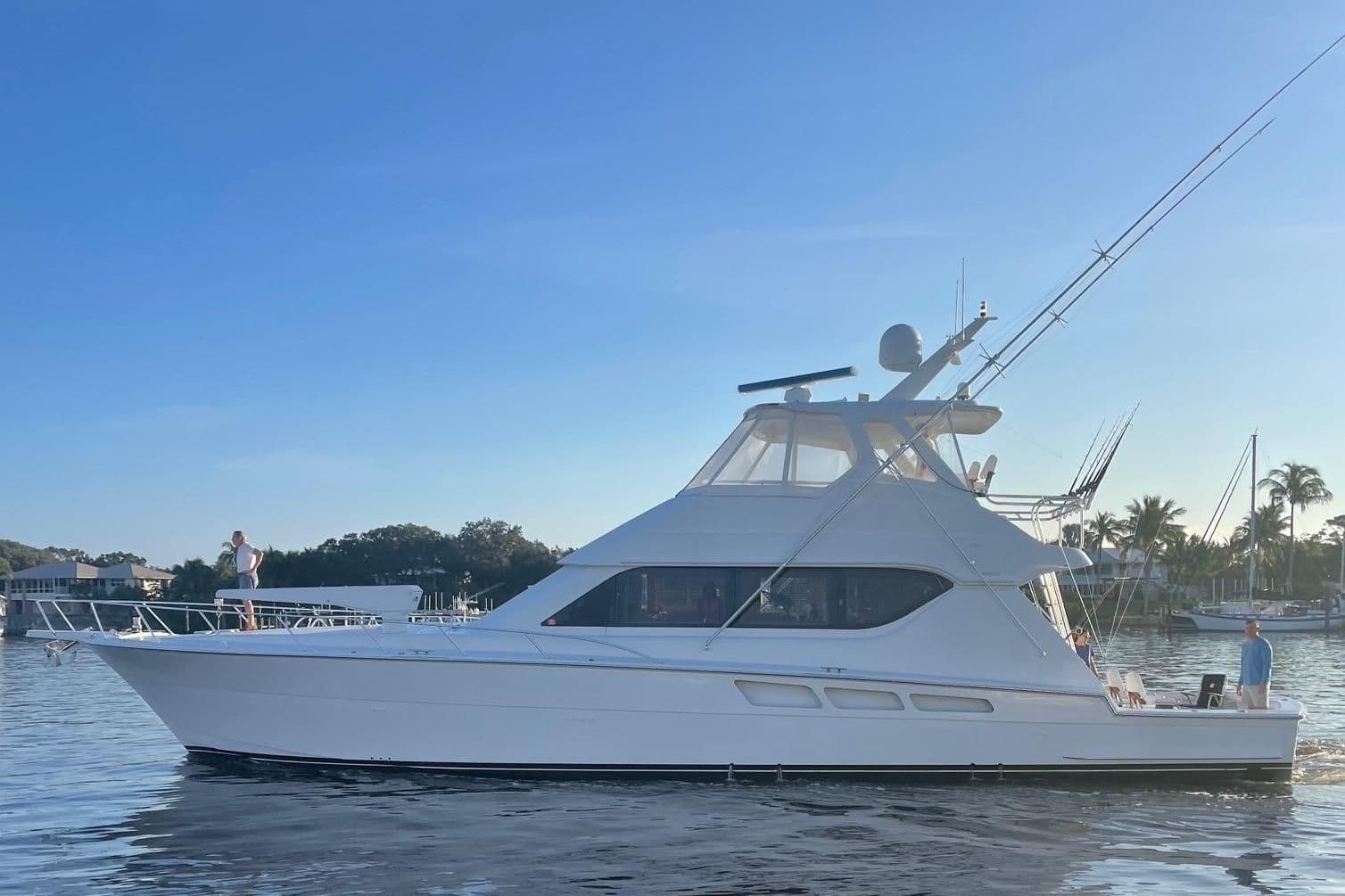
Your Onan generator talks to you through its fault light — it just doesn't use words. When something goes wrong, the unit flashes a specific pattern on the status LED, and each count means something different. Whether you're running a QD series or one of the older MDKBL/MDKBP units common on Tampa Bay boats from the mid-2000s through 2015, the flash codes follow a similar logic. Learning to read them saves you time, money, and a lot of guesswork.
Here's what the most common flash patterns actually mean and what to check before you call anyone:
1 flash — High engine temperature. Start with the raw water strainer. Pop it open and check for debris — sea grass, barnacle chunks, and plastic bags are the usual suspects around St. Pete and Clearwater marinas. If the strainer looks clean, confirm that cooling water is actually flowing out the exhaust. No water flow usually means a chewed-up impeller, which is a wear item that goes bad on a schedule whether you run the generator or not.
2 flashes — Low oil pressure. First, check your oil level on the sight glass with the boat sitting level at the dock. If the oil is fine and the code keeps coming back, the oil pressure sensor itself is the problem the vast majority of the time. We see this one constantly — boaters think they've got a serious engine issue, and it turns out to be a $40 sensor giving a false reading.
3 flashes — General service fault. This one's vague on purpose. Three flashes means the onboard computer detected something outside normal parameters, but you need a diagnostic tool plugged in to get the specific sub-code. This is where DIY troubleshooting ends and professional onan generator repair begins.
How to Reset an Onan Generator After a Fault
Once you've addressed the underlying issue — cleared the strainer, topped off the oil, whatever it was — the generator won't just restart on its own. You need to clear the fault code first. The reset procedure is straightforward: hold the prime switch in the STOP position for about 10 seconds, release it, then hit START. If the fault light comes back right away, the problem isn't actually fixed yet. Don't keep cycling the reset and hoping it sticks.
What the Exhaust Smoke Is Telling You
Beyond the flash codes, your exhaust tells its own story. White smoke on startup usually means unburnt fuel passing through — common after a failed start attempt or if water has gotten into the fuel system, which is something we deal with regularly in the humid conditions around Tampa Bay and Tierra Verde. Blue smoke means the engine is burning oil, pointing to worn rings or valve seals. Black smoke means incomplete combustion — the fuel-air mix is too rich, often from a dirty air filter or injector issues. If you're seeing persistent colored smoke after the generator warms up, that's not something a reset will fix.
When in doubt, give us a call at (727) 607-1050. Our team coordinates with certified marine generator technicians across the Tampa Bay area, and we can usually get someone to your slip faster than waiting for a shop appointment — especially during peak season when every Gulfport and Clearwater boater is firing up their genset for the first time in months.
Why Tampa Bay Eats Onan Generators Faster Than Any Other Market
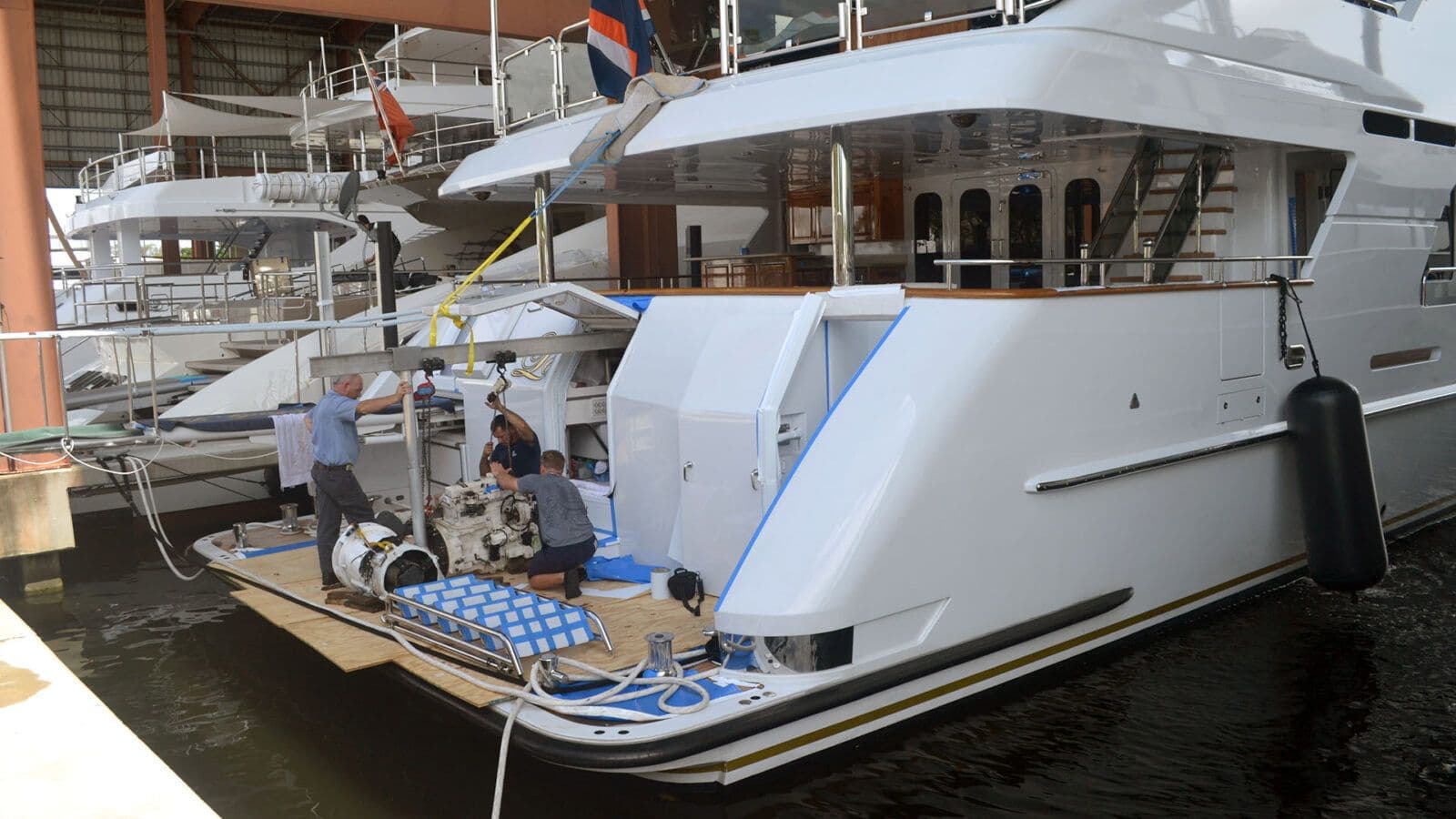
There's a reason we see more dead Onan generators on boats in Tampa Bay than techs up in the Chesapeake or Long Island Sound deal with in twice the time. Warm saltwater environments accelerate corrosion roughly 40% faster than cooler regions. Put plainly, the damage that takes five to seven years to show up on a generator in New England happens in three to four years here. That's not a guess — it's the reality we deal with every week on boats from St. Pete to Clearwater.
The Five Factors Working Against Your Genset
- Salt humidity on electrical components — Tampa Bay's persistent salt-laden air doesn't just corrode hull fittings. It eats starter solenoids and control boards from the inside out. Pop open a battery box on a boat that's been sitting at a Gulfport dock for a few months and you'll find white, blue, and green crusty deposits on the terminals and relay contacts. Those contacts pit and fail, and suddenly your generator won't crank even though the battery tests fine.
- Year-round run hours — Boaters up north winterize in October and don't touch the genset until May. Down here, we're running AC in February. Tampa Bay boaters log roughly 1.5 to 2 times the annual run hours of their northeast counterparts, which means they hit the 3,000-hour mark — where starters, voltage regulators, and fuel system components start showing their age — years earlier than the maintenance schedule assumes.
- Ethanol-blend fuel degradation — Standard E10 gasoline starts forming varnish and gum deposits in as little as 30 days. That varnish clogs carburetor passages and gums up injector tips, which is one of the most common reasons a genset cranks but won't fire. REC 90 ethanol-free fuel has an indefinitely longer stable shelf life, which is exactly why we deliver it — and why we wrote an entire article on fuel phase separation and how to prevent it.
- Brackish water and silt load — Tampa Bay carries significant suspended sediment, especially after heavy rain or tidal shifts. That silt accelerates scale buildup inside raw-water-cooled heat exchangers and chews through impellers faster than clean ocean water would. A clogged heat exchanger means your genset overheats and shuts down — usually right when you need AC the most.
- Extreme thermal cycling — Engine rooms on boats sitting in Tierra Verde or Tampa marinas can hit 130 degrees or higher on a summer afternoon, then cool down overnight. That constant expansion and contraction hardens rubber seals and degrades electrical insulation over time. Wiring that should last a decade gets brittle in five or six years.
The ethanol issue deserves extra attention because it's the one factor boaters can actually control. Switching to REC 90 ethanol-free fuel eliminates the varnish problem entirely and keeps your fuel system clean between runs. It won't fix salt corrosion or silt, but it removes one major failure mode from the equation — and for generators that sit idle between weekend trips, that makes a real difference.
When you stack all five of these factors together, it's no surprise that onan generator repair is practically a year-round job in this market. The environment here doesn't give your genset a break, and neither do the run hours. Knowing what's working against you is the first step toward staying ahead of it.
Expert Marine Maintenance
From routine service to major repairs, our team of expert marine technicians handles it all. Full project management so you can enjoy your boat.
Expert Technicians
Certified marine specialists
What Onan Generator Repair Actually Costs in Tampa Bay (2026)
Let's talk money — because "it depends" isn't helpful when you're staring at a dead genset and trying to figure out whether to fix it or start shopping for a replacement. We put together real cost ranges based on what repairs typically run in this market. These aren't made-up numbers — they're pulled from parts pricing, shop rates, and what boaters across the country are actually reporting they've paid.
Here's what you're looking at for the most common onan generator repair jobs:
| Repair | Typical Cost Range | Time Estimate | Dockside or Yard? |
|---|---|---|---|
| Diagnostic service call | $150–$350 flat | 30–60 min | Dockside |
| Annual service (oil, fuel filters, impeller) | $400–$800 | 2–4 hrs | Dockside |
| Impeller replacement only | $180–$450 | 1–2 hrs | Dockside |
| Raw water pump rebuild/replace | $450–$1,200 | 2–4 hrs | Dockside usually |
| Exhaust mixing elbow replacement | $700–$2,500 | 1–3 hrs | Depends on access |
| Carburetor clean/rebuild (gas models) | $300–$800 | 3–5 hrs | Dockside |
| Starter or solenoid replacement | $400–$900 | 1–2 hrs | Dockside |
| Voltage regulator replacement | $400–$1,000 | 1–2 hrs | Dockside |
| Top-end rebuild (head, valves, rings) | $2,500–$5,500 | 2–5 days | Typically yard |
| Stator rewind (major electrical) | $1,250–$3,450 + R&I labor | Ship-out | Yard for removal |
| Full replacement installed (6–13.5 kW diesel) | $15,000–$25,000+ | 2–5 days | Yard |
A few things worth calling out. That wide range on mixing elbows? It comes down to OEM versus aftermarket parts. OEM Onan elbows can run anywhere from $475 for common sizes up to $2,269 for larger-gen exhaust elbows — which is exactly why most techs will install a quality aftermarket elbow in the $190–$320 range that does the same job. No reason to pay five times more for a part that's going to corrode in Tampa Bay's salt air either way. The annual service range is similarly wide — a straightforward oil-and-filters job on a well-maintained unit at $95/hour shop rate can come in around $330 in labor alone, and that's before parts and the impeller.
When Replacement Makes More Sense Than Repair
Here's the honest math. If your genset is north of 3,000 hours and the tech is telling you it needs a bottom-end rebuild plus there's significant corrosion damage, you're looking at repair costs that start bumping into half the price of a new unit. The general rule of thumb is that somewhere around the 7,000-hour mark, most diesels have given you everything they've got. At that point, sinking $4,000–$5,000 into a top-end rebuild on a unit that might need another major repair in a year doesn't pencil out — especially when a new 6–13.5 kW diesel installed runs $15,000–$25,000. It's not a fun conversation, but it's better to have it before you're three repairs deep into a genset that's past its service life.
The good news is that most of the common failures — starters, impellers, carb rebuilds, even mixing elbows — are dockside repairs. Our team coordinates technicians who can handle the majority of these jobs right at your slip in St. Pete, Clearwater, or Tampa without hauling the boat anywhere. That saves you the yard fees, the bottom paint touch-up, and the week-plus of downtime that comes with pulling the boat. For the bigger jobs like top-end rebuilds or full replacements, we'll help you figure out the smartest path forward and coordinate the yard work so you're not chasing down three different shops in Gulfport or Tierra Verde trying to get quotes.
If your generator is acting up and you want a straight answer on what it'll cost to fix, give us a call at (727) 607-1050. We'll get a tech out to your dock for a diagnostic and give you real numbers — not a guess.
DIY vs. Call a Pro: Where the Honest Line Is
Look, we're not going to tell you every onan generator repair requires a certified tech. Some of this stuff you can absolutely handle yourself at the dock with basic tools and a Saturday afternoon. But there's a real line between "saved yourself a service call" and "turned a $200 fix into a $1,500 problem," and we'd rather be straight with you about where that line sits.
Here's how we break it down — three buckets based on what we actually see go right and wrong on boats across Tampa Bay.
You've got this (basic tools, YouTube, and a little patience):
- Oil and filter change — same as your car, just messier in an engine compartment
- Air filter swap — pull it, check it, replace it. Five minutes
- Spark arrestor cleaning — remove, spray with carb cleaner, reinstall
- Raw water strainer cleanout — especially important in Tampa Bay where grass and debris clog these constantly
- Visual anode inspection — if they're more than 50% eaten, swap them
- Resetting after a soft fault — if the genset threw a code and shut down, sometimes a reset is all it needs
Borderline — depends on your comfort level:
- Impeller replacement — this is where it gets tricky. The swap itself isn't hard if you're mechanically inclined. The problem is what happens when the old impeller has already shed pieces. Those rubber fragments travel downstream and lodge in the heat exchanger. We see this pattern constantly in the boating forums and on the docks — someone replaces the impeller, feels good about it, then two weeks later the genset overheats because nobody checked for debris upstream. That missed step can turn into a $1,500+ heat exchanger repair.
- Fuel filter replacement — straightforward mechanically, but you need to bleed the fuel system afterward and make sure you don't introduce air into the line
- Voltage regulator swap — if you can identify the correct part number and handle basic electrical connections, it's doable. If you're guessing, stop.
Call a pro — seriously:
- Exhaust mixing elbow work — the bolts on these corrode badly in our saltwater environment, and snapping one off means you're now extracting a broken bolt from a casting. That's not a DIY job.
- Heat exchanger service — requires proper disassembly, cleaning or replacement of internal tubes, and pressure testing
- Control board diagnosis — these are expensive components, and swapping parts blindly gets costly fast
- Valve adjustments and carb rebuilds — spec-dependent work that requires specific measurements
- Electrical diagnosis and persistent fault codes — if the genset keeps throwing the same code after a reset, something deeper is going on
Here's a quick look at what the "I'll just try it myself" approach can cost when it goes sideways:
| Repair Scenario | DIY Cost | Cost If DIY Goes Wrong | What Happens |
|---|---|---|---|
| Impeller replacement | ~$30–50 for the kit | $1,500+ | Missed rubber fragments clog the heat exchanger |
| Exhaust mixing elbow | Gasket set ~$20–40 | Broken bolt extraction + new elbow | Corroded bolts snap, now you need a machine shop |
| Fuel filter swap | ~$15–30 for the filter | Air-locked fuel system + tow | Air in the fuel line means the genset won't fire |
The honest version is this: if you're comfortable wrenching on engines and you take your time, the DIY bucket will save you real money. But the borderline and pro categories exist because the failure modes aren't obvious until you're already in trouble. Boaters in St. Pete and Clearwater deal with salt air corrosion that accelerates every one of these failure points, which is why we see so many "easy" jobs turn into expensive ones.
If you're not sure which bucket your situation falls into, give us a call at (727) 607-1050. Our team coordinates with experienced marine techs who work on these units every week — we'd rather point you in the right direction upfront than help you clean up a bigger mess later.
How Dockside Onan Repair Actually Works
Here's what most boaters don't realize — a huge percentage of Onan generator failures can be diagnosed and fixed right at your slip. No hauling the boat, no waiting three weeks at the yard. Our technicians show up with diagnostic equipment, a stocked parts inventory, and enough experience to tell you within the first hour whether we can fix it on the water or whether it needs to come out.
When we roll up to your dock, the truck carries the parts that fail most often: impellers, oil and fuel filters, Racor elements, mixing elbows, starter motors, solenoids, spark plugs for gas models, voltage regulators, anodes, and basic electrical components like battery cables and terminals. That covers the majority of what actually goes wrong with these generators in a saltwater environment like Tampa Bay.
What We Fix at Your Slip
- Impeller replacement — the single most common failure on raw-water-cooled Onans in our area. Rubber breaks down fast in warm Gulf water
- Oil and filter changes — routine, but skipping them is how minor issues turn into major ones
- Fuel filter service (primary + secondary / Racor) — critical after sitting idle, especially if ethanol fuel was left in the system
- Spark plug replacement — gas models only, but a frequent culprit behind hard starts and misfires
- Starter motor or solenoid swap — when you hear a click and nothing else, this is usually the fix
- Voltage regulator replacement — if your AC output is fluctuating or your genset shuts down under load
- Basic carburetor service — cleaning, jet swaps on gas units that have been sitting with old fuel
- Fault code diagnosis and reset — pulling codes tells us exactly where to look instead of guessing
- Raw water strainer and seacock service — restricted flow is a silent killer for cooling systems
- Anode replacement — when they're accessible, we swap them dockside to prevent galvanic corrosion damage
- Battery and cable service — corroded terminals and weak batteries cause more no-start calls than actual engine problems
What Needs to Go to the Yard
Not everything can happen on the water, and we'll be straight with you about that. These jobs typically require pulling the genset or hauling the boat:
- Major top-end rebuilds — engine removal is usually required, and that means a yard with a crane
- Heat exchanger replacement — in tight engine rooms, there's just not enough access to do it right at the dock
- Stator or rotor rewind — this is a ship-out repair to an electrical shop
- Hull-penetration plumbing work — anything below the waterline needs the boat hauled
- Full genset replacement — swapping an entire unit is a yard job, period
When something falls into that second category, we write up a detailed quote so you know exactly what's involved before committing to yard time.
Where We Work
We run scheduled routes across Tampa Bay, covering the areas where most liveaboards and weekend boaters keep their vessels:
| Area | Coverage |
|---|---|
| St. Pete | Municipal Marina, marinas along the downtown waterfront and surrounding areas |
| Clearwater | Clearwater Beach marinas and facilities along the Intracoastal |
| Tampa | Westshore, Davis Islands, and Harbour Island marina facilities |
| Tierra Verde | Marinas near Fort De Soto and the pinch point to the Gulf |
| Gulfport | Gulfport Municipal Marina and surrounding docks |
If your Onan won't fire and you're docked anywhere in these areas, give us a call at (727) 607-1050. We'll get a technician to your slip, figure out what's going on, and handle the onan generator repair right there at the dock — or give you an honest answer about what needs yard work. No runaround, no guessing.
Preventing the Next Breakdown: The Tampa Bay Onan Maintenance Schedule
Factory maintenance schedules are written for "average" conditions — and there's nothing average about running a generator in Tampa Bay. Between the warm saltwater, brackish silt, and the kind of humidity that corrodes a terminal overnight, factory intervals just aren't aggressive enough down here. If you follow the book written for a boat in the Great Lakes, you're going to be calling for onan generator repair a lot sooner than you'd like.
Here's what we recommend based on factory specs adjusted for our local conditions:
| Service | Factory Interval | Tampa Bay Recommendation | Why It's Shorter Here |
|---|---|---|---|
| Oil + filter change | 100–150 hours | Every 100 hours or sooner | Warm, sustained operation breaks oil down faster |
| Raw water impeller | 500 hours | Annually, regardless of hours | Brackish silt accelerates wear well before 500 hrs |
| Zinc anodes | Per hours / visual | Inspect every 3 months, replace every 6 | Warm saltwater depletes zincs roughly 40% faster |
| Heat exchanger inspection | Every 2 years | Annually | Scale and biological growth accumulate fast in our water temps |
| Raw water strainer | Per operation | Check and clean after every run | Silt and debris loads in Tampa Bay are no joke |
| Fuel filter (primary) | Annually | Every 6 months, or at first sign of trouble | Ethanol fuel degradation and microbial growth in diesel are year-round issues here |
| Electrical connections | 200–300 hours | Every 50–100 hours | Corrosion moves roughly 40% faster in warm salt environments |
| Raw water circuit flush | Seasonal | After every trip — mandatory at end of season | Prevents scale buildup and internal corrosion |
| Exercise under load | Not specified | Monthly minimum, 1 hour under real load | Prevents fuel varnish, keeps electrical systems healthy |
The "Exercise" Line Is the One Most People Skip
That last row on the table deserves its own callout. A generator that sits unused for weeks — especially with ethanol-blended fuel in the tank — is practically begging for trouble. Fuel starts degrading within about 30 days, varnish coats the carb internals, and you end up with a unit that cranks but won't fire. We see this constantly with boaters from St. Pete to Clearwater who only run their gensets during summer weekends.
Once a month, fire it up and run it under real load for at least an hour. Not just idle — actual load. Run the AC, the water heater, whatever you've got. An unloaded generator wet-stacks, builds carbon, and never reaches the operating temperature it needs to burn fuel cleanly. That monthly exercise is the cheapest maintenance you'll ever do.
One more thing worth flagging: the intervals above assume your boat lives in the water. If you're on a lift in Gulfport or Tierra Verde, corrosion factors are a little more forgiving on the zincs and raw water side — but the fuel degradation and electrical corrosion timelines stay the same. Salt air doesn't care whether your hull is wet or dry. If you're not sure what schedule makes sense for your setup, give us a call at (727) 607-1050 and our team can walk through what actually needs attention based on how you use your boat.
Get Fuel Delivered to Your Slip
Download the Mobile Marina app to schedule dockside fuel delivery, manage your vessel, and access all our services from your phone.

Frequently Asked Questions
The Bottom Line
Most Onan generator failures come down to the same handful of culprits — fuel delivery issues, a weak battery, or maintenance that's fallen behind. The good news is that nearly all of them are fixable dockside without pulling the genset or hauling your boat anywhere.
Our team works with boaters across St. Petersburg, Clearwater, Tampa, and throughout Tampa Bay to keep generators running right. Whether it's a fuel system flush, a raw water impeller swap, or tracking down an intermittent electrical gremlin, we coordinate the right technician to handle it at your slip so you're not stuck waiting on a yard schedule.
If your Onan won't fire up or it's been a while since the last service, give us a call at (727) 607-1050 or visit mobilemarina.co to set up a free maintenance estimate. We'd rather help you catch a small problem now than deal with a big one later.
Related: Marine Generator Service | On-Water Repairs | Engine Diagnostics | Service Areas | Fuel Phase Separation Explained