Schedule Boat Detailing & Wash
Dockside service across St. Pete, Clearwater, Tampa, Tierra Verde, and Gulfport.
Run a hand down a hull that's spent two summers uncovered in a St. Pete, Clearwater or Tampa slip and it comes away with a white, chalky film. That's oxidized gelcoat, and once boaters notice it, they usually ask us whether to keep waxing or pay more up front for a boat ceramic coating.
Wax is cheap and easy, and it's gone within a couple of months in this sun. Ceramic lasts years, costs more, and only pays off on gelcoat that's been corrected first. We sell both sides of this (full details, and ceramic through our preferred coating partner), so the right answer for us is whichever one fits your boat.
Boat Ceramic Coating vs. Wax at a Glance
| Wax or sealant | Ceramic coating | |
|---|---|---|
| What it is | A soft layer that sits on the gelcoat and wears away | A hard, glass-like layer that bonds to the surface as it cures |
| How long it lasts here | Wax: about 6–10 weeks in summer. Sealant: roughly 10–12 weeks here, though some sources claim up to six months | One to three years above the waterline, with upkeep |
| Prep needed | A clean, dry surface; compound first if it's oxidized | Full correction: wash, decontaminate, compound and polish |
| Who applies it | You, or a detailer during a full detail | A trained installer, with the boat out of the water and dry |
| Upfront cost | Low if you wax it yourself; our full detail ends with a protective coat and starts at $46 a foot | Quoted per boat; more than a full detail, since the correction is part of the job |
| Upkeep | Reapply on a schedule | Gentle washes, a booster spray every few months, no wax on top |
The wax number is what we see on boats around Tampa Bay, not a lab result. The ceramic range comes from the coating side: Ceramic Pro, one of the big marine brands, rates its coating at one to three years above the waterline, as long as it's maintained and not worn by heavy abrasion. Your installer's brand may differ, so ask what theirs is rated for.
How Long Wax and Ceramic Last in Florida Sun
Heat, UV and salt eat wax. A coat that would last a season up north is usually gone in six to 10 weeks on a boat sitting in an uncovered slip from June to September, and you'll see it when water stops beading on the hull. If you wax it yourself, that's why our Florida waxing guide puts you on an eight-week cycle.
It's also why our detailing menu has no wash-and-wax visit: by the next appointment, most of what you paid for would already be gone. Our full detail finishes the gelcoat with a protective coat after the compound and polish, so it's sealed when we hand the boat back, and regular washes carry it between details.
Southern Boating puts ceramic at one to three years against two to three months for wax, and says a polymer sealant can stretch to about six months. Where your boat lives decides where it lands in those ranges. A boat on a covered lift behind a house in Shore Acres or on Clearwater's canals gets far less sun than one tied up in an open marina slip, and anything under a canopy holds its finish longer, coated or not. An uncovered boat in full sun is the hardest case for wax and the best case for a coating.
Below the waterline is a separate story. A topside coating does nothing there, and some brands sell below-waterline products as a "fouling release" that makes growth easier to wipe off. None of them replaces antifouling paint on a boat kept in the water. Our bottom paint guide covers that side.
What a Boat Ceramic Coating Costs
Ours is quoted per boat after we look at the gelcoat, and so is just about everyone else's. Two quotes for the same boat can land far apart because they cover different amounts of work.
Gelcoat condition moves the price more than anything. Light oxidation comes out with a polishing pass. Chalky, faded gelcoat needs a heavier compound first, and on a tired boat that correction labor is often most of the bill.
Size matters next: a hardtop, a tower or a tall-sided cruiser all add surface. So does scope, since coating just the decks and hardtop is a smaller job than adding the hull sides, and a decks-only job leaves the hull on a wax or sealant cycle.
Coatings also vary. Some go on in one layer, some are built up in several, and some use newer graphene-infused formulas. Finally, check whether the quote includes a care kit, booster spray or a yearly inspection.
Be wary of any quote for a ceramic job that's done in an afternoon. Correction and cure time don't fit in a few hours, so a fast job usually means you paid ceramic prices to lock in swirl marks and oxidation.
What a Coating Can Save on a 26-Foot Boat
To judge a ceramic quote, set it against what you already spend keeping the gelcoat protected. Here's our starting full-detail rate of $46 a foot on a 26-foot boat, which is $1,196 a visit:
| Full details | Over one year | Over two years |
|---|---|---|
| One a year | $1,196 | $2,392 |
| Two a year | $2,392 | $4,784 |
Treat those numbers as a ceiling, not savings. A full detail also covers the interior, non-skid, glass and metal, and a coated boat still needs that work, so you'd still book a detail now and then. What the coating replaces is the compounding and sealing on the gelcoat, plus how often you need it.
So a ceramic quote that comes in well under the two-a-year line for the life of the coating, after adding a booster spray and any required inspection, is worth a look. One that lands near it isn't, especially on a boat that sits in full sun and wears the coating toward the short end of its range. Washes are left out because a coated boat needs them either way.
If you wax the boat yourself, the math is different. Wax is cheap, so a coating mostly buys back your Saturdays. That's a fair trade for some boaters and a bad one for anyone who likes the work.
Expert Marine Maintenance
From routine service to major repairs, our team of expert marine technicians handles it all. Full project management so you can enjoy your boat.
Expert Technicians
Certified marine specialists
Prep Is Most of a Ceramic Job
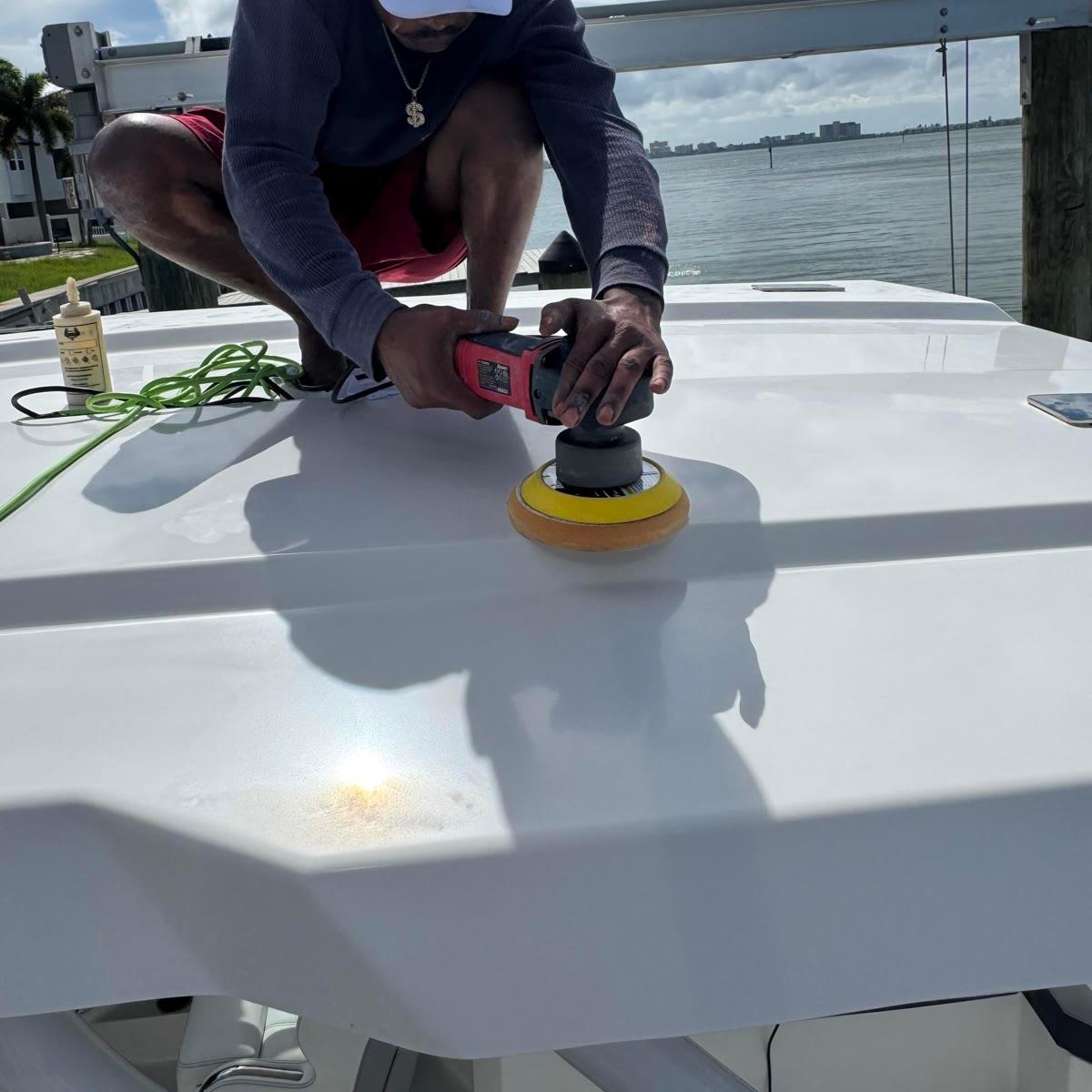
A coating bonds to whatever surface it's given. Oxidation and swirl marks left under it stay there, protected, for as long as the coating lasts. That's why most of a proper ceramic job is correction: the same compounding and polishing that go into a full detail, only more thorough.
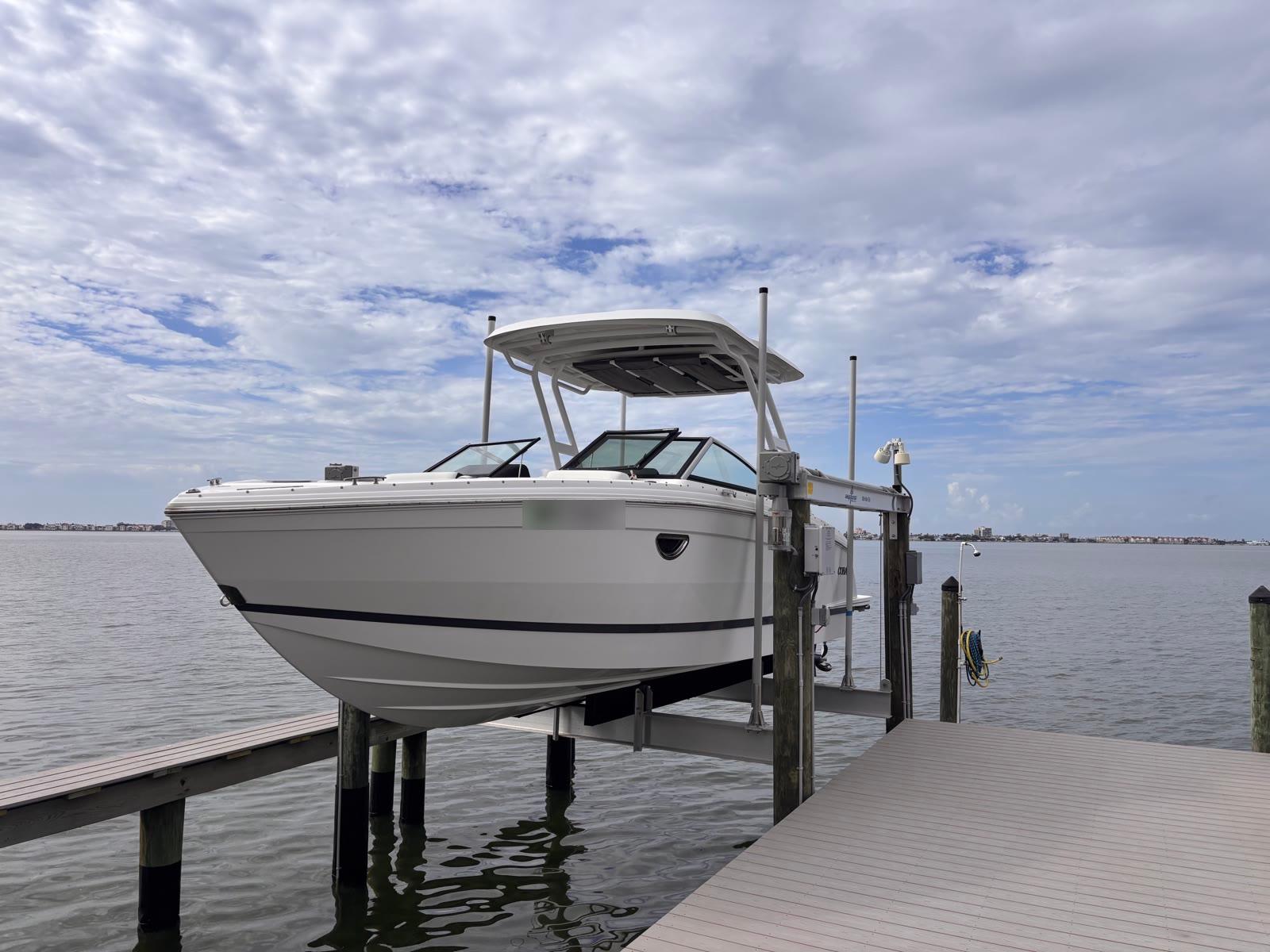
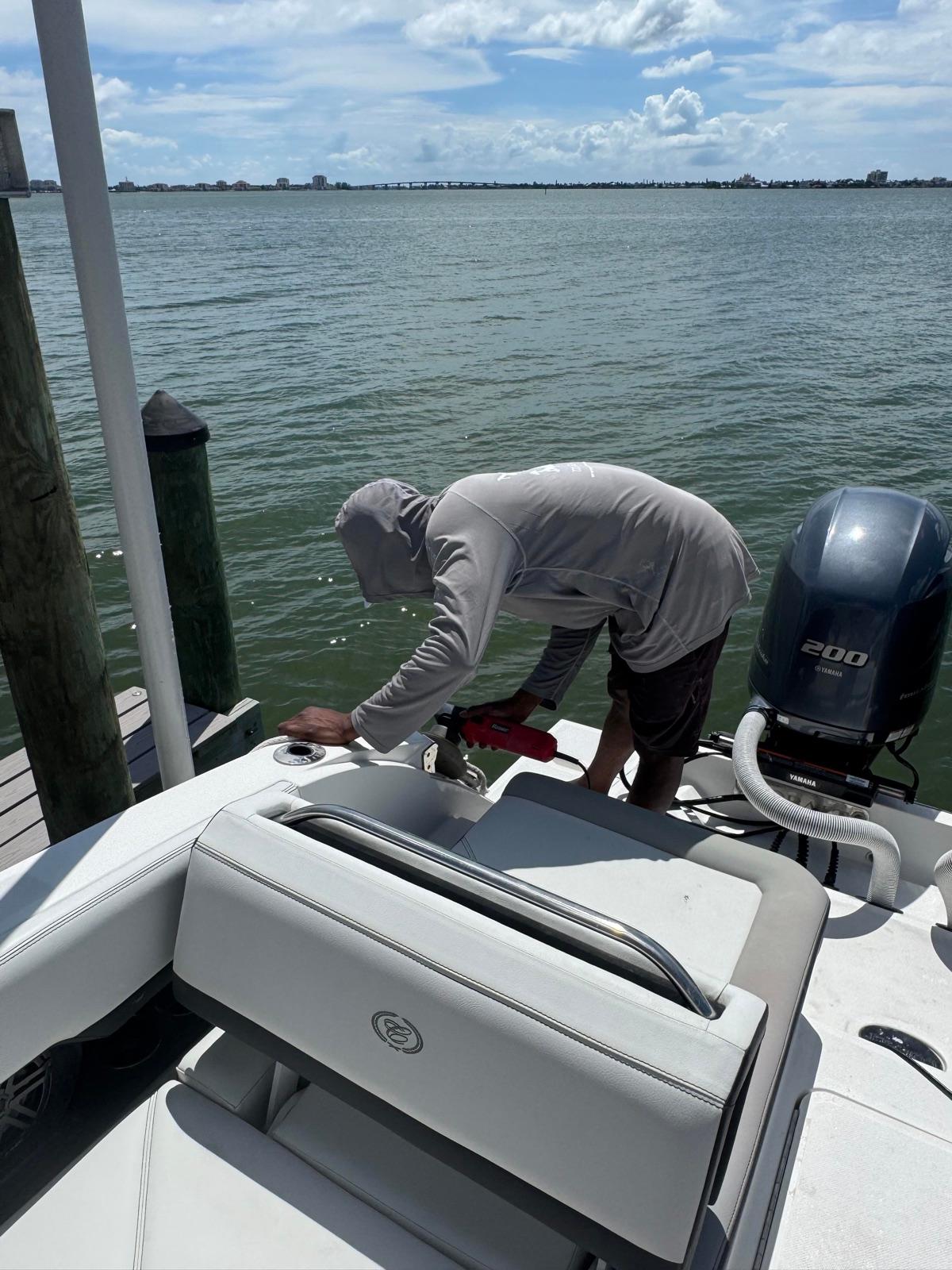
The 27-foot Cobalt in these photos is a good example of where that work starts. It sits on a lift in Gulfport and hadn't been detailed in about a year and a half, so it needed a full compound to take the oxidation off before anything could go on top. Here it got a protective finish as part of a full detail, but a ceramic job would have started the same way.
The usual order is a deep wash, decontamination to lift embedded grime and stains, one or more compound and polish passes, then a wipe-down so the coating bonds to bare gelcoat. The coating goes on last, and it needs cure time before the boat gets wet.
Every compound pass also takes a thin layer of gelcoat with it. A boat that's been hard-compounded every year for a decade may not have much left to correct, and a good installer checks that before quoting a coating at all.
Caring for a Boat After Ceramic
A coated boat is easier to wash, not wash-free. Salt and soot still land on it; they just rinse off with less scrubbing. The written care instructions our coating partner includes with its quotes boil down to five rules:
- Rinse after each use. Fresh water, every time.
- Wash with a pH-neutral marine soap only.
- Use soft mitts and microfiber towels. No abrasive brushes and no harsh chemicals.
- Don't wax over the coating.
- Apply a booster spray every three to six months.
Ask about the warranty too. Ceramic Pro's marine warranty, for example, requires a yearly inspection by a certified installer. If yours has conditions like that, count their cost when you compare quotes.
When Wax Still Makes More Sense
Ceramic isn't the right call for every boat. If the gelcoat is thin, crazed or chalky after years of compounding, a coating won't bring it back, and we'd rather tell you that before you spend the money. If you're selling soon, a full detail with compound, polish and a protective coat makes the boat show well for a lot less.
Small trailer boats are another case. Wax is cheap, a 20-footer is a manageable afternoon, and plenty of boaters enjoy doing it. Boats that live under a roof or a canopy also see less sun, so wax lasts longer and the case for a coating gets weaker.
Ceramic pays off when three things line up: the gelcoat is new or freshly corrected, the boat sits uncovered in the sun, and you'd rather wash than wax. A 30-footer on an open lift in Clearwater is about as good a candidate as it gets.
How Ceramic Works With Mobile Marina
We arrange boat ceramic coating for boaters across Tampa Bay, including St. Pete, Clearwater, Tampa, Gulfport and Tierra Verde, through our preferred coating partner. We set up the job, coordinate with the installer and stay your single point of contact until the boat is back in its slip, and we answer for the work. The partner's installer does the application itself, because the boat has to be out of the water and kept dry for the two days or more the coating needs to cure.
Every coating is quoted per boat after we see the gelcoat, since its condition sets most of the price. Plenty of boats turn out to need a full boat detail at your slip rather than a coating.
A coated boat still needs regular washes. Our monthly wash plan runs $4–$6 a foot at your slip, lift or dock. If the boat sits for months while you're up north, pair it with vessel management, so our captains check on it between washes. Call (727) 607-1050 to have us look at the gelcoat.
Get Fuel Delivered to Your Slip
Download the Mobile Marina app to schedule dockside fuel delivery, manage your vessel, and access all our services from your phone.

Frequently Asked Questions
The Bottom Line
Wax is the cheap, short-lived option, and in Florida sun it fades in a couple of months. A boat ceramic coating costs more up front and lasts years, but only on gelcoat that's been corrected first and only if you keep it washed. Run the numbers on your own boat before deciding. Then call (727) 607-1050 or send us a message, and we'll look at the gelcoat and handle whichever one it needs, so you spend your weekends on the water instead of behind a buffer.
Related: Boat Detailing | Boat Detailing Cost Guide | Vessel Management