Ethanol-free fuel isn't just a preference for serious boaters — it's a necessity for anyone who wants their marine engine to last. If you've ever dealt with a clogged fuel filter, an engine that won't start after sitting for a few weeks, or a mechanic handing you a four-figure repair bill and saying "ethanol damage," you already know this on a gut level. But the science behind why ethanol and marine engines don't mix goes deeper than most boaters realize.
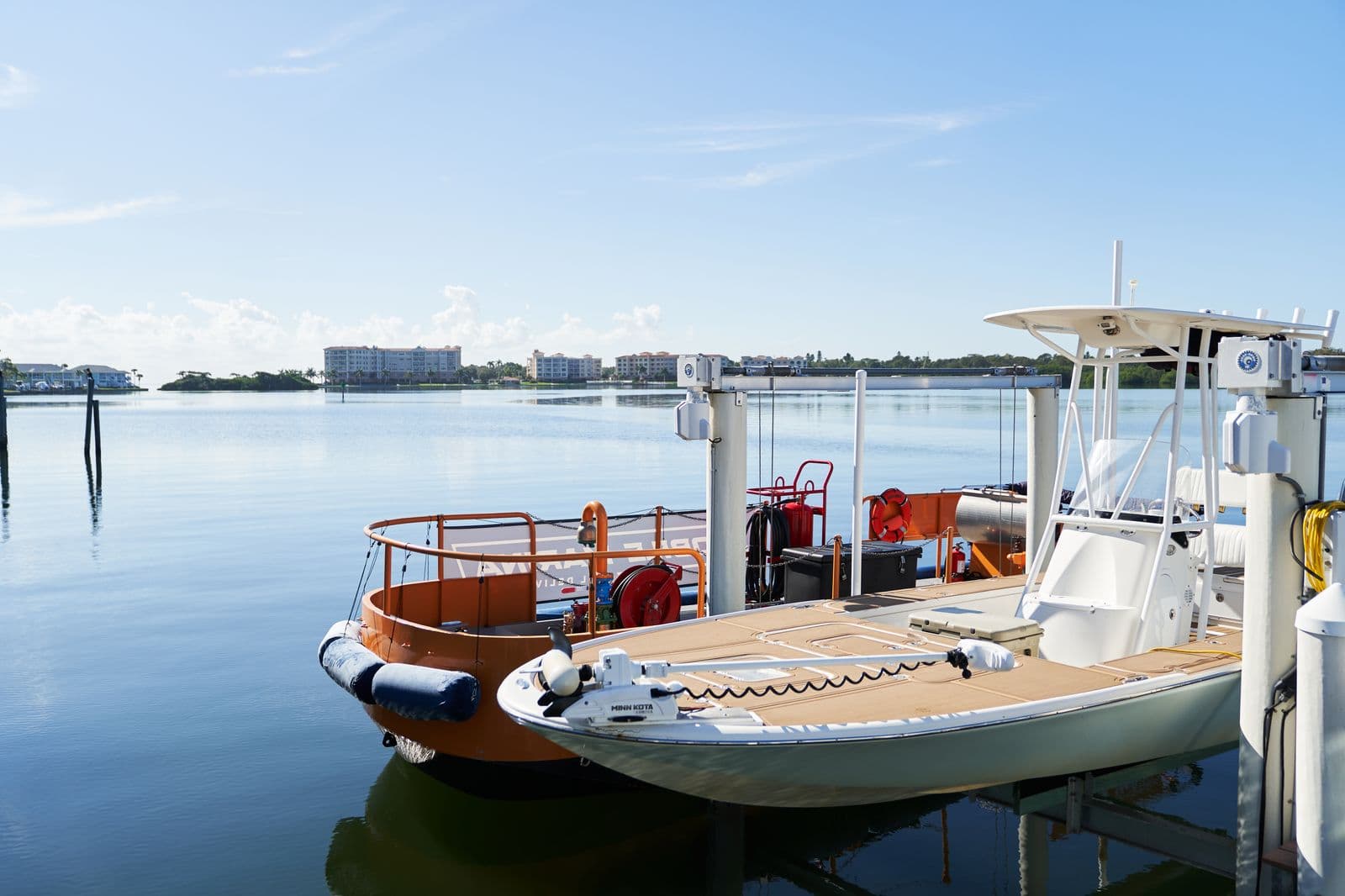
We're Mobile Marina, Tampa Bay's only water-based dockside fuel delivery service, and we see the consequences of ethanol damage every single week on the water. This article isn't about what ethanol-free fuel is — if you want that breakdown, check out our What Is REC 90 Fuel? guide. This is about why it matters, specifically for marine engines, and especially in a place like Tampa Bay.
Let's get into the science, the real costs, and what it means for your boat.
The Chemistry: What Ethanol Actually Does Inside Your Engine
To understand why ethanol-free fuel matters, you need to understand what's happening at the molecular level when ethanol sits in a marine fuel system. This isn't theoretical — it's basic chemistry playing out in your fuel tank every day.
Ethanol (C2H5OH) is an alcohol, and alcohols are hygroscopic — they actively attract and bond with water molecules from the surrounding air. Your boat's fuel tank isn't sealed airtight. It vents to the atmosphere to equalize pressure as fuel is consumed and temperatures change. Every time humid air enters that vent, the ethanol in your fuel pulls moisture out of it and holds it in suspension.
At first, this seems like the ethanol is doing you a favor by absorbing small amounts of water. But there's a hard ceiling. E10 fuel (the standard gas station blend with up to 10% ethanol) can only suspend roughly 6,000-7,000 parts per million of water at 70 degrees. Once it hits saturation — which takes only about 0.5% water content by volume — the whole system collapses.
That collapse is called phase separation, and it's the single most destructive fuel event that can happen to your boat. The ethanol-water mixture drops out of the gasoline and sinks to the bottom of your tank in a distinct corrosive layer. Your fuel pickup sits at the bottom. You do the math.
With ethanol-free fuel, none of this happens. No ethanol means no hygroscopic attraction, no water suspension, no saturation point, and no phase separation. The chemistry simply doesn't allow it.
Why Marine Engines Are Uniquely Vulnerable
Your car runs E10 without drama. So why can't your boat? It's a fair question, and the answer comes down to three critical differences between how cars and boats use fuel.
Boats sit idle far more than cars. The average recreational boat gets used 40-50 days per year. That means fuel is sitting in the tank for the other 310+ days. A car burns through its tank every week or two — ethanol barely has time to cause trouble. A boat? Ethanol has weeks or months to absorb water, degrade, and phase-separate.
Marine fuel systems are exposed to extreme humidity. Your car's fuel system is essentially sealed in a metal box on dry pavement. Your boat's fuel tank vents directly to salt-laden, moisture-saturated marine air. In Tampa Bay, where average humidity runs 73-80% year-round, your fuel tank is constantly breathing in some of the most moisture-rich air in the country. That accelerates every ethanol problem dramatically.
Marine engines run harder. Boat engines operate at or near wide-open throttle for extended periods — something car engines almost never do. This higher stress means any fuel quality issue is amplified. Contaminated fuel that might cause a slight stumble in your car can cause a complete engine failure on the water, which isn't just inconvenient — it's potentially dangerous.
There's also the regulatory angle. E15 fuel (15% ethanol) is flat-out illegal for marine engines under EPA regulations, yet it's appearing at more and more Florida gas stations with minimal labeling. The risks of ethanol at 10% are bad enough. At 15%, the damage accelerates exponentially, and using it can void your engine warranty.
Tampa Bay: Where Ethanol Problems Are Amplified
Not all boating environments are created equal when it comes to ethanol damage. Tampa Bay is one of the worst places in the country to run ethanol-blended fuel in a boat, and it comes down to local conditions that compound every risk.
Year-round high humidity. Tampa Bay's subtropical climate means humidity rarely drops below 60%, and summer months regularly see 85-90% humidity. That vented fuel tank is soaking up moisture around the clock, twelve months a year. Boaters in dry climates like Arizona or Colorado have a much larger margin for error. We don't.
Salt air accelerates corrosion. Ethanol-attracted water in your fuel system is bad. Ethanol-attracted water mixed with salt particles from marine air is catastrophically bad. Salt water is orders of magnitude more corrosive than fresh water. When phase-separated fuel sends a salt-contaminated ethanol-water mix through your fuel injectors and pump, the corrosion rate is far higher than it would be inland.
Warm fuel degrades faster. Ethanol-blended fuel degrades through oxidation, and heat is the catalyst. Tampa Bay's year-round warm temperatures — fuel tanks in direct sunlight can easily reach 100 degrees or more — accelerate degradation significantly. In cooler climates, E10 might last 90 days before serious degradation. In Tampa Bay conditions, you can see phase separation in as little as 30 days.
Boats sit between uses. Tampa Bay's boating season effectively runs year-round, which sounds like an advantage. But in practice, most boaters still use their boats sporadically — a weekend here, a fishing trip there. Between those uses, ethanol is doing its thing. Unlike northern boaters who winterize and drain their fuel systems for months, Tampa Bay boaters tend to leave fuel sitting in tanks indefinitely, which is the exact scenario where ethanol causes the most damage.
These local conditions are why we hear from boaters every week who've learned the ethanol lesson the hard way. It's also why 91% of boaters nationwide — and an even higher percentage in humid coastal areas — actively seek out ethanol-free fuel, according to BoatUS survey data.
Current Fuel Prices
REC 90
Ethanol-free
$6.40
/gallon
Diesel
Marine diesel
$6.63
/gallon
Price Match Guarantee — we'll match any marina or truck.
REC 90 has no minimum. Diesel deliveries have a 50-gallon minimum.
*Subject to change.
The Real Cost Analysis: Ethanol-Free vs. E10
The most common argument for running E10 is price. Ethanol-free fuel costs more per gallon — that's true. But per-gallon price is only one line item in the total cost equation, and it's not even the biggest one.
Let's break this down with real numbers for a typical Tampa Bay boater running a 250hp outboard on a center console.
Fuel Economy Loss
Ethanol contains roughly 30% less energy per unit volume than pure gasoline. In an E10 blend, that means a bit less energy in every gallon than ethanol-free fuel. The U.S. Department of Energy notes the effect depends on how much ethanol is in the blend, so we won't promise a fixed mileage gain.
Say you burn 15 gallons per hour at cruise. With E10, you're effectively wasting 0.5-0.75 gallons per hour to ethanol's lower energy content. Over a 6-hour fishing day, that's 3-4.5 gallons of fuel you paid for but got zero propulsion from. Over a full season of 40 trips, you're looking at 120-180 gallons of wasted fuel. At current prices, that's $700-$1,000 per season in fuel you literally burned for nothing.
Repair and Maintenance Costs
Here's where the math really tips. More than 50% of boaters report needing engine or fuel system repairs directly caused by ethanol damage. These aren't cheap fixes:
- Fuel system cleaning and repair — $500-$3,000+ depending on severity
- Phase separation remediation (tank draining, disposal, cleaning) — $300-$800
- Fuel filter replacements — $50-$150 each, and E10 boats need them 2-3x more often
- Fuel injector replacement — $200-$600 per injector
- Fuel pump failure — $300-$800 for parts and labor
A single serious ethanol-related repair can cost more than the per-gallon price difference over several full seasons of boating. The math isn't close.
The Per-Gallon Myth
When you factor in the fuel economy penalty, increased maintenance frequency, and the statistical probability of at least one ethanol-related repair, E10 is the more expensive fuel for marine use. The per-gallon price tag at the pump is a mirage. Total cost of ownership favors ethanol-free fuel by a wide margin.
At Mobile Marina, REC 90 is $6.40/gallon and Diesel is $6.63/gallon, with a price match guarantee against any marina or fuel truck in the area. When you're already saving money by avoiding ethanol damage and fuel waste, competitive pricing on ethanol-free fuel is the cherry on top.
What Ethanol Does to Your Fuel System Over Time
The damage ethanol causes isn't always immediate. Some of it is slow, cumulative, and invisible until something fails. Understanding the progression helps you appreciate why prevention matters more than treatment.
Stage 1: Absorption and Mild Degradation (Weeks 1-4)
Fresh E10 starts absorbing moisture immediately. In Tampa Bay's humidity, water content climbs steadily from day one. Fuel begins to oxidize. You probably won't notice anything yet — the engine runs, starts fine, performs normally. But inside the tank and fuel lines, the clock is ticking.
Stage 2: Material Degradation (Months 1-6)
Ethanol is a solvent. Over time, it attacks rubber fuel hoses, carburetor gaskets, O-rings, and — in older boats — fiberglass fuel tanks. The dissolved material enters the fuel stream as a gummy, brown residue. Fuel filters catch some of it, but not all. You might notice slightly rougher idle or the occasional filter change.
Stage 3: Phase Separation and System Failure (Variable)
If fuel sits long enough in humid conditions, phase separation occurs. The ethanol-water layer at the bottom of your tank is corrosive, non-combustible, and destructive to everything it contacts. Engine symptoms become obvious: hard starting, stalling, loss of power, or complete failure to run.
At this point, no additive can fix it. The contaminated fuel must be drained, the tank cleaned, filters replaced, and depending on how far the damage spread, fuel system components repaired or replaced.
With ethanol-free fuel, stages 2 and 3 simply don't happen. You skip the entire degradation cycle. That's not an upgrade — it's insurance.
Beyond Your Engine: Environmental and Safety Considerations
The ethanol question isn't just about engine longevity and your wallet. There are broader reasons why running ethanol-free fuel in your boat matters.
Fuel spill risk. Ethanol-degraded fuel lines and fittings are a leading cause of fuel leaks on boats. A single fuel leak on the water can result in environmental contamination, Coast Guard fines, and — in the worst case — a fire or explosion risk. Ethanol-free fuel dramatically reduces the chance of fuel system failures that lead to leaks.
Emissions aren't what you'd expect. While ethanol is promoted as a cleaner fuel for cars with modern emissions systems, marine engines (especially two-strokes and older four-strokes) don't have the same catalytic converter technology. The incomplete combustion caused by ethanol's lower energy content can actually increase certain emissions from marine engines, not decrease them.
Reliability on the water is a safety issue. An engine that stalls in your driveway is annoying. An engine that stalls in a shipping channel, in a busy inlet, or offshore in building seas is dangerous. Every ethanol-related engine failure on the water is a potential safety incident. Running ethanol-free fuel removes one of the most common causes of unexpected engine failure.
How to Protect Your Boat Starting Today
If you've been running E10 or aren't sure what fuel is in your tank right now, here's what we recommend.
Switch to ethanol-free fuel now. You don't need to drain your tank first. Simply start filling with REC 90 on your next fuel-up. The ethanol-free fuel will gradually dilute whatever E10 remains. After two or three fill-ups, your system will be running clean.
Check your fuel filters. If you've been running E10, inspect or replace your fuel filter/water separator before switching. There may be accumulated residue that the cleaner fuel will loosen and flush through the system. Better to catch it in the filter than in your injectors.
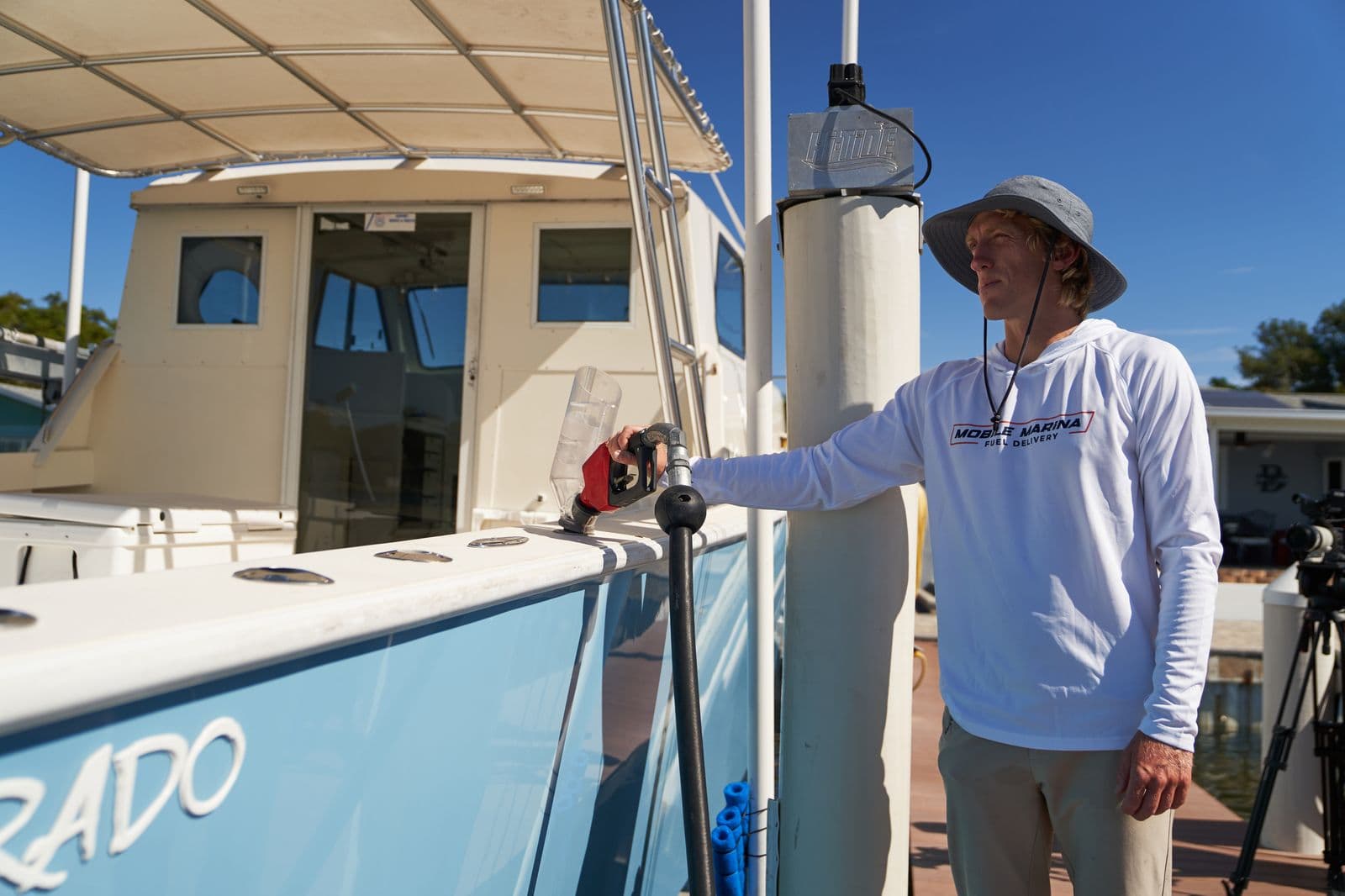
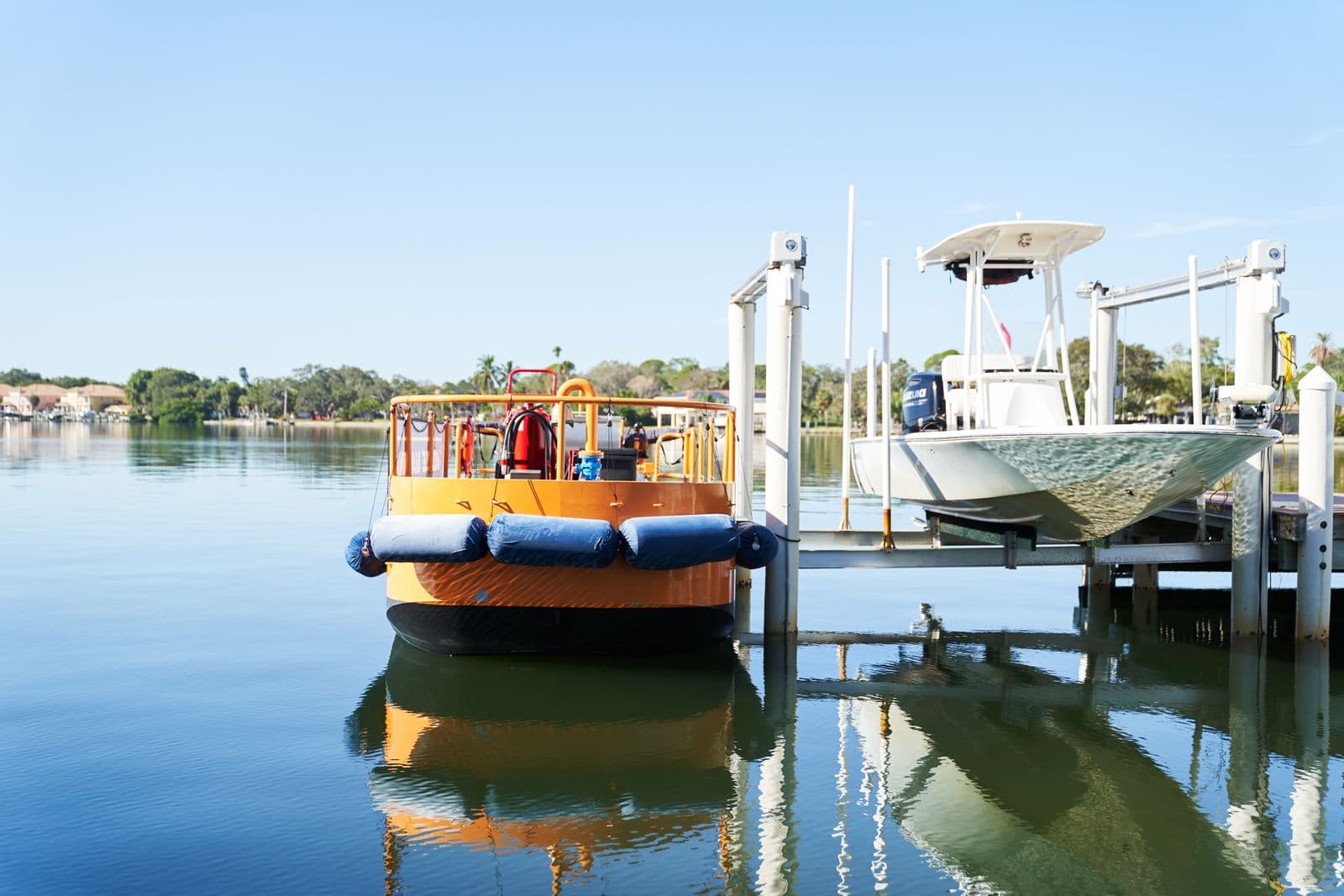
Set up a fueling schedule. The biggest risk factor for ethanol damage is fuel sitting in the tank between uses. Running a regular fueling schedule means you always have fresh fuel on board, even if you haven't used the boat recently. Mobile Marina's scheduled dockside delivery makes this easy — we come to your slip on a set route throughout Tampa Bay, topping off your tanks so your boat is always ready.
Consider a vessel management program. Our vessel management team checks fuel quality as part of every scheduled visit. Catching water contamination or degradation early — before it becomes a repair bill — is one of the highest-value things you can do for your boat. Learn more about our full maintenance services.
Know your fuel source. Whether you're fueling at a station, a marina dock, or through delivery, make sure you're getting actual ethanol-free fuel. If it's not explicitly labeled REC 90 or ethanol-free, assume it contains ethanol. And always double-check that you're not accidentally pumping E15, which is illegal for marine use.
Get Fuel Delivered to Your Slip
Download the Mobile Marina app to schedule dockside fuel delivery, manage your vessel, and access all our services from your phone.

Frequently Asked Questions
The Bottom Line
Ethanol-free fuel isn't a premium upsell or a nice-to-have — it's the single most impactful decision you can make to protect your marine engine, your fuel system, and your wallet. The chemistry is clear, the cost analysis favors it, and Tampa Bay's conditions make it even more critical. When 91% of boaters prefer ethanol-free and over 50% have already paid for ethanol damage repairs, the evidence speaks for itself.
Our goal is to keep you on the water — not in a repair shop dealing with fuel system problems that were completely avoidable. Download the Mobile Marina app or call us at (727) 761-1173 to set up scheduled dockside fuel delivery. Your boat will thank you.
Related: What Is REC 90 Fuel? | Boat Maintenance Services | Vessel Management | Service Areas