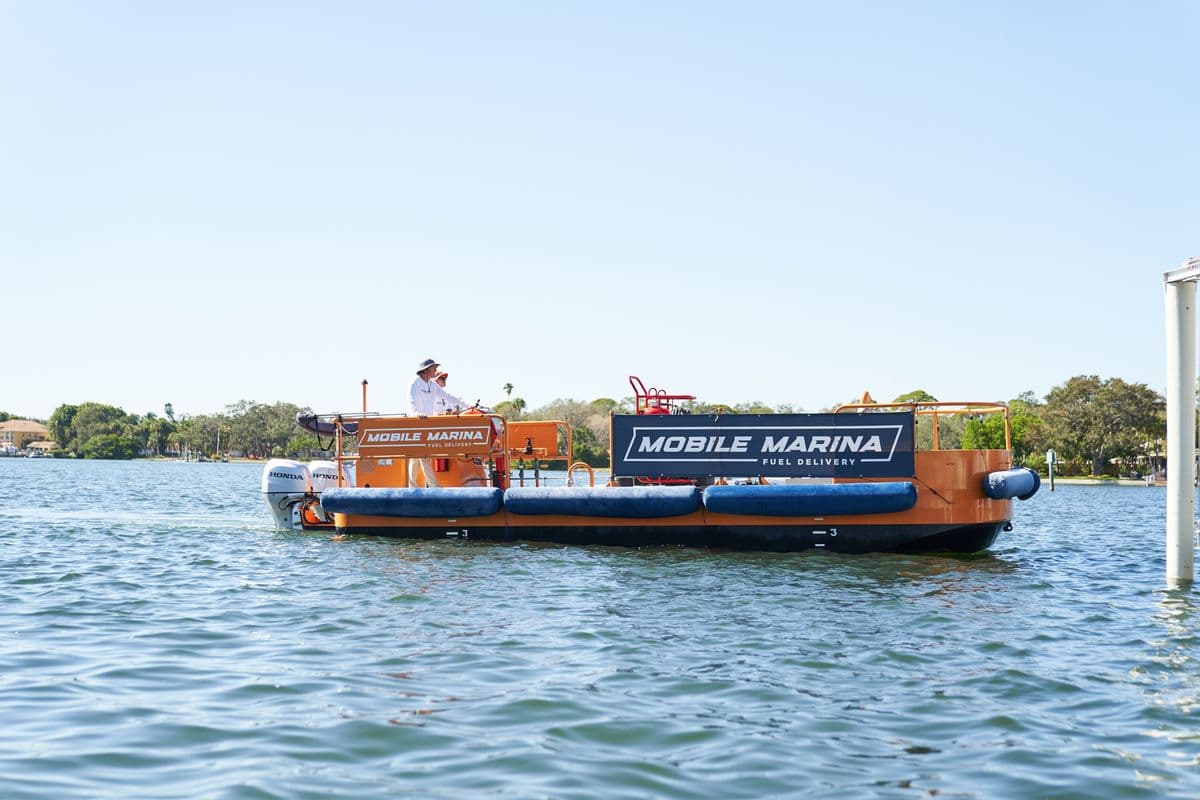
If you are searching for REC 90 fuel or REC 90 gas near me, there are three practical options in Tampa Bay: a marina fuel dock, a street station that clearly labels an ethanol-free product, or delivery directly to your boat. The right choice depends on where the boat is kept and whether you want to spend part of your boating day making a fuel run.
Mobile Marina delivers REC 90 fuel by water to eligible marina slips, private docks, and boat lifts across Tampa Bay. The boat stays where it is, the captain works from the vessel and access information saved in your account, and the tank can be filled before you arrive.
This guide explains what REC 90 is, how it differs from ethanol-blended gasoline, where to find it around Tampa Bay, and when dockside delivery is the easier option.
The Quick Answer: Where Can I Get REC 90 Gas Near Me?
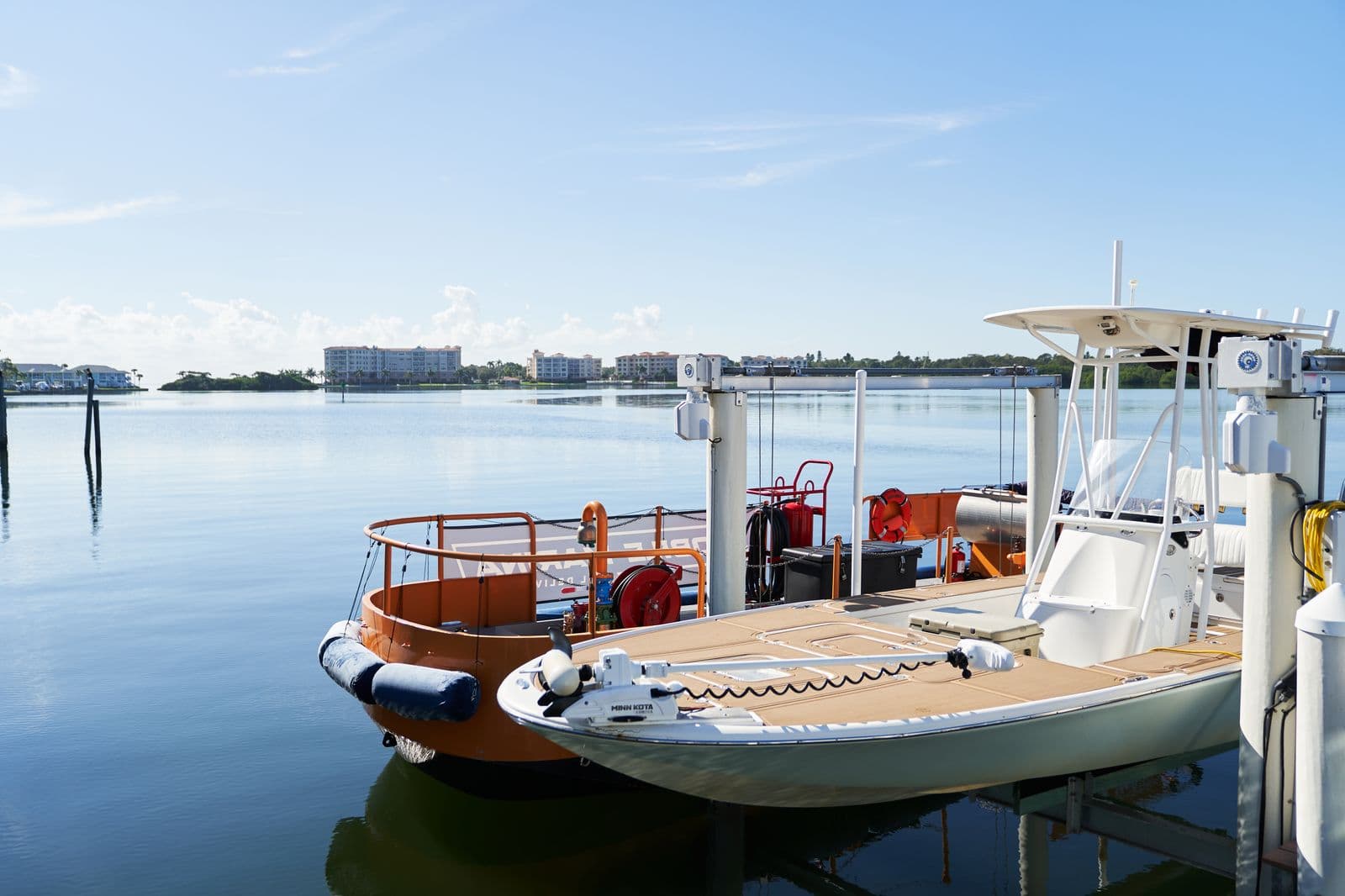
For a boat that stays in the water, the simplest option is usually to bring the fuel to the boat. Mobile Marina runs scheduled REC 90 fuel delivery routes throughout St. Petersburg, Clearwater, Tampa, Gulfport, Tierra Verde, Treasure Island, Madeira Beach, and nearby eligible waterfront communities.
Complete your Mobile Marina account with the boat, dock, tank, fill, marina-permission, and access information our captains need. Once that information is saved, you do not have to explain the same boat and slip details every time you order.
If you prefer to visit a pump, use our Tampa Bay ethanol-free marina directory. It identifies marina listings whose source specifically describes the gasoline as ethanol-free or REC 90 and flags listings that still need verification. For current delivered and marina prices, use the live Tampa Bay boat fuel price comparison.
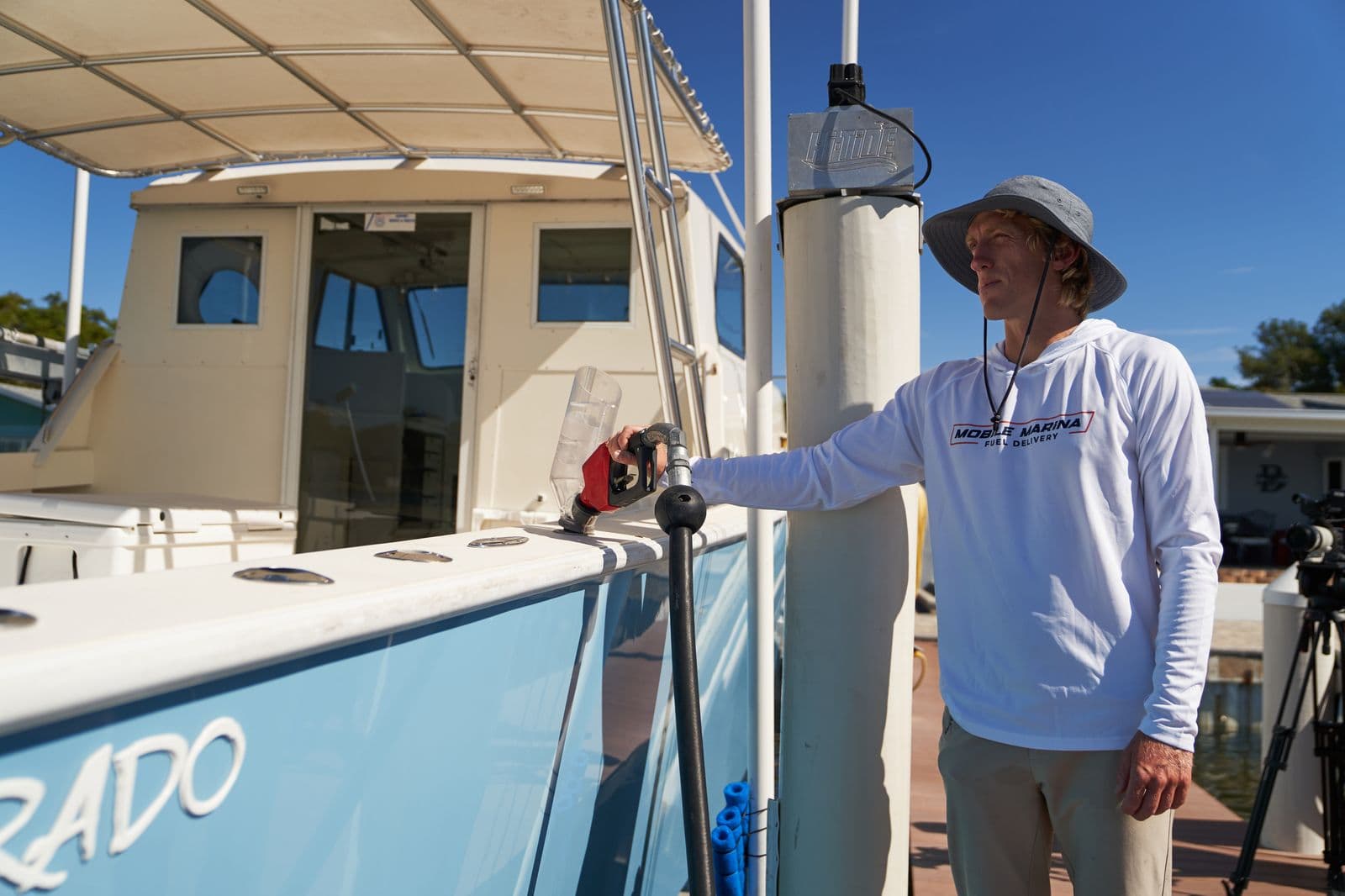
Whether you use delivery, a marina, or a street station, read the pump label and confirm that the fuel grade matches the specification in your engine owner's manual. A nearby gasoline pump is not automatically an ethanol-free pump.
What Is REC 90 Fuel, Exactly?
REC 90 is the common name for 90-octane recreational gasoline containing no ethanol. You may also see it labeled E0, ethanol-free gas, non-ethanol gas, or recreational fuel. The pump label is the final authority because a general “gasoline” listing does not establish ethanol content or octane.
Most conventional gasoline contains some ethanol, commonly E10. E15 contains 15% ethanol, and the U.S. Environmental Protection Agency states that E15 cannot be used in boats.
REC 90 removes ethanol from the gasoline blend, but that does not make every 90-octane product correct for every engine. Follow the fuel specification in the owner's manual and any instructions printed on the engine or vessel. Never select fuel based only on the boat's size, style, or what another owner uses.
Current Fuel Prices
REC 90
Ethanol-free
$6.40
/gallon
Diesel
Marine diesel
$6.63
/gallon
Price Match Guarantee — we'll match any marina or truck.
REC 90 has no minimum. Diesel deliveries have a 50-gallon minimum.
*Subject to change.
Why Boat Owners Choose Ethanol-Free Fuel
The strongest reason to use REC 90 fuel is simple: it meets the engine manufacturer's fuel requirements while avoiding the storage and water-management concerns associated with ethanol in a marine fuel system.
Yamaha explains that boats operate in wet environments, use vented fuel systems, and often hold fuel longer than cars. Those conditions make water control and fuel-system maintenance especially important. Yamaha also warns that ethanol can affect some fiberglass fuel tanks and says E15 or E85 should not be used in any Yamaha outboard.
Ethanol also contains less energy per gallon than gasoline. The U.S. Department of Energy notes that the effect depends on the percentage of ethanol in the blend, so we do not promise a fixed fuel-economy improvement from switching to REC 90.
REC 90 can be a sensible choice when the engine permits it, especially for boats that sit between outings. It is not a substitute for keeping the deck fill, vent, filters, hoses, separators, and tank in good condition.
How Ethanol Changes Marine Fuel Decisions
Ethanol-blended gasoline is not automatically wrong for every boat. Many marine engines permit E10, while others have more specific requirements. The owner's manual is the controlling source for the acceptable octane and ethanol percentage.
The marine environment does make fuel management different from a car. Yamaha notes that boats typically have vented fuel systems, operate in wet conditions, and may hold fuel for longer periods. Moisture, changing temperatures, and long gaps between outings make it important to keep the deck fill, vent, filters, separators, hoses, and tank in good condition.
Material compatibility also matters. Yamaha specifically notes that ethanol can affect polyester resin used in some fiberglass fuel tanks. Older boats or modified fuel systems deserve extra care, and an uncertain system should be inspected before changing fuel types.
E15 Is Not Boat Fuel
E15 is gasoline containing 15% ethanol. EPA's current guidance lists boats among the nonroad vehicles that cannot use E15. Yamaha separately states that E15 and E85 should not be run in its outboards. Check the pump every time, especially at street stations that dispense several blends from the same island.
What Phase Separation Means
Ethanol can hold some water within a gasoline blend. If enough water enters the fuel, the ethanol-water portion can separate from the gasoline. Because a boat's fuel pickup is near the bottom of the tank, contaminated fuel can lead to hard starting, rough running, power loss, stalling, corrosion, and filter problems.
Ethanol-free REC 90 does not experience ethanol-water phase separation because it contains no ethanol. That does not make the tank immune to water, sediment, oxidation, or other contamination. Good caps, seals, vents, filters, and routine inspection still matter.
If the fuel appears separated or the engine develops symptoms after sitting, do not keep running it to “burn through” the problem. Stop and have the fuel system evaluated. The correct remedy depends on the amount of contamination and the engine manufacturer's procedure.
REC 90 vs. E10
| Factor | REC 90 (Ethanol-Free) | E10 (Up to 10% Ethanol) |
|---|---|---|
| Ethanol content | 0% | Up to 10% |
| Typical octane label | 90 | Varies by product |
| Energy content | More energy per gallon than an otherwise comparable ethanol blend | Slightly reduced by the ethanol portion |
| Ethanol-water phase separation | Not applicable | Possible if sufficient water enters the blend |
| Material compatibility | Avoids ethanol-related compatibility concerns | Must be compatible with the engine, tank, hoses, seals, and fittings |
| Storage guidance | Follow the engine manufacturer's storage procedure | Follow the engine manufacturer's storage procedure |
| Best decision rule | Use when it meets the engine specification | Use only within the ethanol limit stated by the manufacturer |
Do not choose between REC 90 fuel and E10 from a generic internet rule. Verify the engine specification, read the pump label, and consider how long the boat normally sits between trips.
What REC 90 Really Costs
The correct comparison includes more than the posted price per gallon. Consider:
- The current price for the exact fuel grade
- Fuel burned traveling to and from a marina pump
- Time spent getting underway, waiting, fueling, and returning to the slip
- The engine manufacturer's fuel requirement
- How long fuel normally remains in the tank
- The condition and ethanol compatibility of the fuel system
Mobile Marina's delivered price changes with the market, so the live fuel-price page is the source for today's REC 90 and diesel rates. REC 90 delivery has no minimum. Diesel delivery has a 50-gallon minimum.
Get Fuel Delivered to Your Slip
Download the Mobile Marina app to schedule dockside fuel delivery, manage your vessel, and access all our services from your phone.

Signs That Fuel or the Fuel System Needs Attention
Watch for:
Visual Signs
- Cloudy or hazy fuel — may indicate water or other contamination
- Distinct layers visible in a fuel sample — can indicate separated or contaminated fuel
- Dark or discolored fuel — deserves inspection before continued use
- Visible particles or sediment — can restrict filters or indicate a tank problem
Performance Signs
- Hard starting or failure to start
- Rough idling or surging
- Loss of power under load
- Engine stalling, especially at low RPM
- Increased fuel consumption beyond normal
Cloudy fuel, visible layers, repeated water in the separator, or recurring filter restriction deserves professional diagnosis. Do not insert household tools into the deck fill or attempt to extract fuel unless you have the correct equipment and know the vessel's tank layout.
If you are on our vessel management program, our captains can flag visible concerns during scheduled visits and coordinate appropriate marine maintenance when needed.

Where to Get REC 90 in Tampa Bay
There are three ways to answer a search for REC 90 gasoline near me:
- Street station: Useful for portable tanks or trailer boats when the pump clearly identifies the product as ethanol-free and the transport method is safe and legal.
- Marina fuel dock: Useful when you are already underway, need fuel right away, and have confirmed that the dock sells REC 90 rather than an unspecified gasoline blend.
- Dockside delivery: Best for an eligible boat that stays in the water and can be fueled at its regular marina slip, lift, or private dock.
Our Tampa Bay ethanol-free marina directory is the place to research pump availability. The fuel-price comparison shows current published marina prices beside Mobile Marina's delivered price.
Why Have REC 90 Delivered to the Boat?
A trip to the marina pump consumes part of the boating day before the actual trip begins. You have to start the engines, leave the slip, travel to the fuel dock, wait for an opening, tie up, fuel, and return to the dock—or build the stop into your route.
Mobile Marina moves that errand off your schedule. Our fuel vessel brings REC 90 to the boat on a scheduled route, allowing the fill to be completed at the boat's regular location. You can arrive ready to fish, head to the sandbar, meet friends, or simply get underway.
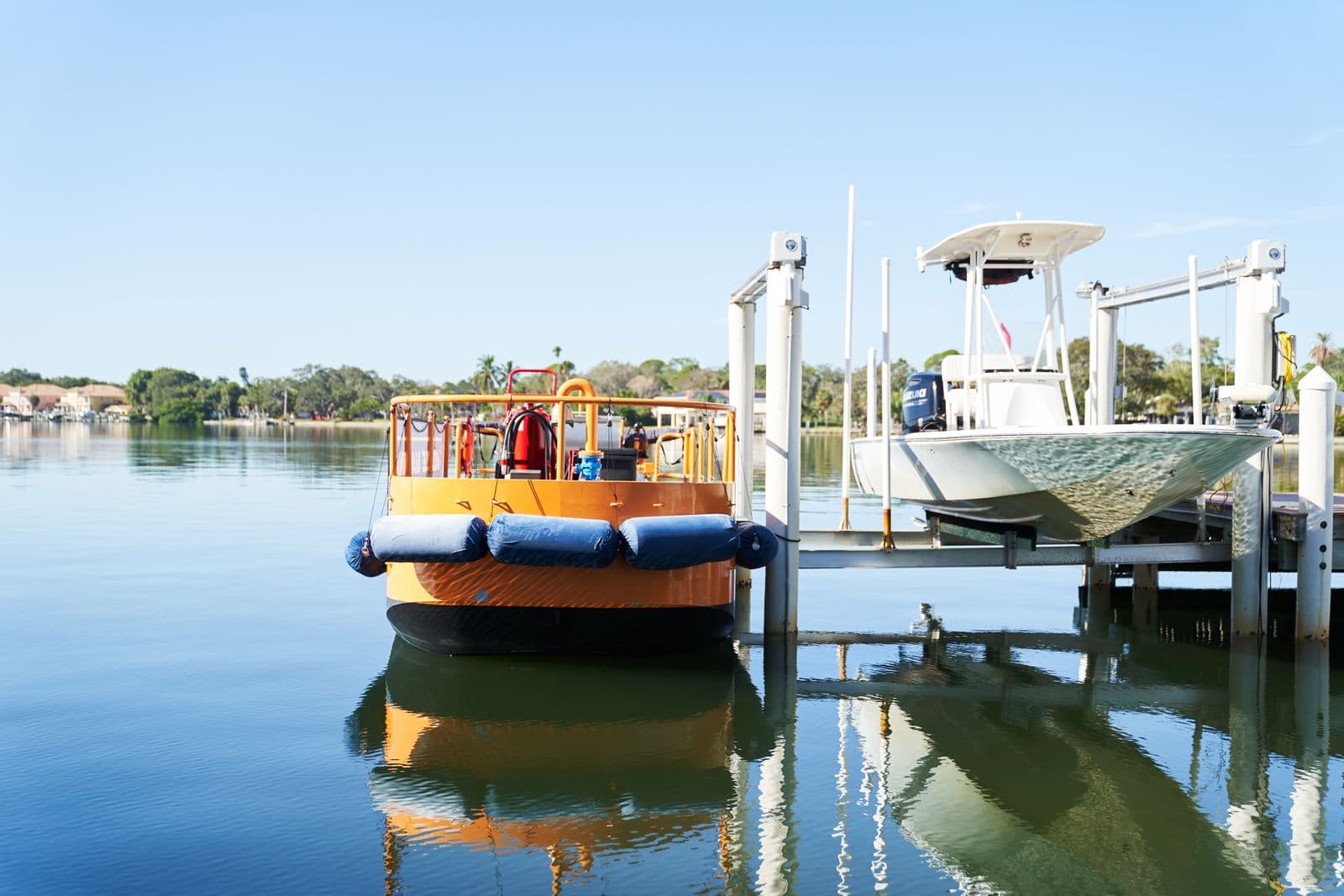
Water-based delivery also avoids moving portable containers or arranging access for a fuel truck through the property. The delivery vessel approaches from the water, and the captain leaves the boat the way it was found—from covers to tie-up—except that the fuel tank is full.
Current REC 90 delivery areas include:
- St. Petersburg
- Clearwater
- Tampa
- Gulfport
- Tierra Verde
- Treasure Island
- Madeira Beach
- Other eligible Tampa Bay waterfront locations on scheduled routes
If you are unsure whether a specific dock can be serviced, contact one of our captains. We will review the location and figure out whether delivery is possible.
How Mobile Marina's Scheduled Fuel Delivery Works
Mobile Marina operates scheduled REC 90 fuel routes rather than an emergency dispatch service. Planning ahead lets us arrive before the tank becomes a problem and gives you a boat that is ready when you want to use it.
- Create or complete your Mobile Marina account.
- Add the boat, dock or marina, slip, tank, fill location, fuel type, access instructions, and marina-permission details.
- Request the quantity or fill preference you want.
- The captain receives the saved account information with the order and places the stop on an eligible route.
- We complete the fueling and leave the boat the way we found it.
You do not need to call and repeat the same boat and access details for every delivery. Keep the account current whenever the boat moves, the tank setup changes, or marina access instructions are updated.
An owner may not need to be present for an eligible delivery when the account contains the required authorization and access information. Marina policy, safe water access, weather, clearance, and route capacity still determine whether a particular stop can be completed.
Frequently Asked Questions
The Bottom Line
REC 90 fuel is a 90-octane ethanol-free option, not a universal prescription for every engine. Check the owner's manual, verify the pump, and keep the fuel system maintained.
If your boat stays in the water and REC 90 is the correct product, you do not have to spend the beginning of the day running to a fuel dock. Complete your Mobile Marina account, schedule delivery on an eligible Tampa Bay route, and arrive to a boat that is ready to use.
Review current fuel prices, confirm your service area, or call (727) 761-1173 if you have questions about delivery to a particular dock.
Related: Tampa Bay Ethanol-Free Gas Directory | Current Boat Fuel Prices | Where to Get Boat Fuel in Tampa Bay | Service Areas