Spring in Tampa Bay hits different. After months of cooler weather and winter winds pushing salt spray across every dock from Clearwater to Tierra Verde, your boat has been quietly taking a beating. The humidity never really left, the UV never stopped, and if you're like most boaters around here, your vessel has been sitting more than running since November.
That's why spring boat prep isn't optional — it's the difference between a great season on the water and a frustrating one full of breakdowns, no-starts, and expensive emergency repairs. We put together this spring boat preparation checklist based on what our USCG-certified captains see during monthly inspections across St. Pete, Tampa, Gulfport, and everywhere in between. These are the items that actually matter, with the context behind why each one deserves your attention.
Hull and Exterior: Your First Line of Defense
Your hull took the brunt of winter. Tampa Bay's brackish water, combined with months of salt-heavy wind patterns and marine growth, means your below-the-waterline surfaces need serious attention before splash day.
Start with a full visual inspection of the hull. You're looking for cracks, blisters, or any spots where gelcoat has chipped away. Even hairline cracks can let water intrude into the fiberglass laminate, and in Florida's heat, that moisture expands and causes delamination fast. Our technicians see this every spring — a $200 gelcoat repair in March becomes a $2,000 structural fix by July.
Here's your hull and exterior checklist:
- Inspect the hull for cracks, blisters, or osmotic damage — run your hand along the bottom and look for any soft spots or raised areas that indicate water intrusion
- Clean and wax all gelcoat surfaces — Florida UV breaks down gelcoat faster than almost anywhere in the country, and a fresh coat of marine wax adds a critical protective barrier
- Check and replace sacrificial zincs — salt water eats zincs quickly, and corroded zincs mean galvanic corrosion moves to your expensive underwater metals instead
- Inspect the propeller — dings and bent blades cause vibration that damages your lower unit over time, and a prop that's even slightly out of balance wastes fuel
- Check trim tabs and all underwater hardware — look for corrosion, loose mounting bolts, and any play in the hydraulic rams
- Evaluate bottom paint — if you're seeing growth after just a few weeks in the water, your antifouling paint is done and needs a fresh coat before the water warms up
Don't skip the topsides either. Check all deck hardware — cleats, rod holders, rail mounts — for loose fasteners. Tampa Bay's chop puts constant stress on through-bolted hardware, and a loose cleat under load is a safety hazard.
Engine and Mechanical: The Heart of Your Boat
If your boat sat for most of the winter, your engine needs more than a quick key-turn and a prayer. Engines that sit idle develop problems — condensation in the oil, dried-out seals, corroded connections, and fuel system issues are all common after a few months of inactivity.
The single most important thing you can do is change the oil and filter before your first run. Even if you changed it at winterization, oil that's been sitting absorbs moisture from condensation. Running contaminated oil — even for a short trip — accelerates wear on bearings and cylinder walls. A $60 oil change now prevents a $6,000 powerhead rebuild later.
Work through these engine checks systematically:
- Change engine oil and filter — fresh oil with the correct marine-grade weight for your engine
- Replace the fuel filter and water separator element — old filters restrict flow and can't trap the water that accumulated over winter
- Inspect spark plugs (gas engines) — look for fouling, corrosion, or improper gap, and replace if there's any doubt
- Check all belts for cracking and proper tension — rubber degrades in Florida heat even when the engine isn't running
- Inspect coolant hoses for swelling, soft spots, or cracking — squeeze every hose and replace anything that feels spongy
- Check coolant level and condition — flush and replace if it's been more than two years or if it looks rusty
- Test battery charge and clean all connections — corroded terminals are the number one cause of no-starts, and batteries lose charge over winter
- Inspect the steering system — check hydraulic fluid level, look for leaks, and verify smooth operation lock-to-lock
- Grease all zerk fittings — steering, tilt/trim, and any other greaseable points need fresh marine grease
If your boat has a raw-water cooling system (most outboards and many sterndrives), pull the impeller and inspect it. Rubber impellers that sit in one position for months develop a memory set — the vanes flatten on one side and lose pumping efficiency. A new impeller costs about $25. A seized engine from overheating costs a lot more.
Tampa Bay: If you run in brackish or saltwater, assume faster impeller wear than OEM “~300 hour” preventive charts suggest—many owners replace or inspect the impeller annually or every 100 hours; align with your 100-hour or spring service and your owner’s manual.
Fuel System: Don't Burn Bad Gas
Fuel problems are what we see most often during spring startups. Gas that sat in your tank all winter, especially fuel containing ethanol (E10), absorbs moisture from humidity and can phase-separate — meaning the ethanol and water settle to the bottom of your tank where your fuel pickup sits. Trying to start your engine on a layer of ethanol-water mix is a recipe for hard starts, misfires, and injector damage.
Here's what to check:
- Assess your existing fuel — if the boat sat with E10 gas for more than 60-90 days without stabilizer, that fuel is suspect and may need to be drained
- Inspect all fuel lines for cracking, hardening, or swelling — ethanol attacks rubber fuel lines over time, and Florida heat accelerates the process
- Check the fuel tank vent — a blocked vent creates vacuum in the tank, starving the engine of fuel under load
- Fill up with fresh ethanol-free fuel — REC 90 is the best choice for marine engines because it eliminates phase separation risk entirely
- Inspect the fuel-water separator bowl — if you see any water or discoloration, drain and replace the element
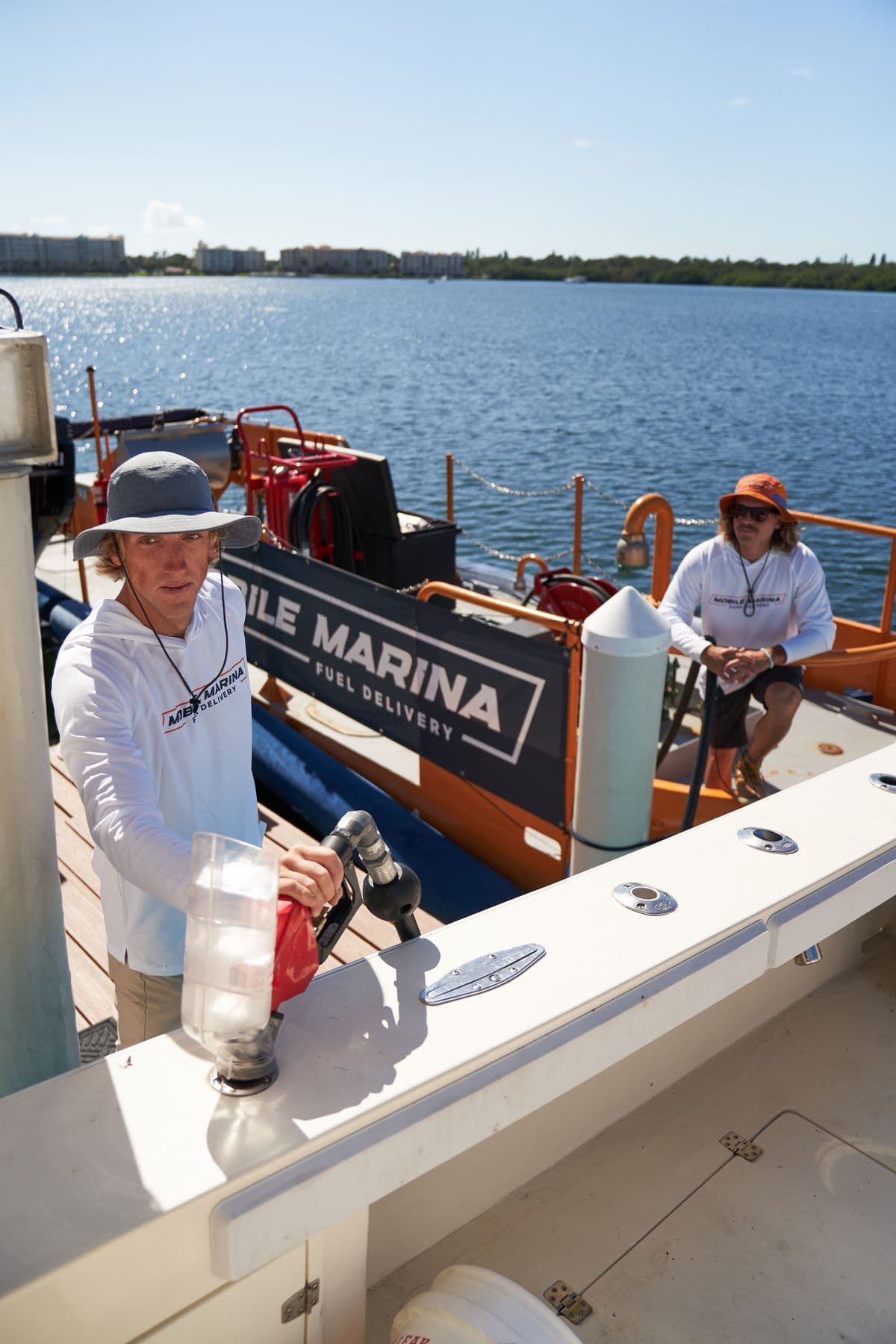
We deliver REC 90 at $6.40/gal right to your dock on our scheduled routes across Tampa Bay. No fuel dock lines, no hauling jerry cans, and no risk of getting E10 when you specifically need ethanol-free. If you're doing spring prep and need a full tank of clean fuel to start the season right, the easiest move is to schedule a dockside delivery through our app at mobilemarina.co.
Electrical Systems: Find Problems Before They Leave You Stranded
Electrical gremlins are sneaky. Everything might seem fine at the dock, but corroded connections and marginal wiring fail under load — usually when you're miles from the ramp with a thunderstorm building (welcome to Tampa Bay spring weather). A thorough electrical check now saves you from being that boat calling for a tow on the VHF.
Go through each system methodically:
- Test all navigation lights — check port, starboard, stern, masthead, and anchor light. Replace any dim or intermittent bulbs and clean corroded sockets
- Test the horn — it's a USCG requirement and the one thing you'll really need in a close-quarters situation
- Test the bilge pump on both manual and automatic modes — pour water into the bilge and verify the float switch triggers correctly. A failed bilge pump is how boats sink at the dock
- Inspect all wiring runs for chafe, corrosion, or exposed copper — pay special attention to areas where wires pass through bulkheads or near heat sources
- Power up all electronics — GPS, VHF radio, fish finder, depth sounder. Verify they get a GPS lock and that transducers are reading correctly
- Test the battery switch — cycle through all positions and verify each bank is isolated properly
One thing our captains check during every vessel management inspection is voltage drop under load. A battery might show 12.6 volts sitting still but drop below 10 volts when cranking. If your batteries are more than three years old and you're in Tampa Bay's heat, budget for replacements. Heat kills batteries faster than cold does.
Expert Marine Maintenance
From routine service to major repairs, our team of expert marine technicians handles it all. Full project management so you can enjoy your boat.
Expert Technicians
Certified marine specialists
Canvas, Upholstery, and Interior
Tampa Bay humidity is brutal on soft goods. If your boat has been covered (or worse, uncovered) all winter, expect to deal with mildew, UV damage, and possibly some critter activity.
Start with the canvas and enclosures:
- Inspect all canvas panels for tears, failed stitching, or stretched snaps — a winter of wind gusts puts serious stress on canvas
- Clean and treat isinglass windows — never fold isinglass, and use only approved cleaners. Scratched or yellowed panels reduce visibility
- Check zippers for corrosion — salt air destroys cheap zippers fast. Lubricate with a zipper wax or silicone spray
Then move to the interior:
- Clean all vinyl seats and surfaces with marine vinyl cleaner — follow with a UV protectant. Florida sun destroys unprotected vinyl in a single season
- Check under seat cushions and in storage compartments for mold — if you find it, clean with a marine-grade mildew remover and improve ventilation
- Inspect seat bases and pedestal mounts — wobbling seats mean loose hardware, which means someone could get hurt in rough water
- Check the head (if equipped) — flush the system, inspect hoses for odor or cracking, and verify the holding tank is empty and the Y-valve is in the correct position
Don't forget the bilge area. Clean it out, check for any standing water or oil, and make sure drain plugs are in good shape. More than one boater has launched in spring and realized the drain plug wasn't seated.
Safety Equipment: The Stuff You Hope You Never Need
USCG requirements aren't suggestions, and spring prep is when you make sure everything is current and functional. We've seen boaters get cited on their first trip of the season because they forgot to check expiration dates.
Go through your safety gear:
- Inspect all life jackets — check for rips, failed buckles, mildew, and proper sizing. Florida law requires one USCG-approved PFD per person on board, and kids under 6 must wear one at all times
- Check fire extinguisher gauges and expiration dates — if the needle is out of the green zone or the extinguisher is past its service date, replace it. Most marine extinguishers are good for 5-12 years
- Verify visual distress signals (flares) are within date — expired flares won't count during a USCG or FWC inspection. Replace them and dispose of old ones properly
- Test your throwable flotation device — the Type IV throwable needs to be in good condition and immediately accessible, not buried under gear
- Restock the first aid kit — replace anything expired or used
- Verify your registration is current and your documentation is aboard — Florida registration must be displayed and current, and if documented, carry your USCG documentation certificate
If you carry an EPIRB or PLB, check the battery expiration and verify your registration with NOAA is current. These devices save lives, but only if they actually work when activated.
Trailer and Launch Prep
If your boat lives on a trailer rather than in a slip, your trailer needs attention too. Winter weather and sitting in one spot means bearings, tires, and lights all need a check before that first ramp trip.
- Inspect trailer tires for dry rot, proper inflation, and tread depth — tires that sit in Florida sun develop sidewall cracks even with good tread
- Check and repack wheel bearings — bearing failure on the way to the ramp is a bad start to any day, and bearing failure on the ramp can mean your boat ends up in the water without you
- Test all trailer lights — brake, turn, and running lights. Corroded connectors are the usual culprit
- Inspect the winch, strap, and safety chain — check the winch cable or strap for fraying, and make sure the safety chain hooks are solid
- Check the bunks or rollers — look for worn carpet, cracked rollers, or shifted supports
- Lubricate the tongue jack and coupler — spray with a marine-grade lubricant and verify the coupler locks securely onto the ball
Practice your launch procedure in the driveway before heading to the ramp. Nobody at the Fort De Soto or Gandy boat ramp wants to wait while you figure out your straps and plugs for the first time this season.
Create a Maintenance Schedule for the Season
Spring prep isn't a one-time event — it's the start of a maintenance rhythm that should carry through the whole boating season. Tampa Bay summers mean thunderstorms, intense UV, water temperatures in the upper 80s (which accelerates growth on your hull), and heavy use on weekends.
Build a basic recurring schedule:
- After every trip — flush the engine (if saltwater), rinse the boat, check the bilge
- Monthly — check fluid levels, inspect belts and hoses, test electronics, clean and wax high-exposure surfaces
- Quarterly — check zincs, inspect bottom paint, clean fuel-water separator, test safety equipment
- Annually — full spring prep (this checklist), plus anything recommended in your engine manufacturer's service schedule
If maintaining a schedule sounds like more work than you signed up for, that's exactly why we built our vessel management program. For $99/month, our USCG-certified captains run a documented monthly inspection of your vessel — checking everything from fluid levels to hull condition to electrical systems. We find issues before they become real problems, and when something does need attention, we coordinate repairs with expert marine technicians so you don't have to chase down quotes and schedules.

$99
per month
Starting price for vessels under 25ft
Never Worry About Your Boat Again
Monthly inspections by USCG-certified captains keep your boat ready to go whenever you are.
Monthly Inspections
Full systems checks every month
Full Diagnostics
Engine, electrical, and navigation systems
Coordination
We schedule and manage all maintenance
Peace of Mind
Your boat is always ready when you are
Frequently Asked Questions
The Bottom Line
Spring boat prep is how you set yourself up for a season of good days on the water instead of breakdowns, tow calls, and surprise repair bills. Tampa Bay is one of the best places in the country to be a boater, but the same sun, salt, and humidity that make it beautiful are also working against your vessel every single day.
Work through this checklist systematically, don't skip the unglamorous stuff like zincs and fire extinguishers, and start the season with fresh REC 90 in the tank. If you'd rather have someone handle inspections and maintenance coordination for you, our USCG-certified captains do exactly that — $99/month gets you documented monthly inspections and white-glove maintenance coordination. Download the app at mobilemarina.co or call us at (727) 607-1050. Our goal is to keep you on the water.
Related: Maintenance Services | Vessel Management Program | Why Ethanol-Free Fuel Matters