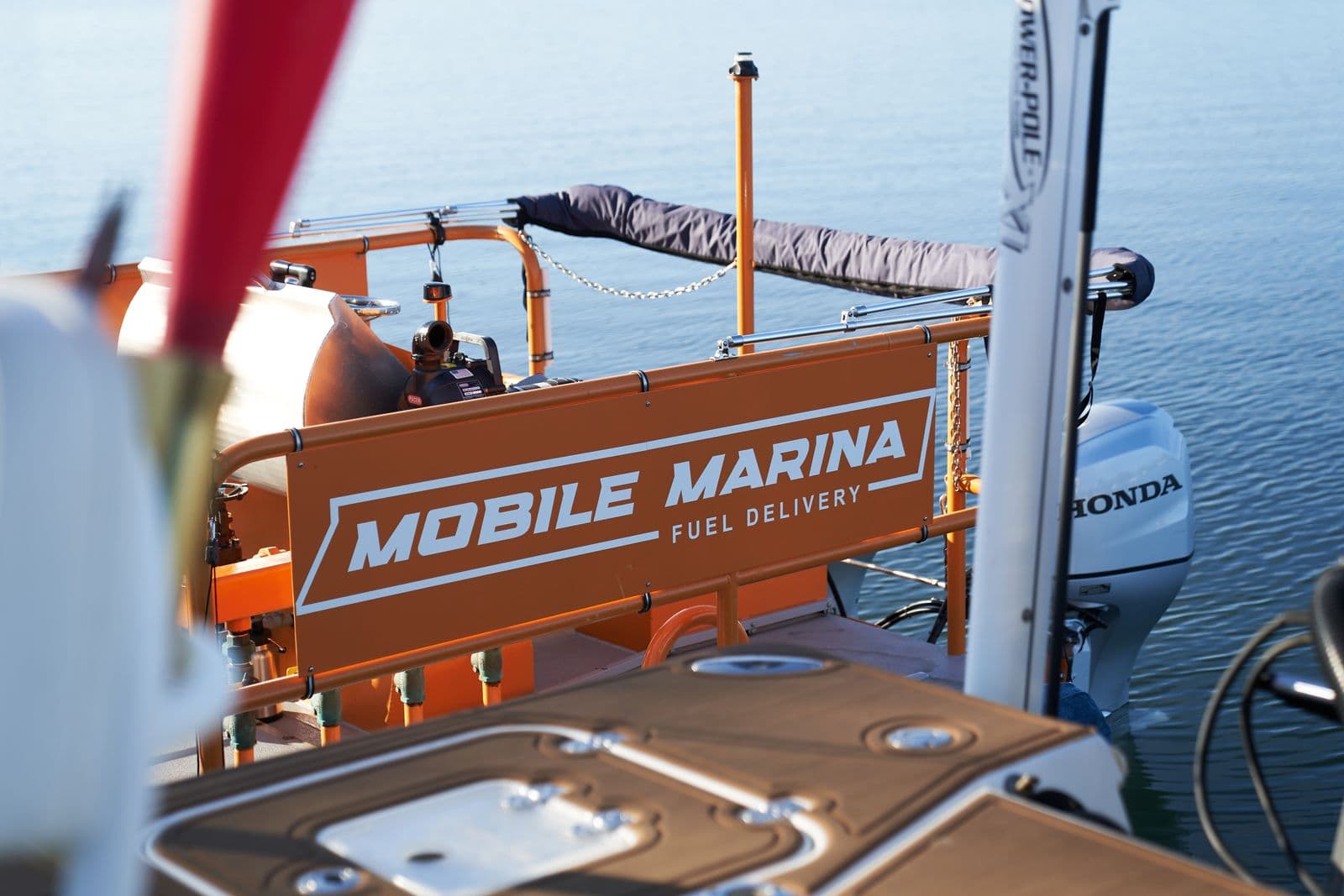
Schedule Outboard Maintenance
Dockside service across St. Pete, Clearwater, Tampa, Tierra Verde, and Gulfport.
Most modern four-stroke outboards need a major service every 100 operating hours or once a year, whichever comes first. That is the useful planning rule for outboard motor maintenance, but it is not a universal parts list. Yamaha, Mercury, and Suzuki change specific requirements by model, horsepower, year, and operating conditions.
For Tampa Bay boaters, the calendar matters even when the hour meter is low. Saltwater exposure, year-round use, heat, humidity, and long periods at the dock continue affecting the cooling system, fuel system, anodes, electrical connections, and lower unit while the engine is not running.
The short version: check the engine before every trip, flush it according to the manufacturer's procedure after saltwater use, plan around the 100-hour or annual milestone, and use the maintenance schedule tied to the engine's serial number for the final checklist.
Outboard Motor Maintenance Schedule at a Glance
Use this table to plan service—not to order parts. The owner's manual for the exact engine controls the interval and procedure.
| When | What to plan for |
|---|---|
| Before every trip | Check engine oil on four-strokes, look for fuel or oil leaks, inspect the propeller, verify steering and trim operation, and confirm cooling-water flow after startup. |
| After saltwater use | Flush and rinse the engine using the manufacturer's procedure; inspect the propeller and lower unit for line, impact damage, or new leaks. |
| Initial service | Many engines call for an early inspection or service around 20 hours or the first month. Verify the exact milestone in the manual. |
| Every 100 hours or annually | Common items include four-stroke engine oil and filter, gearcase lubricant, fuel filters, lubrication points, anodes, spark plugs, belts, hoses, controls, batteries, and cooling-system inspection. The exact list varies. |
| Longer milestones | Water-pump components, thermostats, valve-clearance inspections, timing components, and other model-specific work may appear at 200, 300, 500, or 1,000 hours. |
| Whenever symptoms appear | Stop treating the issue as routine maintenance. Overheating, alarms, hard starting, power loss, vibration, fuel odor, milky gear lubricant, or repeated battery problems need diagnosis. |
If the engine reaches 100 hours in six months, service by hours. If it runs only 35 hours in a year, service by the calendar when the manual says “100 hours or annually.” Low use does not make the annual inspection irrelevant.
A written outboard motor maintenance schedule should show both the next hour milestone and the next calendar date. That keeps a low-hour boat from missing annual work and a heavily used boat from passing an hour-based service while the calendar still looks safe.
Yamaha, Mercury, and Suzuki: What the Manufacturers Say
The three brands use the same broad maintenance categories, but they do not share one universal schedule. Start with the engine serial number, then use the correct manufacturer resource.
Yamaha outboard maintenance
Yamaha's Maintenance Matters guidance identifies regular flushing, fuel-filter care, corrosion prevention, and 100-hour engine- and lower-unit-oil changes as core maintenance. Yamaha also directs owners to the model-specific manual and says flushing should be completed after each use, especially in salt or brackish water.
Use Yamaha's owner-manual lookup with the engine's Primary ID. That is where you confirm whether spark plugs, the water pump, thermostats, valve clearance, timing components, or other items are due on that model.
Mercury outboard maintenance
Mercury says that, for most boaters, the first scheduled annual maintenance is completed at 100 engine hours or before long-term storage. Mercury also specifically tells high-hour, V12, and year-round boaters to follow the hour-based schedule for their engine.
Use Mercury's serial-number manual finder because FourStroke, Verado, Pro XS, SeaPro, and Racing engines can have different requirements. A Mercury schedule from another horsepower or product family is not a safe substitute.
Suzuki outboard maintenance
Suzuki's model-specific schedules commonly begin with an initial 20-hour or one-month milestone and continue with recurring hour-and-calendar intervals. For example, the official DF115B/DF140B manual says maintenance intervals are judged by hours or months, whichever comes first, and includes a 100-hour or 12-month column.
Use Suzuki's owner resources and manual library to find the correct schedule for the DF model and serial range. Do not assume the checklist for a DF140 is identical to the checklist for a different Suzuki family.
This model-specific approach keeps outboard motor maintenance accurate. It also prevents an owner from paying for work that is not due—or skipping a component because a generic checklist left it out.
Expert Marine Maintenance
From routine service to major repairs, our team of expert marine technicians handles it all. Full project management so you can enjoy your boat.

Expert Technicians
Certified marine specialists
What a 100-Hour Outboard Service Usually Includes
A proper 100-hour service is more than an oil change. On a modern four-stroke, the technician commonly works through the following categories, subject to the engine manual:
- Engine oil and oil filter
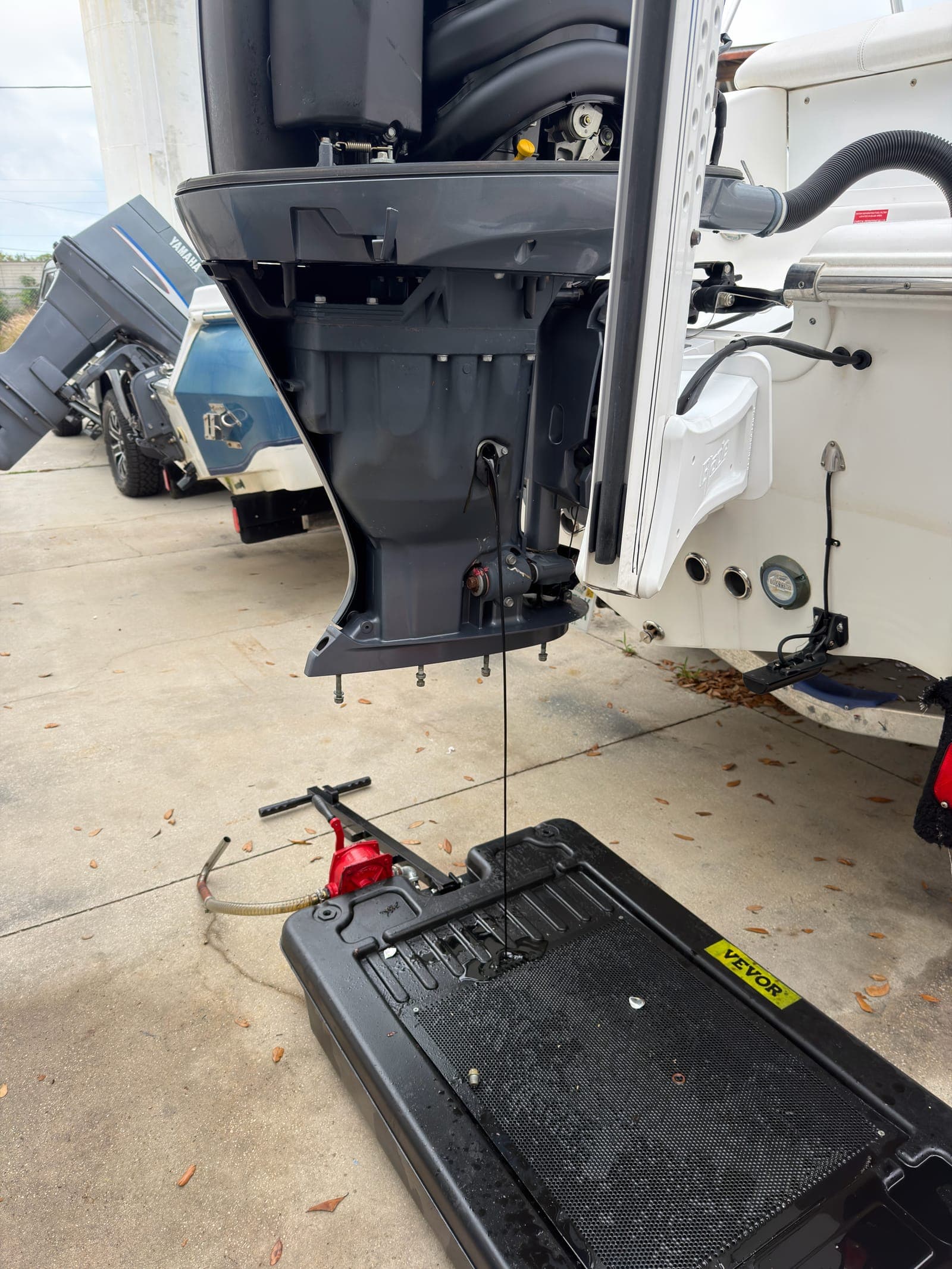
- Lower-unit or gearcase lubricant, with the drained lubricant inspected for water or abnormal metal
- Engine-mounted fuel filter and boat-mounted water-separating filter
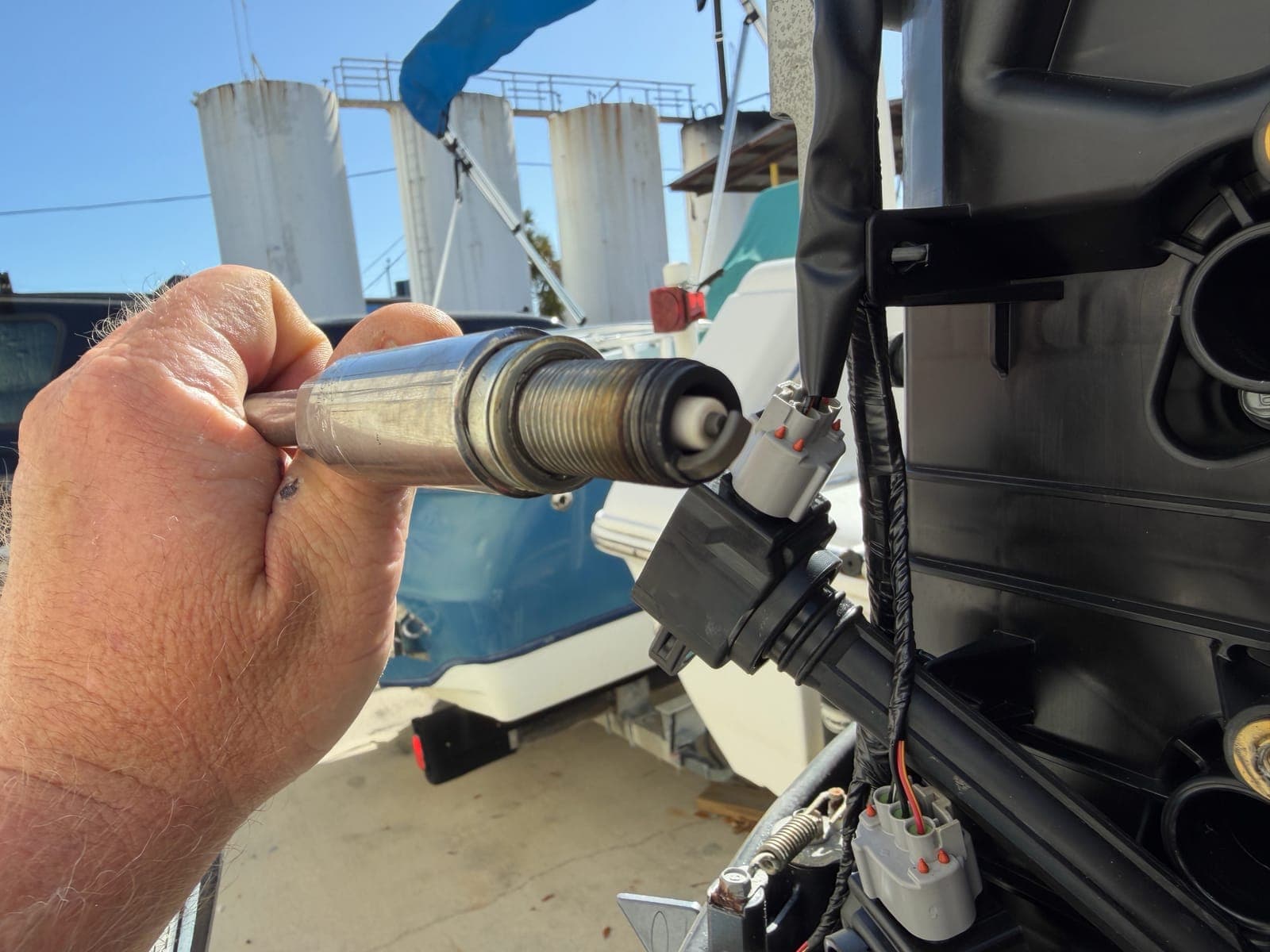
- Spark-plug inspection or replacement when due
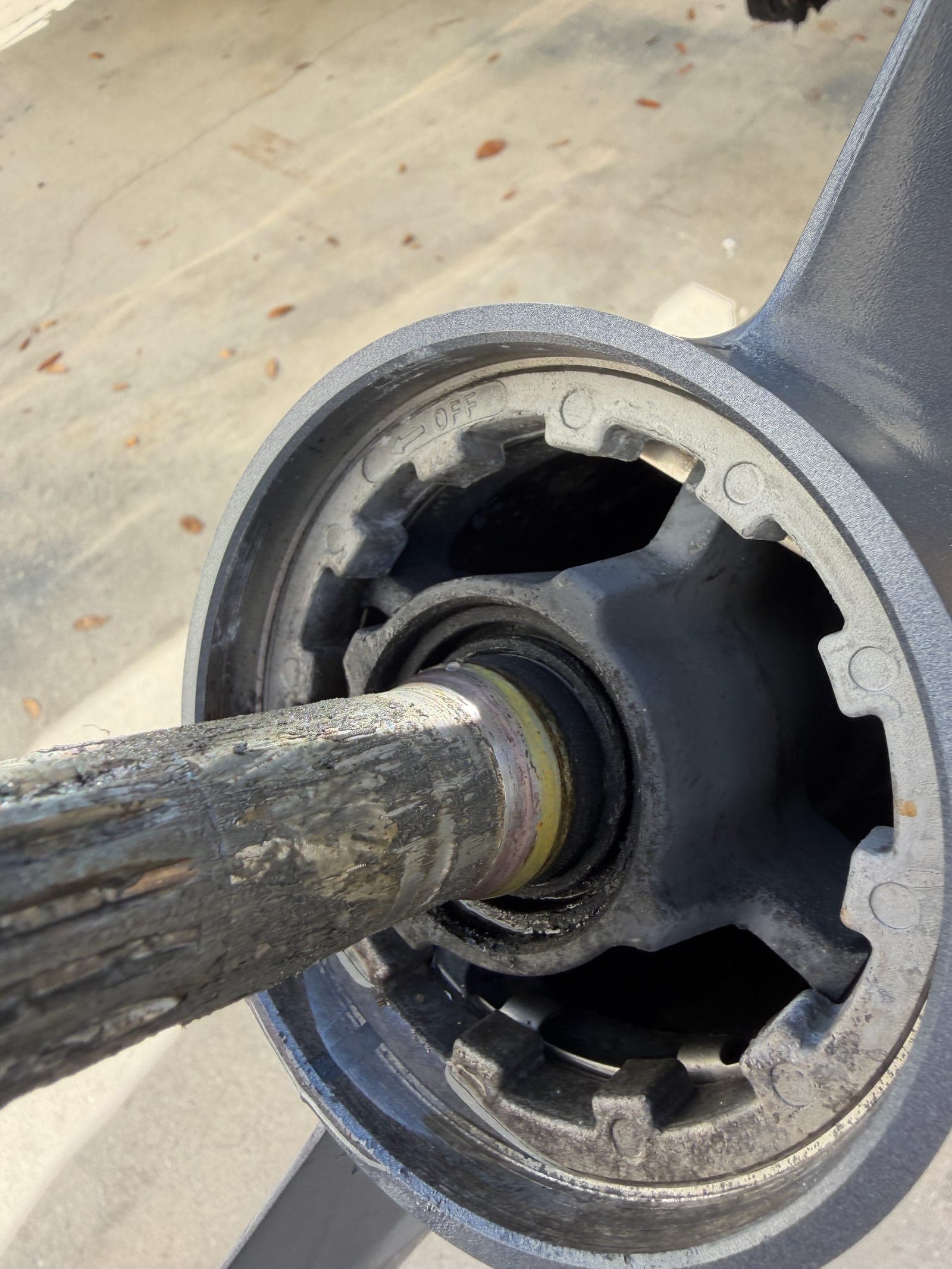
- Propeller removal and prop-shaft inspection for fishing line or seal damage
- Anode inspection and replacement based on the manufacturer's limit
- Steering, throttle, shift, trim, and lubrication-point inspection
- Battery, charging, wiring, hose, belt, and fastener inspection
- Cooling-water flow, thermostat, water-pump, and impeller inspection when scheduled
- Diagnostic scan and stored-fault review when supported by the engine
- Written service record, engine hours, findings, and the next due milestone
The difference between a quick oil service and a complete interval service is the inspection work. Old gear lubricant can reveal water intrusion. A removed propeller can expose fishing line at the shaft seal. Stored fault history can show an overheat or voltage problem even when the engine behaves normally at the dock.
For a detailed invoice-style breakdown, read what is included in a 100-hour outboard service. If the engine is approaching a larger milestone, use the 300-hour outboard service guide.
Water Pump, Impeller, and Cooling-System Maintenance
The water-pump impeller is important, but “replace every impeller at the same hour” is not sound guidance. Model schedules differ, and operating in shallow, sandy, muddy, or saltwater conditions can justify more frequent inspection.
Yamaha's current owner guidance recommends inspecting the impeller and water-pump assembly every year while still directing owners to the engine manual for the specific service interval. Other manufacturers place inspection or replacement at different milestones depending on the model.
Watch for these cooling-system warnings:
- An overheat alarm or guardian/protection mode
- Cooling-water flow that is weaker or different from normal
- Steam, unusual exhaust temperature, or a hot-engine smell
- Debris around the water intakes
- An engine that loses power after running under load
A blocked tell-tale outlet does not always mean the water pump has failed, and a visible tell-tale stream does not prove every cooling passage is clear. If the engine alarms, overheats, or loses cooling-water flow, shut it down and diagnose the cause before continuing.
Lower Unit, Propeller, and Gearcase Warning Signs
The lower unit carries engine power through gears and the propeller shaft while operating partly underwater. Yamaha recommends changing lower-unit lubricant after the first 20 hours on a new outboard and every 100 hours after that, but the exact rule for another brand or model can differ.
Pay attention to:
- Milky, cloudy, or water-contaminated gear lubricant
- Large metal chips on a magnetic drain plug
- Fishing line behind the propeller
- Gear-lube leakage around the prop shaft or drain screws
- New vibration after a propeller strike
- Difficulty shifting into forward, neutral, or reverse
Fine metallic dust can be normal during break-in, while larger fragments warrant further inspection. Drain-plug seals should be replaced according to the manufacturer's procedure. If the propeller strikes bottom or submerged debris, inspect more than the visible blade—the shaft, seals, and gearcase can also be affected.
Fuel, Oil, Electrical, and Corrosion Checks
Outboard motor maintenance also covers systems that rarely get attention until the engine will not start.
Fuel system
Use only the octane and ethanol content allowed by the engine manufacturer. Inspect fuel hoses, primer bulbs, clamps, filters, vents, and the water separator. Recurring water in a filter is a reason to find the entry point, not simply keep replacing filters. For fuel-grade guidance, see what REC 90 fuel is and when it fits a marine engine.
Engine oil
Check four-stroke oil with the engine positioned as the manual specifies. Too little oil is dangerous, but overfilling can also cause aeration, pressure, or running problems. Use the oil viscosity and specification listed for the engine rather than choosing by brand familiarity alone.
Batteries and electrical connections
Inspect battery state, terminal tightness, charging voltage, harness plugs, grounds, and visible corrosion. Intermittent starting, low-voltage warnings, trim problems, and electronics resets can share a battery or connection problem. Do not replace an expensive engine component before testing the supply side.
Anodes and corrosion protection
Anode material and replacement limits vary with the engine and water conditions. Inspect all external and internal anodes listed in the manual. Paint, heavy scale, poor bonding, or the wrong material can keep an anode from doing its job even when it still looks substantial.
What Boat Owners Can Check Themselves
Routine observation is one of the most valuable parts of outboard motor maintenance. A boat owner can usually:
- Record engine hours and the next service date
- Check oil and visible fluid levels
- Inspect for fuel, water, or oil leaks
- Look over the propeller, skeg, water intakes, and anodes
- Flush and rinse the engine using the approved procedure
- Keep battery terminals clean and secure
- Photograph warning messages and note the conditions when they appeared
- Keep invoices, part numbers, diagnostic reports, and service notes together
Yamaha notes that many procedures can be completed by a mechanically inclined owner with the correct tools, while work such as valve-clearance checks and timing-belt inspection belongs with an authorized dealer. The safe dividing line depends on the procedure, warranty, access, and the owner's experience.
Call a professional when the work requires diagnostic software, precise torque procedures, fuel-system opening, lower-unit disassembly, compression or leak-down testing, steering repair, internal engine work, or troubleshooting an alarm under load.

$99
per month
Starting price for vessels under 25ft
Never Worry About Your Boat Again
Monthly inspections by USCG-certified captains keep your boat ready to go whenever you are.
Monthly Inspections
Comprehensive systems checks every month
Full Diagnostics
Engine, electrical, and navigation systems
Coordination
We schedule and manage all maintenance
Peace of Mind
Your boat is always ready when you are
How Dockside Outboard Service Saves a Boating Day
Routine service should not require turning your boat into a transportation problem. Many inspections, diagnostic scans, 20-hour services, 100-hour services, filters, plugs, anodes, water-pump jobs, and minor fuel, electrical, or cooling-system repairs can be handled while the boat remains at its regular slip or private dock.
For owners whose boats stay in the water, dockside outboard motor maintenance removes the launch, trailer, and repair-yard logistics from routine service. The boat stays at its normal location while the planned work is completed.
Mobile Marina coordinates qualified technicians throughout St. Petersburg, Clearwater, Tampa, Gulfport, Tierra Verde, Treasure Island, and Madeira Beach. Complete your account with the boat, engine, dock, access, and service-history information. That gives the team the details needed to match the job, prepare the estimate, and plan the visit without asking you to repeat the same vessel information each time.
When access and authorization are already arranged, you may not need to be present for the entire visit. The goal is to complete the service, document what was found, and leave the boat the way it was found—except with the maintenance handled and the next interval recorded.
Some jobs still belong at a dealer, repair shop, or haul-out facility. Major internal disassembly, machining, warranty-directed repairs, severe lower-unit damage, and work that cannot be performed safely at the dock should move to the appropriate facility. We identify that path during intake instead of forcing every boat through the same process.
How Much Does Outboard Motor Maintenance Cost?
Cost depends on engine count, horsepower, model, service milestone, access, parts, corrosion, and what the inspection finds. A single-engine oil service and a twin-engine 300-hour service are not comparable jobs.
Before accepting an estimate, confirm:
- The engine count, exact model, serial number, and current hours
- Whether the quote is for a basic oil service or the complete manufacturer interval
- Which filters, lubricants, plugs, anodes, seals, and water-pump components are included
- Whether diagnostic scanning and a written report are included
- What happens if corrosion, water in the gear lubricant, stored faults, or damaged parts are discovered
- Whether travel, haul-out, shop supplies, and disposal are separate charges
Mobile Marina provides project-based estimates for maintenance. Submit the engine and boat details through your account or request a maintenance estimate so the scope reflects the actual engine rather than a generic advertised price.
Frequently Asked Questions
Build the Schedule Around Your Actual Engine
The best outboard motor maintenance plan is specific to the engine and easy to keep current. Start with the serial-number manual, record the hours, and schedule the next service before the calendar or hour meter passes the required interval.
Mobile Marina can coordinate the work at eligible docks across Tampa Bay, keep the vessel details in your account, and help determine when a dealer or shop is the better service path. Review our outboard maintenance service, check the Tampa Bay service areas, or call (727) 607-1050 to request an estimate.
Related: 100-Hour Outboard Service | 300-Hour Outboard Service | Yamaha vs. Mercury vs. Suzuki Schedule Comparison | Mobile Boat Repair vs. a Repair Shop | Outboard Maintenance Service