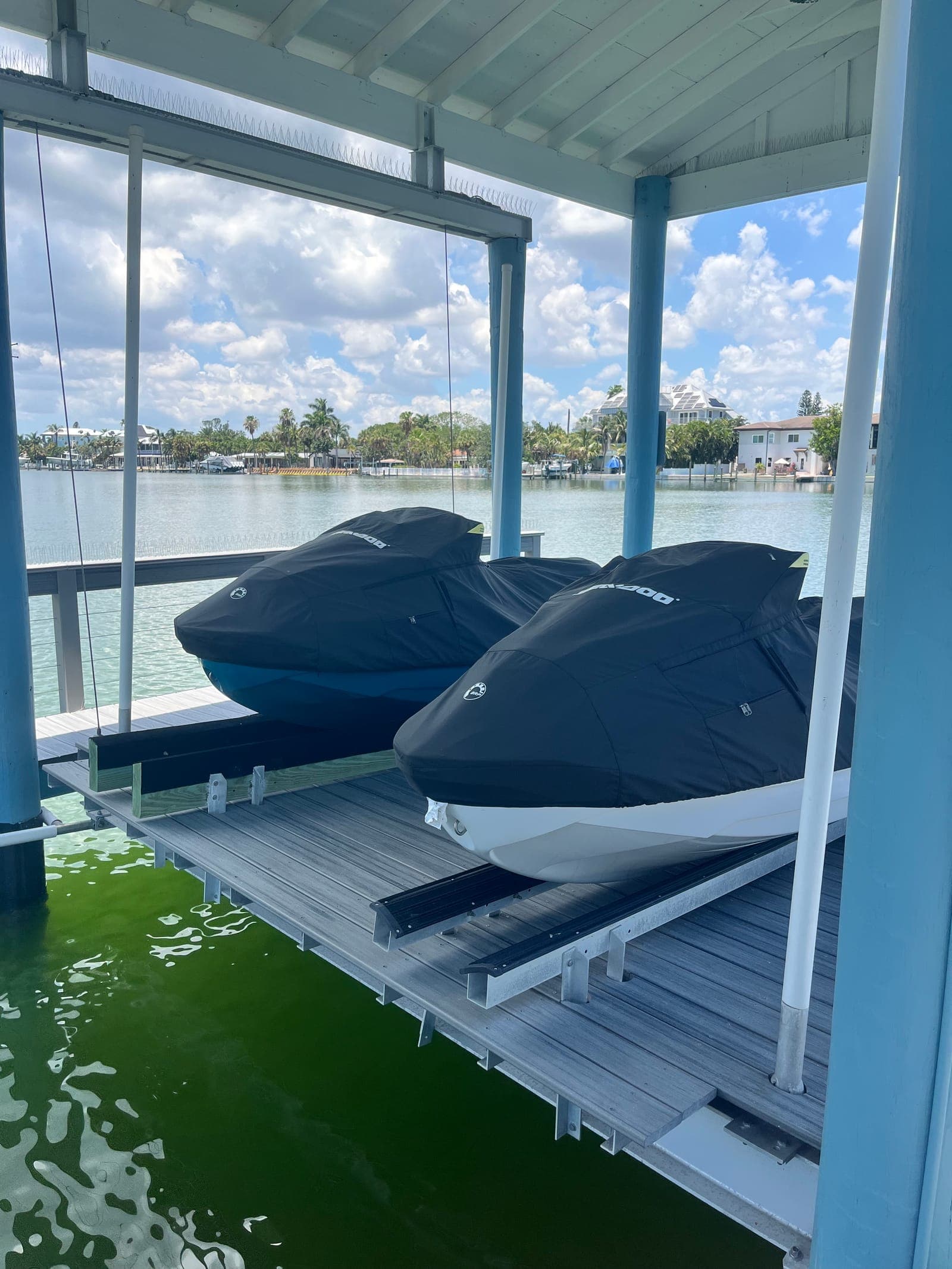
A boat lift problem does not always begin with a broken motor or a snapped cable. Sometimes the first sign is quieter: the lift hesitates, one side travels differently, or the cable no longer wraps the way it should.
That was the issue on this Tampa Bay personal-watercraft lift. The cable wraps needed attention, but the service visit uncovered the more important cause: barnacle growth on the pilings was causing the lift brackets to catch.
The crew serviced the lift, corrected the wraps, and resolved the immediate problem. They also left the owner with a practical next step—watch how the lift travels and revisit the cable setup only if the behavior returns.
This case study is based on the completed service record and project photos. The customer has been kept anonymous.
The Cable Was Not the Whole Problem
The visible concern was at the cable wraps, but the diagnosis required looking at the entire moving system. The platform, brackets, guides, pilings, cables, and surrounding clearances all affect how the lift travels.
On this lift, barnacles on the pilings were interfering with the brackets. When a bracket caught, the cable could continue pulling while part of the supported hardware hesitated. That mismatch helps explain why the wraps were no longer behaving as expected.
Simply straightening the cable without checking the hardware beside the pilings would have addressed the symptom without understanding what was disrupting the movement.
How Marine Growth Became Mechanical Interference
Barnacles are ordinary around Tampa Bay docks, but their impact is not always cosmetic. Growth on a piling can reduce the clearance available to nearby lift hardware. A bracket that once traveled freely can begin rubbing or catching as that growth builds.
An owner may first notice that one side hesitates, the platform no longer moves evenly, the lift sounds different under load, or the cable begins stacking inconsistently. Those signs do not all point to the same failure, but they are reasons to stop and inspect how the complete lift is moving.
The documented finding on this job was specific: the barnacle growth was causing the brackets to catch. That environmental obstruction was directly connected to the cable-wrap issue the crew had been asked to address.
Correcting the Movement and the Wraps
The crew serviced the lift and repaired the cable wraps. By the end of the visit, the catching issue had been resolved and the lift was reported to be in good order.
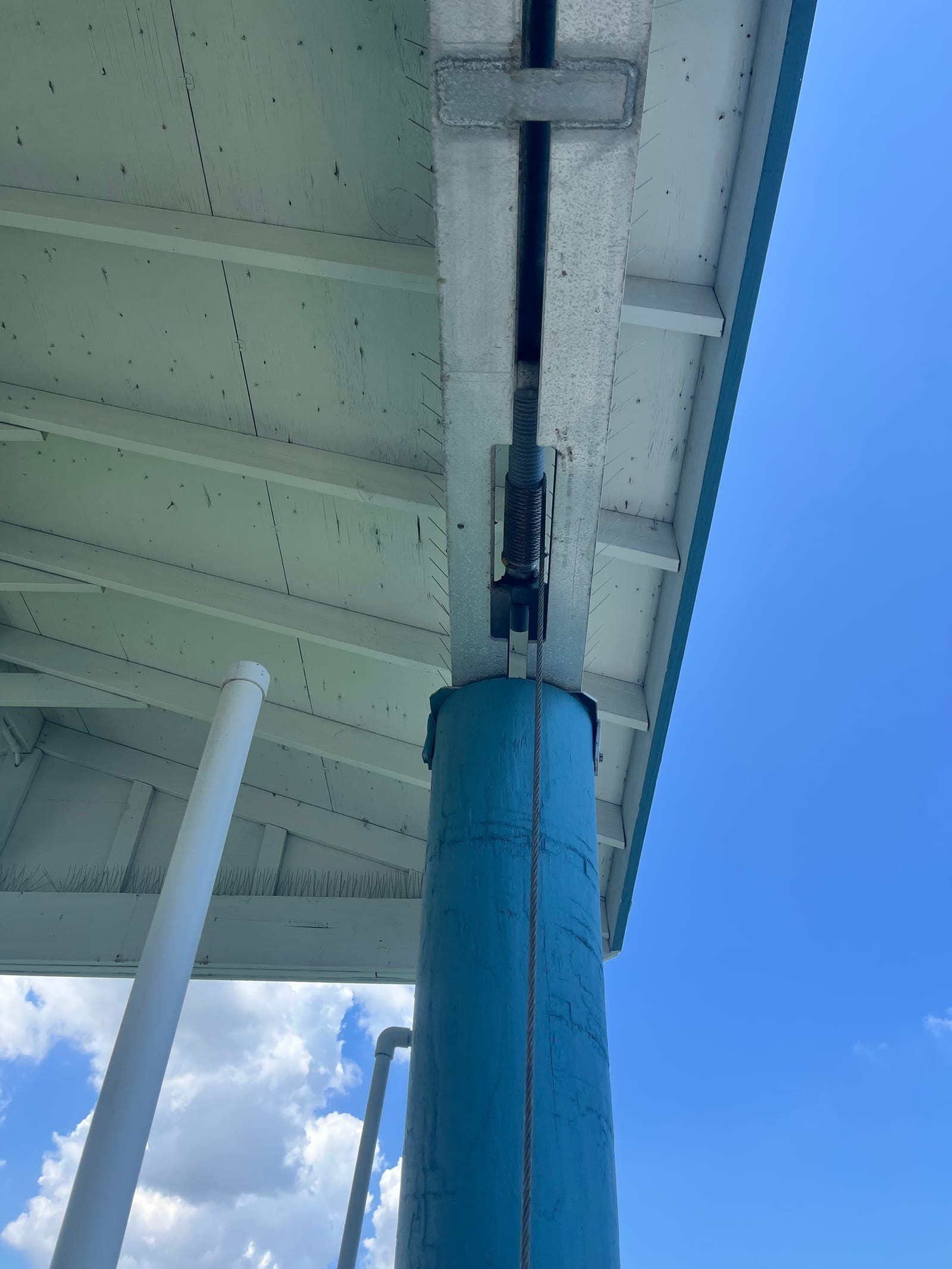
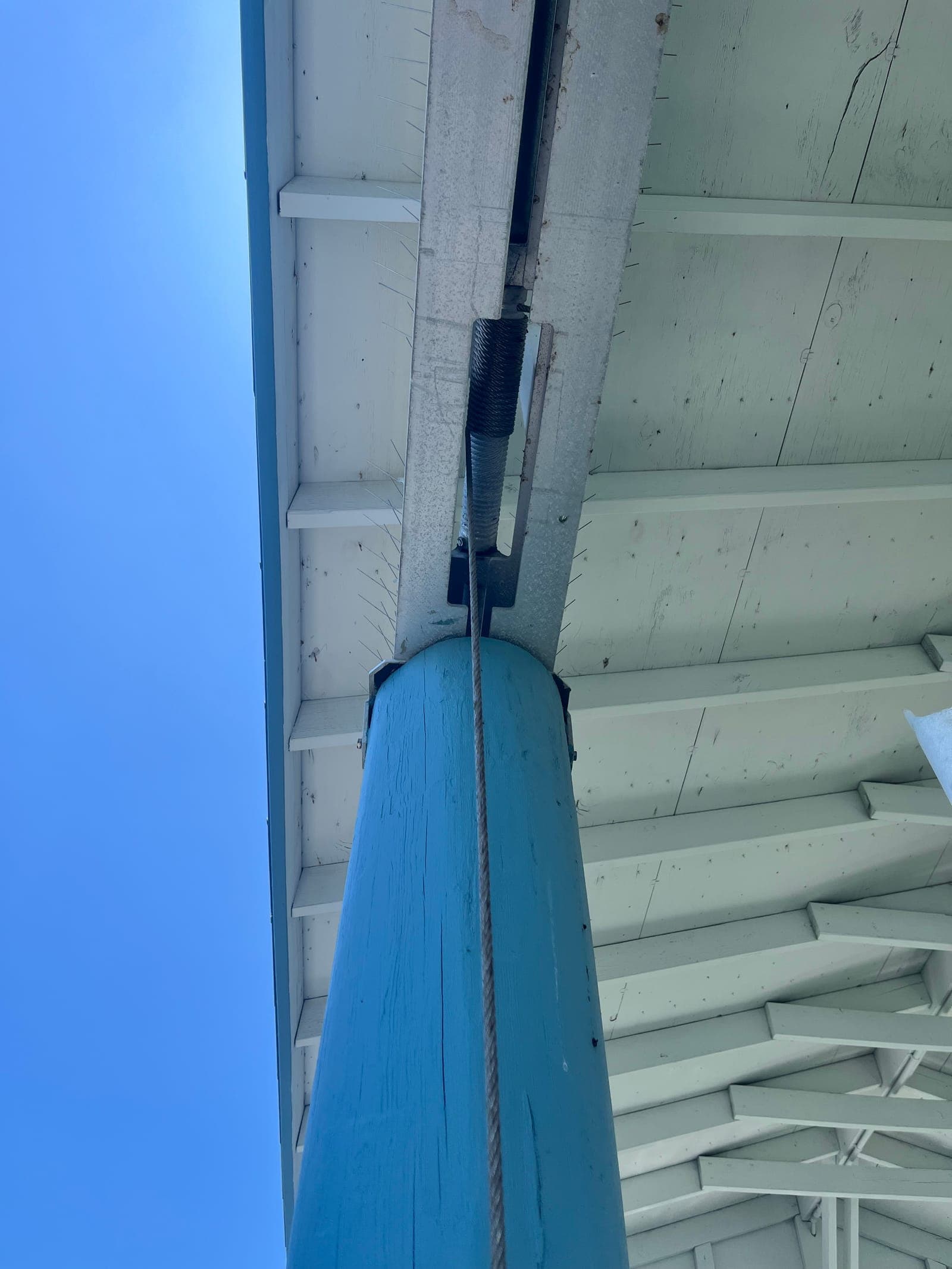
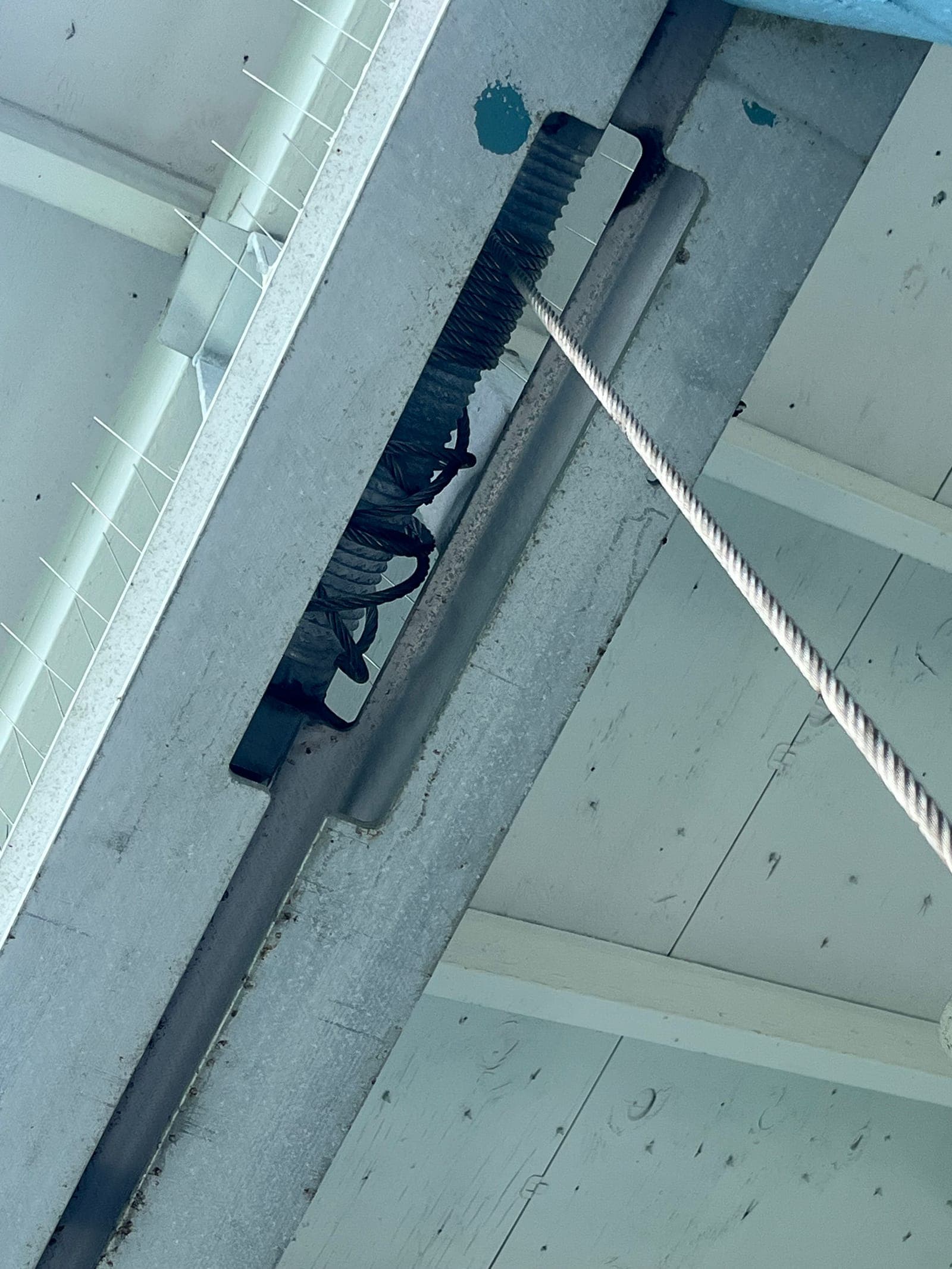
Correcting a wrap is more than making the cable look neat. The cable has to follow its intended path while the connected bracket and lift structure move freely. The repair therefore treated the cable and surrounding hardware as one system rather than isolated parts.
The completion photos document the finished cable routing, wraps, brackets, and overhead structure from several angles. They are not presented as a manufactured “before and after.” Their value is that they preserve a reference point for how the lift looked when it was operating correctly again.
Why Cable Wraps Deserve Attention
Wire rope carries a changing load every time the lift rises or lowers. Consistent wraps help transfer that load through the lift as designed. When wraps cross, bunch, or track unevenly, something in the system may be interfering with that movement.
An uneven wrap does not automatically mean a cable has failed. It does mean the cause should be investigated before repeated use turns a manageable interference problem into damaged cable or hardware.
Owners should never put their hands near a moving cable, drum, pulley, or bracket. If a lift is binding, traveling unevenly, or making an unfamiliar sound, stop operating it and have the system inspected with the load in a safe position.
A Repair With a Clear Watch Plan
The crew's follow-up recommendation was measured: monitor the lift rather than adding more hardware immediately. If the problem returns, the service record notes that additional weight on each cable may need to be evaluated.
For the owner, monitoring means watching whether both sides begin moving together, whether the lift remains level, whether the cable lays consistently, and whether a bracket pauses or rubs beside a piling. It also means keeping an eye on new marine growth in the same travel path.
If the catching or uneven wrapping returns, the completion photos and service notes provide a useful baseline for the next diagnosis.
What Tampa Bay Lift Owners Can Learn From This Job
The practical lesson is simple: the component showing the symptom is not always the condition causing it. The cable wraps needed attention, but the reason they needed attention was connected to an obstruction at the pilings.
Boat and personal-watercraft lift owners should watch the lift while it travels, not only after it reaches the raised position. A hesitation, new sound, uneven platform, or changing cable pattern can reveal a developing problem early.
Keep the path around brackets and guides clear of heavy marine growth, and stop using the lift if a cable is visibly frayed, kinked, displaced, or carrying the load unevenly. Early inspection gives the technician a chance to correct the cause before a cable, pulley, bracket, or motor is damaged.
If your lift is wrapping unevenly, catching beside a piling, or no longer traveling smoothly, request a maintenance estimate. Mobile Marina can inspect the lift at the dock, document the condition, and determine what is disrupting its movement.
For broader dockside support, explore Mobile Marina's maintenance services or learn how vessel management keeps recurring inspections and repairs organized.
Expert Marine Maintenance
From routine service to major repairs, our team of expert marine technicians handles it all. Full project management so you can enjoy your boat.
Expert Technicians
Certified marine specialists