If you ask a boat owner why their windlass isn't working, most will point at the same thing: the solenoid. It's the most visible part. It clicks when you press the helm switch. When the chain doesn't move, the solenoid is the obvious suspect.
Sometimes the solenoid is the problem. Often it's not. A working windlass is actually a chain of four components — batteries → switch/solenoid → electric motor → mechanicals — and a fault anywhere along that chain produces the same symptom: the windlass doesn't work.
This is the story of one 26' Regal in Treasure Island where the answer was at the end of the chain, not the beginning. Over five scheduled visits across about nine weeks, our team worked through each layer in order, documented every test, and ultimately got the owner a working windlass without replacing the whole unit. We're publishing this with the customer's permission and with their name kept out of it.
Why Windlass Faults Get Misdiagnosed
A windlass is one of the highest-current devices on a boat. When you hold the helm switch, it draws hundreds of amps for a few seconds at a time — enough to expose any weakness in the electrical chain feeding it. That makes "the windlass isn't working" one of the most ambiguous complaints in marine service. It could be:
- Tired batteries that read fine on a multimeter but can't supply the amperage under load
- A failing solenoid with worn contacts that intermittently won't carry current
- A loose or corroded power connection anywhere between the battery and the motor
- A dead electric motor at the windlass itself
- A mechanical jam in the gypsy or chain stripper
The right way to diagnose it is to start at the battery and work outward. The wrong way — and the most common — is to start by replacing the most expensive-looking part and hope.
December 12: First Visit, First Theory
The owner's initial call was for a windlass solenoid replacement. He had done the troubleshooting himself, narrowed it down to that part, and asked us to handle the swap.
Our technician was on the boat the same week. He confirmed the symptoms, replaced the solenoid, and tested the windlass on the way out — working as expected. Before leaving, he flagged two recommendations for the owner based on what he'd seen in the compartment:
- Get the batteries tested. They were three years old, and AGMs of that age tend to drop off rapidly even when they still read fine at the helm.
- Spray every electrical connection with Corrosion-X. Saltwater boats lose more electrical performance to corrosion than to any single failing part.
Both recommendations were filed for a follow-up visit. The windlass was working again. For the moment.
December 28: The Symptoms Return
Two weeks later, the owner went out for the first trip since the solenoid swap. The windlass let out about two or three inches of chain, then went back to clicking without moving the chain at all.
He noted that the helm voltage was reading 14V — high enough that batteries seemed unlikely on the surface. He suspected the motor next.
This is the moment where systematic diagnosis matters most. Voltage at the helm is a partial picture. What it doesn't tell you is whether the batteries can sustain the amperage draw a windlass requires. That's a separate test, and we needed to do it before chasing any more parts.
We scheduled the next visit for January 6 with the battery tester loaded.
January 6: Testing the Batteries Properly
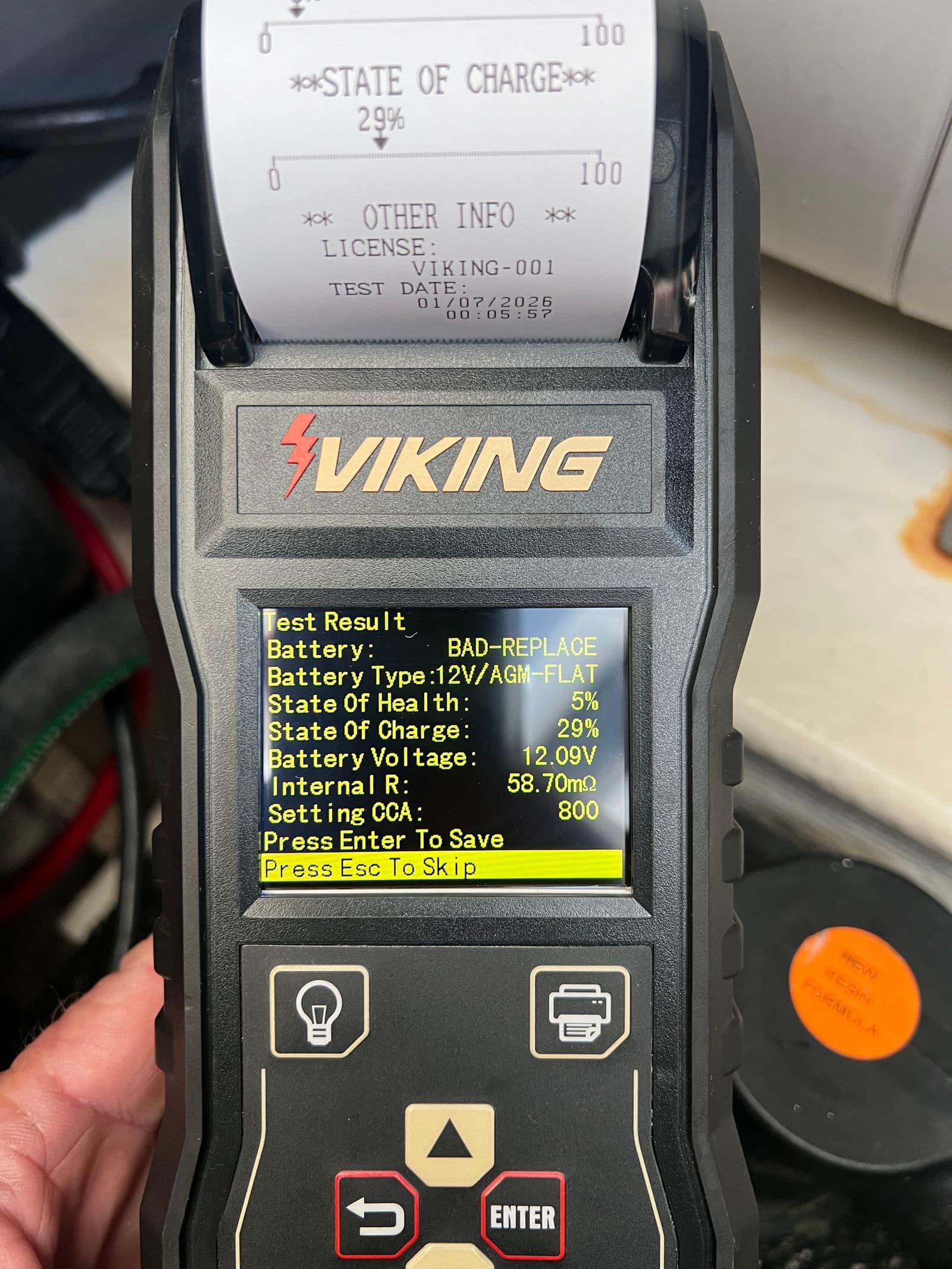
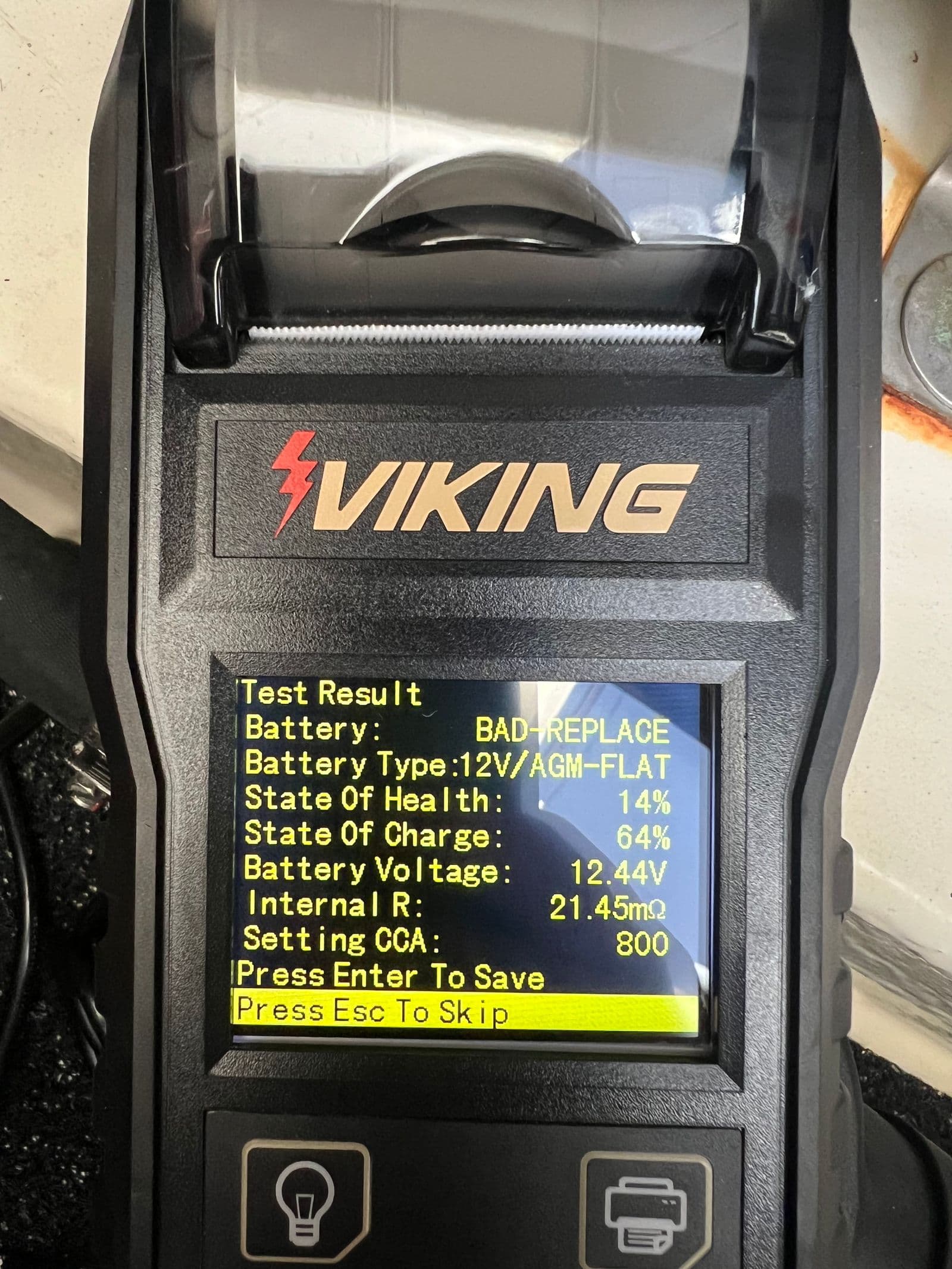
The Viking battery tester is built for exactly this kind of diagnosis. Where a multimeter only reads voltage, the tester puts the battery under a simulated load and measures state of health, state of charge, internal resistance, and cold cranking amps — the metrics that actually predict whether a battery will hold up under a real draw.
Both house batteries came back the same way: BAD-REPLACE.
- Battery 1: State of health 5%. State of charge 29%. Internal resistance 58.7 milliohms. Voltage 12.09V — the exact reading that a casual check would call "fine."
- Battery 2: State of health 14%. State of charge 64%. Internal resistance 21.5 milliohms. Voltage 12.44V.
That's the trap. Both batteries showed adequate voltage. Both were three years into a typical AGM lifespan. And both had degraded to the point where they couldn't reliably deliver the amperage a windlass needs — even though they could still start the engines and run the helm electronics without complaint.
The diagnosis pointed to batteries as the next layer to address. We scheduled the replacement for January 13.
January 13: The Battery Swap (and an Access Lesson)
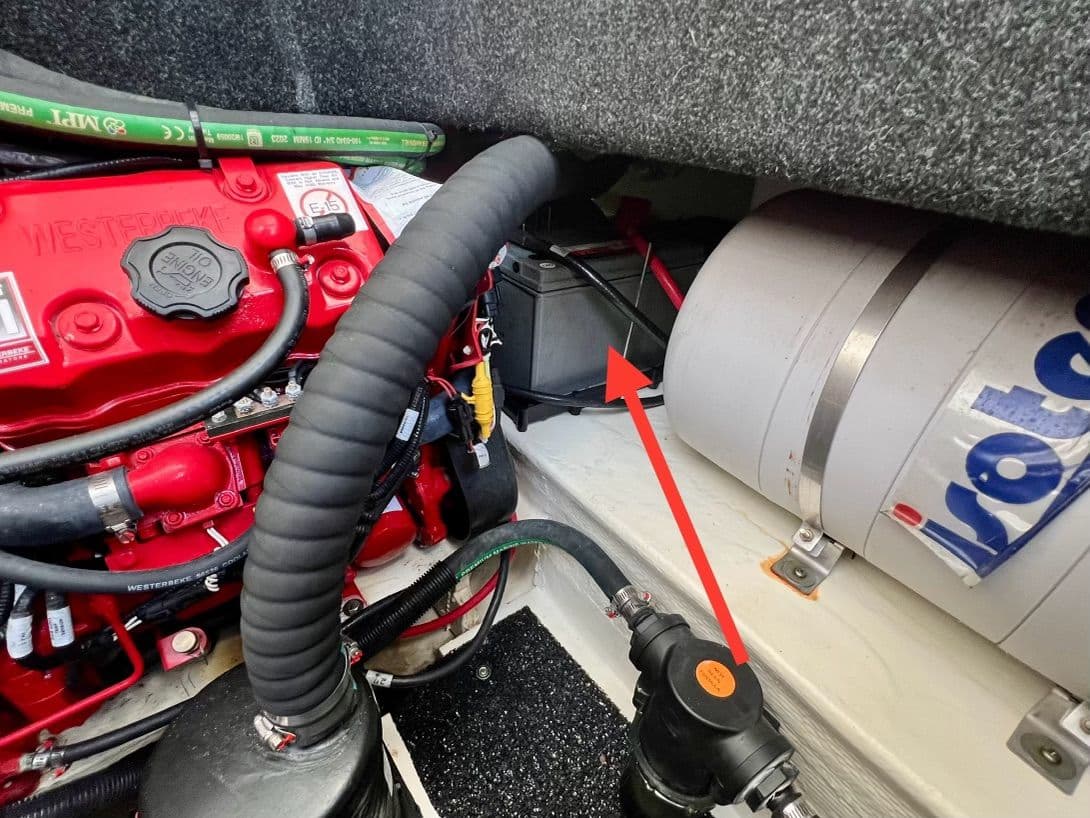
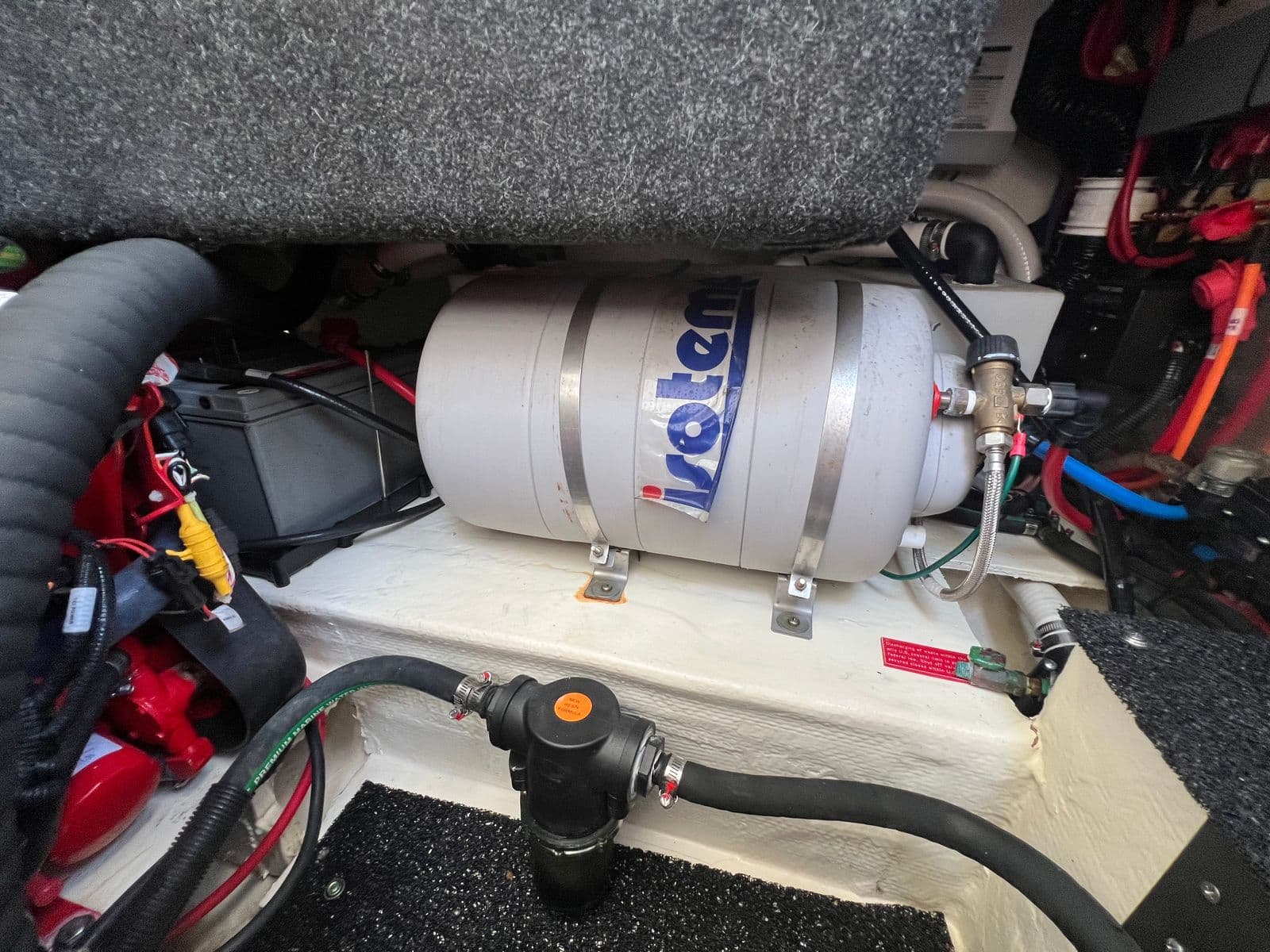
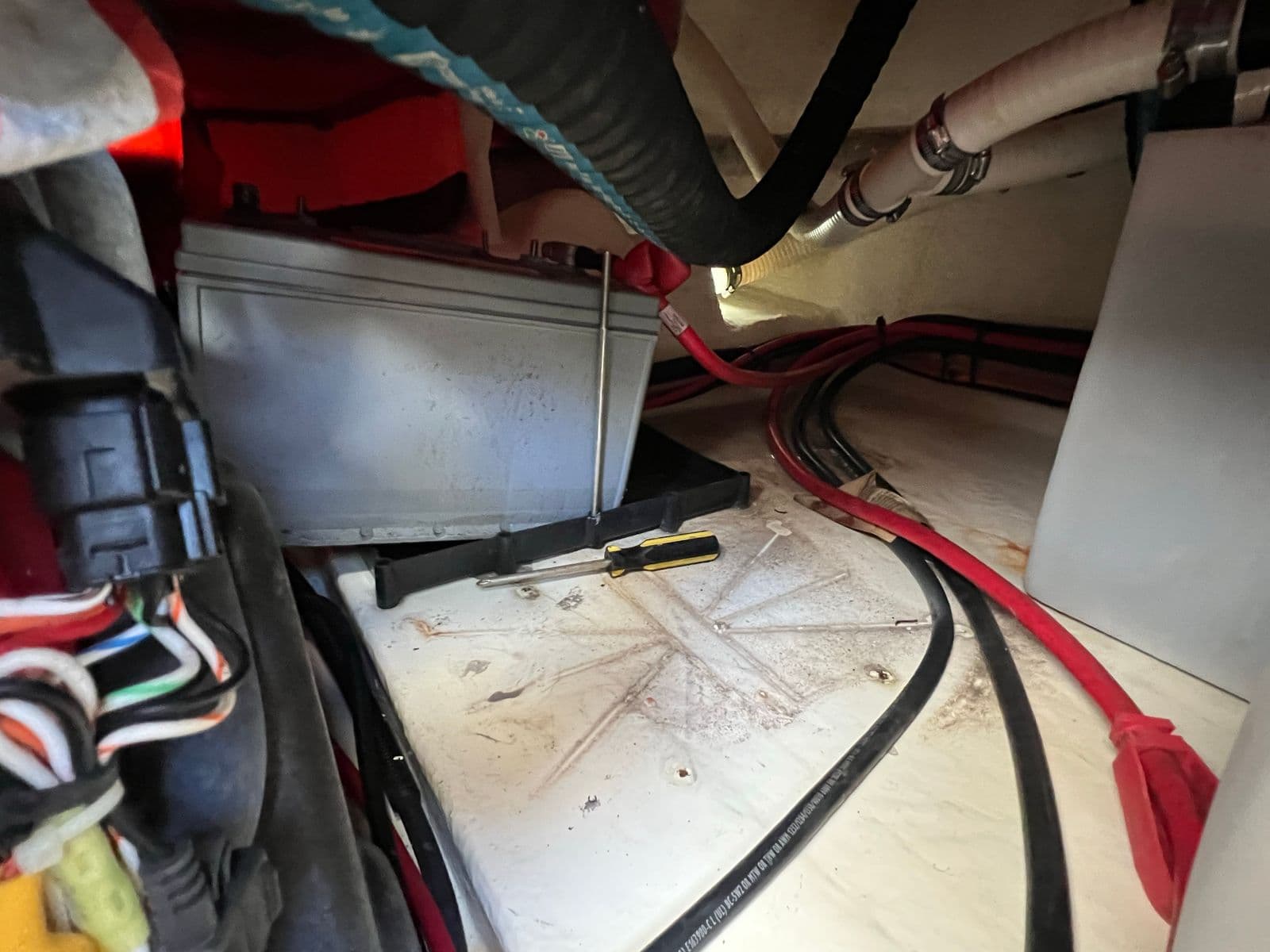
The Regal's house bank lives in a bow compartment that doubles as the home of an Isotemp marine hot water heater. The previous installation had placed the heater and an exhaust hose directly above the battery position, which made even removing the old batteries a real job — and made fitting an upgrade impossible without temporarily relocating the heater.
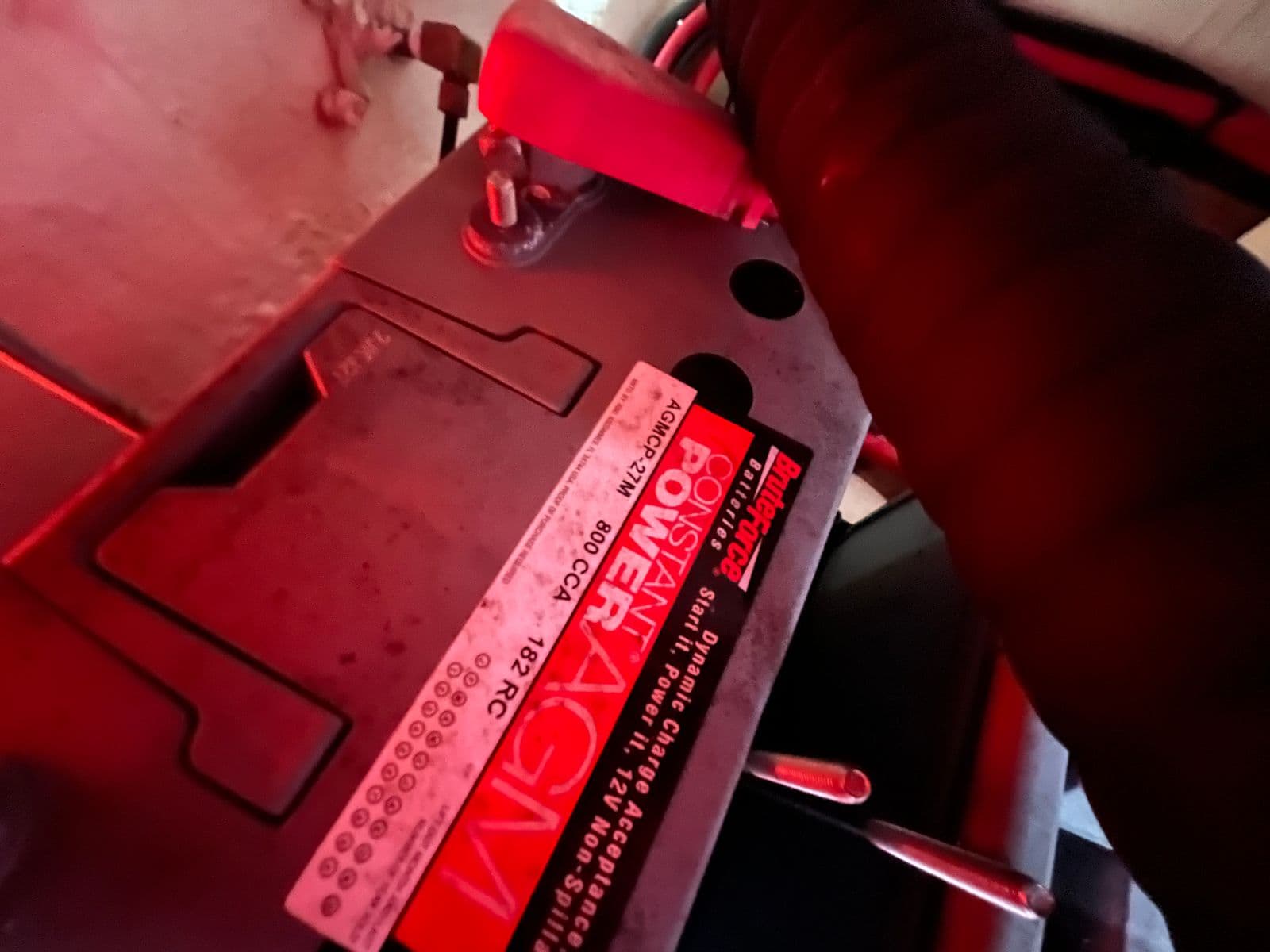
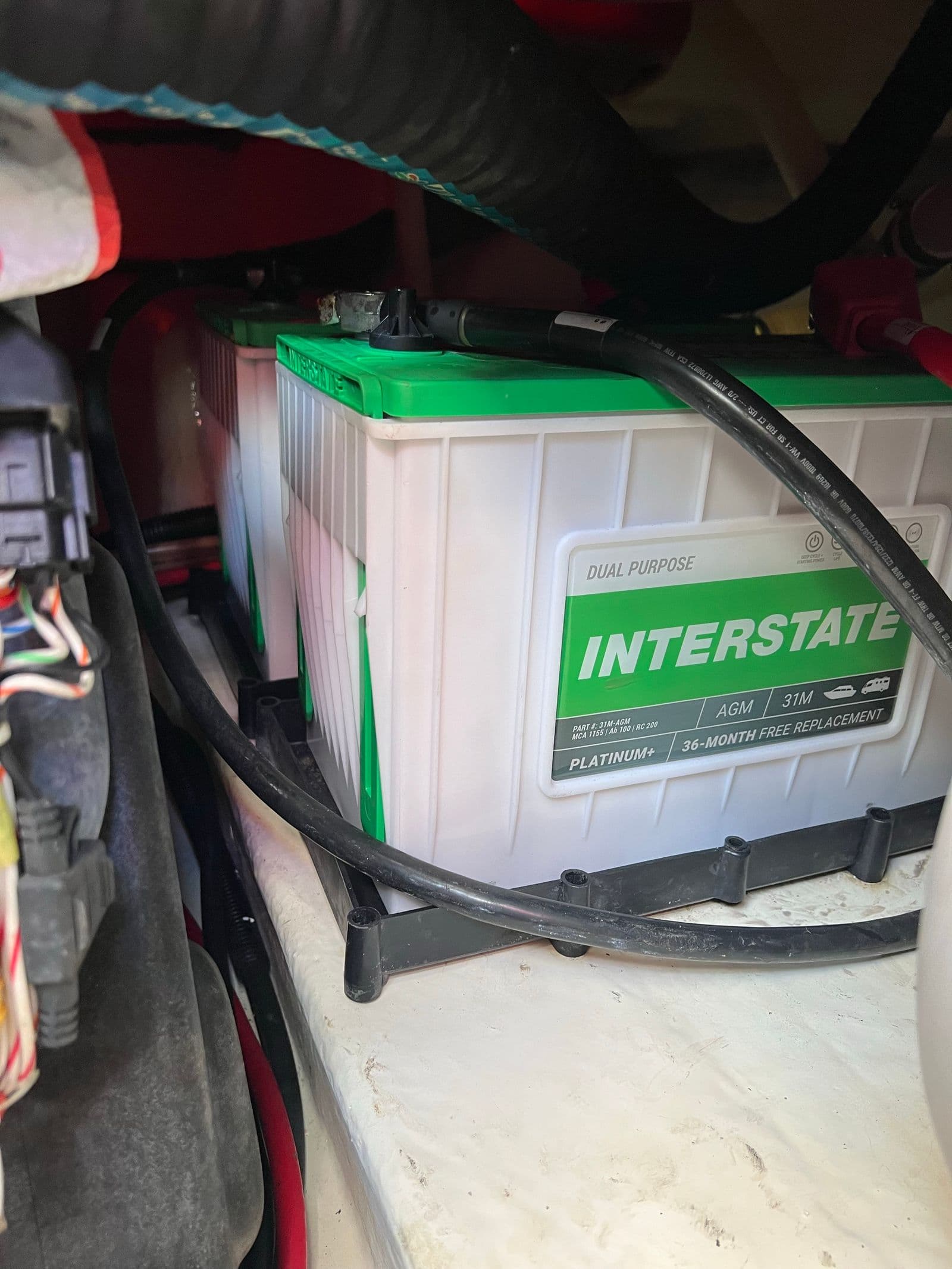
While we were in there, we made a decision worth noting: the original equipment was a BatteryForce Group 27 AGM rated at 800 CCA. We replaced them with Interstate Group 31 AGMs at 900 CCA each — a deliberate upgrade in both physical size and capacity. A windlass is a high-draw device. Putting in batteries with more headroom for that draw makes the whole electrical chain more forgiving as it ages.
Service items completed on this visit:
- Replaced 2× Group 31 AGM batteries (upgrade from Group 27)
- Moved hot water heater and exhaust hose to access the battery bank, then reinstalled
- Cleaned every battery cable connection
- Sprayed all connections with Corrosion-X
- Tested all components and the windlass before leaving
The windlass tested operational on the way out. But within an hour of our crew leaving, the owner reported the symptom had returned: clicking at the helm, no motion at the windlass.
That ruled out batteries as the root cause. Two of the three layers were now confirmed healthy — fresh batteries, recent solenoid. There was one remaining component to test.
Same Visit, No Charge: A Second Solenoid Attempt
Before leaving the dock that day, our team replaced the solenoid a second time at no charge to the owner, on the chance that the new one we'd installed in December had a defective contact. The replacement was completed and tested.
The intermittent behavior persisted. Two solenoids in a row do not usually fail the same way. With batteries verified good, both solenoids verified good, and the symptom unchanged — the diagnosis pointed to the next layer down: the windlass motor itself.
January 22: Calling Lewmar
Before recommending any parts, our technician Oliver called Lewmar — the manufacturer of the V700 windlass — to research what was covered under warranty.
The answer mattered:
- Gearing and mechanicals: 5-year warranty
- Electric motor: 1-year warranty
The V700 was outside the motor warranty window but well inside the mechanical warranty. That meant the right answer wasn't to replace the entire unit — it was to source the motor alone and install it into the existing housing. The motor-only swap cost a small fraction of what a full-unit replacement would have run.
This is where coordinated marine management earns its keep. The owner didn't have to navigate Lewmar's warranty terms, source the part himself, or decide between full-unit and component replacement on his own. We laid out the options, recommended the motor-only swap, and ordered the part the same week.
February 3 – February 10: The Real-World Timeline
The motor was scheduled to ship from Lewmar directly. Two delays pushed the timeline:
- Weather delays up north held up initial shipment by several days
- An incorrect shipping address on Lewmar's end required a redirect once the package was in transit
Neither delay was catastrophic, but both were honest realities of marine parts logistics that we communicated to the owner as they happened. We rescheduled installation for the week the part actually arrived.
$99
per month
Starting price for vessels under 25ft
Never Worry About Your Boat Again
Monthly inspections by USCG-certified captains keep your boat ready to go whenever you are.
Monthly Inspections
Comprehensive systems checks every month
Full Diagnostics
Engine, electrical, and navigation systems
Coordination
We schedule and manage all maintenance
Peace of Mind
Your boat is always ready when you are
February 10: Motor Replacement
When the motor arrived, the install was straightforward — and detailed. Replacing the motor on a V700 is more than just bolting on a new electric drive; it's an opportunity to service every adjacent component while the unit is open. Our crew completed the following:
- Removed the failed motor from the V700 housing
- Cleaned old grease and debris from the gypsy, shaft, and internal components
- Applied fresh marine grease to the gypsy and clutch
- Mounted the new motor
- Sprayed all connections with Corrosion-X
- Reassembled the unit — gypsy, chain pipe, stripper ring, and all mating components
- Tested the full operation of the windlass before leaving
The windlass ran clean. Five visits and three replaced components after the first call, the boat was where it should have been all along — with batteries, switch, and motor all confirmed healthy, and a documented record of every step along the way.
What This Case Study Teaches
A few takeaways for any owner whose windlass is acting up:
- A windlass is a chain, not a part. Batteries → switch/solenoid → motor → mechanicals. Any link can produce the same symptom. Diagnose in order, starting at the battery.
- Multimeter voltage is not the same as battery health. A 3-year-old AGM can read 12.4V on a multimeter and still fail a load test. If your high-draw devices (windlass, thrusters, starter) are getting flaky, get the batteries tested with a real load tester before replacing anything else.
- Group sizing matters for high-current loads. When replacing batteries that feed a windlass, sizing up (Group 27 → Group 31) gives you headroom that the original installer may not have built in.
- Warranty research can change the repair scope. A motor that's out of warranty doesn't mean the whole unit is. Manufacturers often warranty mechanical and electrical components on different schedules. A few minutes on the phone with the manufacturer can be the difference between a component swap and a full-unit replacement.
- Access often costs more than parts. On this boat, the hot water heater sat directly over the battery bank. The labor to clear access was a real line item. When you spec a refit, ask where the consumables live and how often you'll need to reach them.
The Signs Your Windlass Might Be Doing the Same Thing
If any of this sounds familiar, your windlass may be telling you the same story:
- It clicks at the helm switch but the chain doesn't move — a classic symptom that lives anywhere in the electrical chain, not just the solenoid.
- It works for a few inches of chain, then stops — usually a sign of voltage sag under load, often pointing at batteries.
- It runs cleanly off shore power but stalls on battery — the boat can deliver enough voltage on shore power, but the batteries can't sustain the amperage by themselves. Test the batteries.
- Batteries that are 3+ years old on a Florida boat — heat and humidity accelerate AGM aging. The 5-year nameplate life is a best case.
- A unit that was "rebuilt" in the past with no documentation — if you don't know what was replaced or when, assume the components have age on them.
How We Help Owners Get Ahead of Jobs Like This
The goal of our monthly management program is to find issues like the ones in this case study early — before a windlass quits at the wrong moment, before batteries fail under load, before the only fix is a multi-week repair across several visits.
A USCG Master Captain walks your boat on the same week every month and runs a 32-point checklist covering electrical, bilge, fuel, engine, safety, and ground-tackle systems. Battery health is part of that walkthrough. So is testing high-draw devices like windlasses and thrusters. When something needs attention, you get a heads-up and an estimate before it becomes an emergency. When it's a quick fix, we handle it as part of the visit.
Every layer of this story — the aging batteries that still read fine on a multimeter, the windlass motor that was nearing the end of its first year, the access challenges that turn a 30-minute job into a 3-hour one — is the kind of thing a monthly visit is designed to surface. Marine systems are predictable when somebody is paying attention to them.
The Timeline at a Glance
- Dec 12, 2025 — Initial visit. Solenoid replaced per owner's request. Recommended battery testing and Corrosion-X application.
- Dec 28, 2025 — Owner reports windlass intermittent on first use. Schedules diagnostic visit.
- Jan 6, 2026 — Battery tester confirms both house batteries BAD-REPLACE despite normal voltage readings.
- Jan 13, 2026 — Battery replacement. Group 27 → Group 31 AGM upgrade. Hot water heater relocated for access. Solenoid replaced a second time at no charge when symptom persisted.
- Jan 22, 2026 — Lewmar warranty research. Motor-only swap recommended over full-unit replacement.
- Jan 26, 2026 — Replacement motor sourced from Lewmar. Estimate provided for motor swap.
- Feb 3 – Feb 5, 2026 — Shipping delays (weather + address correction) communicated to owner.
- Feb 10, 2026 — Motor installation. Full V700 service: cleaned grease, lubricated gypsy and clutch, mounted new motor, reassembled, tested. Windlass operational.
The Spec Sheet
For the boat nerds who want the full rundown:
- Vessel: 2023 26' Regal cruiser, Treasure Island, FL
- Service window: December 12, 2025 – February 10, 2026 (five scheduled visits)
- Initial complaint: Windlass not operating; owner suspected solenoid
- Actual root cause: Failed Lewmar V700 windlass motor (out of motor warranty), compounded by 3-year-old Group 27 AGM batteries unable to sustain windlass amperage under load
- Diagnosed by: Marine electrical technician using Viking load tester, working from documented findings on each visit
- Batteries replaced: 2× Interstate Group 31 AGM, 900 marine cranking amps each (upgrade from original Group 27 800 CCA BatteryForce units)
- Switch components: V700 solenoid replaced twice (both replacements at no additional charge after the initial Dec 12 install)
- Motor: Lewmar V700 replacement motor, sourced direct from manufacturer
- Additional work: Battery cable connections cleaned and treated with Corrosion-X; hot water heater and exhaust hose relocated to access battery bank; gypsy, shaft, and internal windlass components cleaned and re-greased during motor swap
- Coordination: Lewmar warranty research conducted by Mobile Marina to ensure component-level rather than unit-level replacement